- Language accreditation is obtained through degree courses, recognized external certificates, and specific tests organized by university language services.
- Universities and autonomous communities regulate which degrees are valid, how to incorporate them into the file and what application procedures and deadlines must be followed.
- There are scholarship and grant programs, especially in Andalusia, that partially finance the attainment of B1, B2 or higher levels to avoid economic barriers.
- Accreditation of language skills is essential for undergraduate degrees, international mobility programs, and for teachers to teach in foreign languages.
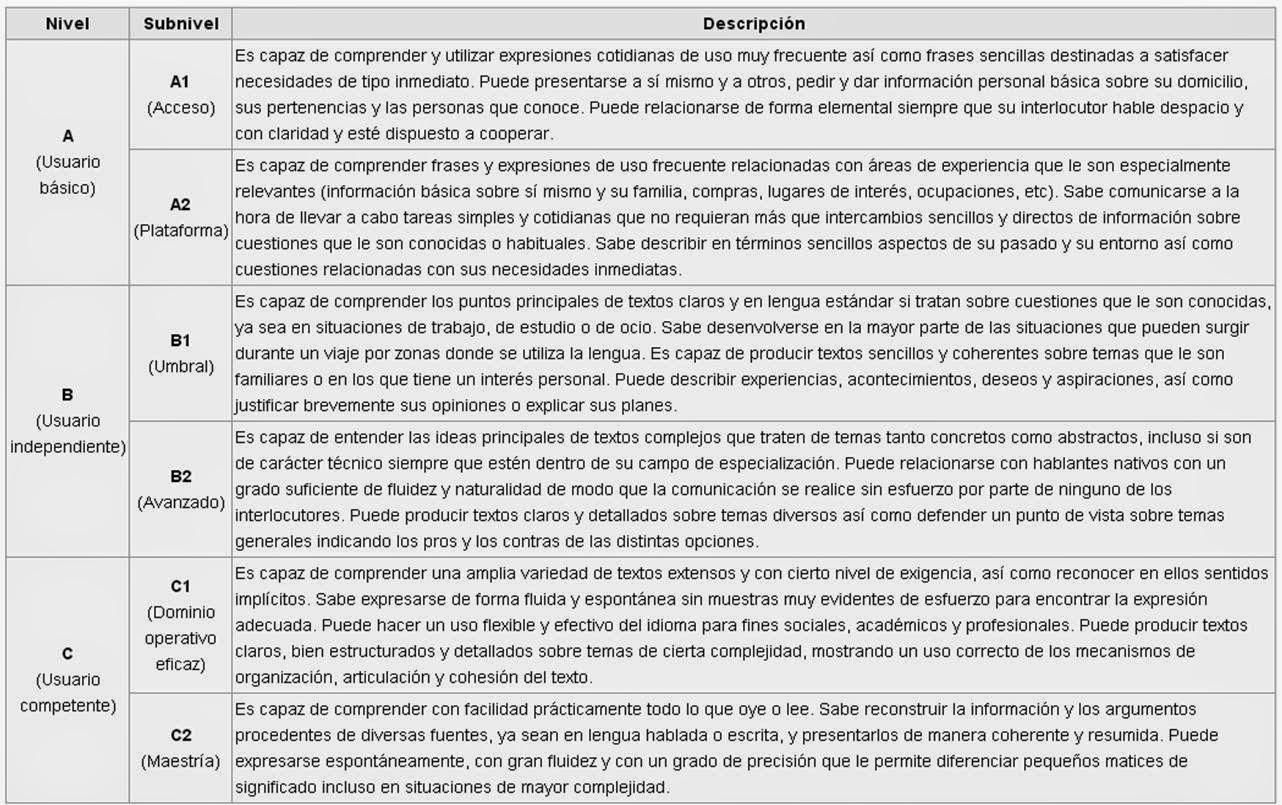
Language proficiency accreditation has become almost mandatory at universities, for accessing scholarships, and in many faculty selection processes and international mobility opportunities. If you study at a Spanish university, especially in Andalusia, the Valencian Community, Castile and León, Aragon, or similar regions, you will very likely need to officially demonstrate your language level.
This article provides a comprehensive and detailed guide on how language accreditation works in various universities and government agencies: which certificates are recognized, how to include them in your academic record, what financial aid is available, the deadlines and requirements for faculty, and the regulations governing this entire process. The goal is that, by the end of this article, you'll have a clear understanding of all the options available to you.
Accreditation of linguistic competences in undergraduate studies
In many Andalusian universities, such as the University of Seville or the University of Granada, language accreditation for undergraduate degrees is closely linked to the subjects you already take in your curriculum and to agreements between universities. This means that, in some cases, you don't need to take an extra exam because your existing language course already serves as proof of proficiency.
At the University of Seville, for example, undergraduate students who have passed certain subjects whose exams are aligned with the CEFR (Common European Framework of Reference for Languages) levels and who meet the criteria of the Collaboration Agreement of the Andalusian Universities (Rectoral Resolution of June 22, 2017) see that level reflected directly in their academic documentation.
This means that the level achieved is automatically recorded on both academic transcripts and the SEVIUS online record . For those who require a specific document, a written certificate can be requested upon payment of the applicable academic fees and using the form provided by the university for this purpose.
In addition, there is a list of degree courses that qualify for academic certification upon payment of the corresponding fees, which is usually available on the website of the center or the language service. This list details the courses that, once passed, allow students to obtain a university certificate of language proficiency.
For those who completed undergraduate or graduate degrees with courses in instrumental languages taught by the Language Center , the university can provide a generic document issued by the corresponding department. This document explains the correspondence between the content of those courses and the CEFR levels, which helps to justify the level for external applications, although it does not always equate to an official accreditation certificate.
Obtaining and recognizing official language certificates
Beyond the subjects in the curriculum, many universities allow students to demonstrate language proficiency through external certificates recognized by regional agreements or internal regulations. It is crucial to know which qualifications are accepted and how to obtain their recognition.
Within the framework of Andalusian Public Universities, there is an agreement that establishes an annex with certificates valid for accrediting foreign language proficiency levels. If you possess any of the qualifications listed in this annex, you can request official recognition of your level at the Language Institute or equivalent service of your university. The annex is usually published as a document available for consultation on the university's website.
At the University of Seville, the Language Institute regularly organizes foreign language proficiency exams that allow students to obtain certificates aligned with the CEFR levels. Information about exam dates, deadlines, levels, and fees is published on their official website, which also details registration requirements and exam rules.
At the University of Granada, the recognition process is very systematic: the student submits an application for accreditation of foreign language proficiency through the UGR's online portal , attaching the certificate or diploma they wish to have recognized in PDF format. This documentation is then sent to the registrar's office of the faculty or school where they are studying.
Once the application is received, the center's administrative office verifies the authenticity of the certificate and the existence of a report from the Language Accreditation Commission . If there is no prior report on the certificate, one is requested. Finally, the Dean of the center decides whether or not to accept the accreditation for the student's academic record.
It is important to understand that, according to these regulations, the validity of the accreditation granted by the University of Granada (UGR) is limited to the university itself. Outside of the university, this accreditation may or may not be accepted, depending on the criteria of other institutions, unless specific mutual recognition agreements exist.
Language accreditation regulations at the University of Alicante
The University of Alicante (UA) has a highly structured system for the recognition of certificates in Valencian, foreign languages, and Spanish , as well as for accreditation through specific educational pathways in certain degree programs. This applies both to the automatic recognition of some certificates and to the applications that students must submit.
Regarding Valencian, the University of Alicante (UA) has regulations that define the Valencian language proficiency certificates issued by the Language Service and their equivalencies with other degrees, diplomas, and certificates. These regulations are published in the Official Bulletin of the University of Alicante (BOUA) of October 31, 2023, which details the levels, tests, and recognitions.
Certificates issued by CIEACOVA through the UA are directly incorporated into the student's file, so it is not necessary to make any additional request for the level to appear officially recognized in the system.
The University of Alicante (UA) also regulates the accreditation of the C1 level of Valencian through pathways within the Bachelor's degrees in Early Childhood Education and Primary Education. This accreditation was published in the Official Gazette of the University of Alicante (BOUA) on September 27, 2024, and allows those who complete these studies, meeting the established requirements, to obtain C1 level recognition without needing a specific exam in many cases.
In parallel, there are regulations for the accreditation of C1 level Valencian through specific pathways in Philology degrees and in Translation and Interpreting degrees. These regulations, announced for February 27, 2026, establish the validation of C1 level upon successful completion of certain subjects and training modules related to the language.
Regarding foreign languages, the University of Alicante (UA) has approved specific regulations defining its own certificates and their equivalencies with other degrees and diplomas. Of particular note in this area are the ACLES certificates (Association of Language Centers in Higher Education), which, when issued by the UA itself, are automatically added to the student's academic record without any additional procedures.
In the case of Spanish as a foreign language, the University of Alicante also establishes its certificates of Spanish proficiency and equivalencies with other degrees (BOUA 31-10-2023). All of this is integrated into a common framework for language accreditation that seeks to harmonize the recognition of proficiency levels within the institution.
To have other external certificates added to their academic record, students must complete a process through UACloud > eAdministration > Procedures > Academic > Language Proficiency Accreditation , attaching a scanned copy of the certificate. The Language Office then reviews the documentation, verifies the validity of the certification, and, if everything is in order, validates it and adds the level to the student's academic record.
In case of an issue, such as not being able to locate the level or language in the procedure's drop-down menu, the recommendation is to send an inquiry to the Language Secretariat through official channels, so that they can review the specific case and provide guidance on the correct way to proceed.
Grants from the Andalusian Regional Government for language accreditation
The Andalusian Regional Government has launched a financial aid program for B1 level or higher language proficiency, managed through Andalusian public universities. This aid aims to ensure that the accreditation requirement is not an economic barrier to obtaining a Bachelor's degree.
The grants are structured in several ways. First, there is the Language Proficiency Grant for Undergraduate Studies , designed to cover the cost of achieving the minimum required level (usually B1 in a first foreign language) necessary for graduation. This grant typically covers part or all of the tuition fees and, in some cases, the preparatory course.
Secondly, there is a First Foreign Language Competence (B2 or higher ) grant for students who have already demonstrated the level required for the Bachelor's degree and wish to continue progressing to higher levels (such as B2 or C1) in that same language.
The third option considers proficiency in a second foreign language at level B1 or higher for those who already hold the necessary accreditation for the qualification in their first language. This encourages students to acquire a second foreign language at a functional level for studies and mobility.
Regarding the amount, these grants can reach up to 300 euros per recipient , an amount intended to cover approximately the costs of tuition and training courses required to take the accreditation exams. The regulations clearly state that no more than two grants can be received, with a maximum of 300 euros per grant.
The recipients of these grants are primarily students who have received a general grant from the Ministry responsible for education or equivalent general grants from the Basque Country or Navarre, either in the call for applications from the participating university or in the immediately preceding academic year, provided that they have not received other public aid for the same purpose.
The universities themselves manage the grants, awarding them once students pass the language certification exams. In other words, the grant is usually awarded when the student demonstrates they have achieved the required language level.
European context and development of the scholarship program in Andalusia
This entire framework of language accreditation is framed within the European context derived from the Bologna Plan , where proficiency in at least one foreign language is a key requirement for obtaining university degrees and for promoting international student mobility.
In 2015, the Andalusian Regional Government was one of the first autonomous administrations to implement a specific scholarship program for language accreditation , focused primarily on the B1 level. The aim was to ensure that the language requirement did not become an economic barrier for those with fewer resources.
This type of program has been replicated and adapted in other countries and regions, as it promotes internationalization and student mobility by facilitating access to courses and accreditation exams. However, the economic realities of many families mean that, without public support, it is difficult to afford exam fees and preparation courses.
The 2016 call for applications introduced a significant improvement by simplifying the application process , allowing students to submit their applications directly at the university where they are studying. It also broadened the number of eligible applicants to include students who had received a grant from the Ministry of Science, Innovation and Universities in any year of their university studies, not just the year immediately preceding the application.
Currently, it is estimated that around 70.000 Andalusian students benefit from this scholarship program for foreign language accreditation. This support helps improve their chances of accessing master's degree programs, mobility programs such as Erasmus, and job opportunities that require specific levels of language proficiency.
Language training and access to centers in Andalusia
To prepare for and obtain these certifications, students have access to a wide range of language training centers and institutions located throughout the eight Andalusian provinces. These institutions offer everything from general English courses to preparation for official exams in other languages, such as online French courses.
Through the lists usually provided by the regional government and the universities themselves, you can access official language schools, university language centers, specialized academies , and other institutions that offer courses in multiple languages, both European and non-European. This allows you to choose the option that best suits your starting level, goals, and budget.
Language accreditation of non-university teaching staff
Accreditation of language skills does not only affect students, it is also essential for non-university teachers who want to teach non-linguistic subjects, areas or modules in foreign languages (for example, teaching Natural Sciences in English within a bilingual program).
In regions like Valencia and Castile and León, resolutions are regularly published announcing accreditation procedures for teachers in non-university education. These announcements establish the minimum language proficiency levels required, typically B2 or higher according to the CEFR.
One example is the Resolution of June 19, 2012, from the Ministry of Education, Training and Employment , which called upon teachers to obtain accreditation in foreign languages in order to teach non-linguistic subjects. In this context, a specific application form was made available to teaching staff, and the steps of the procedure were outlined.
In line with this, a participation model for accreditation is provided, through which teachers can request to be evaluated for teaching non-linguistic subjects, areas, or modules in a foreign language. Based on these applications, the education administration assesses the merits and certifications submitted and publishes provisional and final lists of accredited and excluded candidates.
In many calls for applications, such as those in Castile and León, a five-business-day period for appeals is opened from the day after the provisional list is published. During this period, teachers can submit appeals or correct documentation if they detect errors or a lack of justification in the qualifications provided.
Requirements, documentation and deadlines for teachers
To participate in these procedures, teachers must meet a series of requirements by the application deadline . These conditions include belonging to certain teaching bodies (primary school teachers, secondary school teachers, vocational training teachers, etc.) and possessing the necessary academic qualifications.
Regarding documentation, an electronic application form is usually required , which is submitted through the regional government's online portal, along with a copy of the academic qualification or language proficiency certificates. These certificates must demonstrate at least a B2 level of the CEFR in the foreign language for which accreditation is requested, as indicated in the corresponding annex of the call for applications (for example, Annex I).
It is common practice to allow applicants to submit one application for each teaching position they wish to participate in (for example, one for primary school teachers and another for secondary school teachers), and in each application they may request accreditation in more than one foreign language, provided that the required level is accredited.
If more than one application is submitted for the same position, the rule states that the last one submitted takes precedence , based on the date and time recorded in the electronic registry. This makes it essential to carefully review applications before submitting them and to take into account any subsequent modifications.
The calls for proposals specify the application period precisely . A typical example would be: from October 20, 2025, to October 29, 2025, with specific times indicated, such as from 09:00:00 on the first day to 23:59:59 on the last day. Once this period has passed, the system usually indicates that the application period has ended.
Regarding the maximum time limit for a decision, some regulations stipulate that if six months have passed since the end of the application period without an express decision, the request is considered rejected by administrative silence. This rejection effect is explicitly mentioned in the call for applications.
Notifications of the provisional and final lists of accredited and excluded participants are normally sent through the electronic headquarters of the autonomous community and the corresponding education portal. These notifications also provide the electronic form for correcting qualifications or certifications that have not been properly justified.
In response to the final decision, interested parties may file an optional appeal for reconsideration or pursue legal action through the administrative courts, in accordance with applicable law. General information on administrative appeals is usually available in documents attached to the call for applications.
Regulatory framework: examples from Castile and León and Aragon
As an example of the level of legislative detail, the Resolution of October 9, 2025, from the Directorate General of Human Resources of Castile and León, announces the accreditation of foreign language proficiency for tenured, probationary, and temporary teachers during the 2025/2026 academic year. This applies to primary school teachers, university professors, and secondary school teachers, as well as the phasing-out vocational training teachers and the vocational training specialists in specific sectors.
These resolutions clearly identify the managing body and the deciding body , which is usually the General Directorate of Human Resources of the relevant Ministry. They also include an information sheet on the processing of personal data associated with the procedure, in compliance with data protection regulations.
In Aragon, the recognition of linguistic competence in the region's own languages (Aragonese and Catalan of Aragon) is specifically regulated in accordance with the CEFR. Order ECD/1591/2020, of December 30, establishes the basis for this recognition.
This Order stipulates that its annex may be periodically amended to include new qualifications or revise existing ones, thereby allowing for updates to the lists of accepted certificates. The final provision empowers the Directorate General with authority over language policy to approve the instructions and resolutions necessary for implementing the Order.
An example of this is the RESOLUTION of June 26, 2023, from the Director General of Language Policy, which updates the annex to Order ECD/1591/2020 . This resolution modifies the annex of the Order (also referred to as ECD/1595/2020 in some texts), incorporating new qualifications or adjusting equivalencies according to the evolution of training programs and the certificates issued by different institutions.
Language accreditation for university mobility programs
Language proficiency accreditation is also key in the allocation of places in mobility programs managed by the International Relations Offices (ORI) of universities. Here, language certificates directly influence the selection of destinations.
In many mobility programs, the university provides a system for students who have applied to programs such as Erasmus or other exchanges to submit their language certificates. These documents are considered as merits or minimum requirements by certain host universities.
The procedure typically allows students, once they have submitted their mobility application, to upload their language certifications to the International Relations Office (ORI) platform, where they are assessed along with their academic record and other evaluation criteria. This ensures that placements are allocated more closely to each candidate's language proficiency.
Use of cookies and related web information
Many of these accreditation procedures and applications are carried out through electronic offices and online platforms , which in turn use cookies for their proper functioning. Although it doesn't affect the substance of language accreditation, it is relevant to know why these cookie acceptances are requested when accessing the portals.
Cookies are files that store minimal information sent by a website and saved in the user's browser. They are used to recognize sessions, remember preferences, or, in some cases, analyze site usage to improve services. In university and administrative contexts, they are primarily used to ensure that applications function securely and reliably.
Cookies are typically distinguished from session cookies: session cookies are deleted when the browser is closed and only store temporary data , while persistent cookies are stored for a longer period defined by the website or until the user manually deletes them. In terms of purpose, they can be technical, personalization, or analytical.
Technical cookies are used to keep the session open or allow access to restricted areas (for example, the administration area or the student intranet). Personalization cookies save user preferences, such as interface language or certain settings, to make browsing more convenient.
Analytics cookies allow institutions to understand which pages are visited, how long users stay on them, and which options are used , in order to tailor content and improve the user experience. Users can configure their browser to receive cookie notifications or block them at any time, although this may limit access to certain services or prevent them from remaining logged in to the platform.
Each browser (Firefox, Chrome, Internet Explorer, Safari, etc.) offers specific options for managing and deleting cookies through its settings menus, usually in the privacy or security section. Understanding these options is useful for those who frequently complete accreditation processes and want to maintain detailed control over their browsing data.
Overall, language proficiency accreditation in Spain combines university courses, official certificates, regional regulations, financial aid, and electronic procedures that affect both students and teachers. Understanding how each piece fits together—from agreements with Andalusian universities and regulations at the University of Alicante or Aragon, to calls for applications in Castile and León and Andalusian scholarship programs—allows for a much more confident approach to certifying language levels and maximizing the academic and professional opportunities that depend on it.