- It establishes international guidelines for managing the identification and location of documentary sources in academic works.
- It offers flexibility through three citation systems: author-date, numeric, and continuous notes.
- Define precise structures for referencing everything from books and scientific articles to patents, legislation, and digital resources.

When we delve into the world of research or write an academic paper, it is essential to give credit to those who have already worked on the topic. This is where the UNE-ISO 690 standard comes into play , a kind of roadmap that tells us how to organize sources so that any reader can find the original document without going crazy trying.
The first thing to understand is that this standard is not a rigid constraint, but rather offers general guidelines . Unlike other more inflexible styles, ISO 690 focuses on ensuring that information is complete and consistent, allowing each discipline or tutor to adapt the punctuation or typographic style as needed, provided that uniformity is maintained throughout the text.
Basic concepts you shouldn't confuse

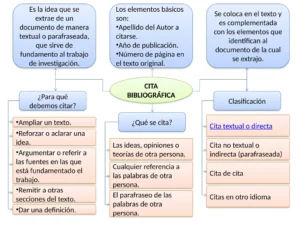
We sometimes use the terms interchangeably, but in academic rigor there are clear differences. A bibliographic citation is that quick mention we make while writing to indicate where an idea comes from. On the other hand, a bibliographic reference is the detailed set of data (author, year, title, publisher) that allows us to locate the exact resource; it is, basically, the necessary complement to the citation.
When we compile all these references at the end of the work, we create the bibliography . To ensure that everything makes sense and doesn't look chaotic, we apply a bibliographic style , which is the set of rules (such as APA, Vancouver, or UNE-ISO) that ensure the document is professional and readable.

In-text citation systems

Depending on how you prefer to organize your work, the standard allows you to choose between three different ways to link the text to the final list:
- Author-date systemThe author's last name and the year are placed in parentheses. This is very common in the social sciences.
- Number systemA number is assigned to each source, which then corresponds to the final list.
- Continuous note systemFootnotes are used to detail the source.
If you choose the author-date citation format, the structure varies depending on the number of authors. For a single author , simply list their last name and the year. For two authors , list both last names joined by "and." For three authors , list all three last names. However, if the work has more than three authors , it's more practical to list the first author's name followed by " et al." to avoid interrupting the flow of the text with an endless list.
How to write references according to the type of source

This is where things get interesting, since each format has its own "recipe." Citing a book is not the same as citing a tweet or a law.
Monographic resources and books
For a traditional book, the sequence is: Author 's Last Name, Author's First Name , Year of Publication, Title of the Work (followed by a subtitle if applicable), Format, Edition, Place of Publication, and Publisher. For example, if citing an e-book, it is essential to include the format (such as "Kindle e-book") and, if it is available online, the date accessed and the URL.
Articles from journals and serial publications
For scientific articles, the structure begins with the author and year, followed by the article title in quotation marks . Next comes the journal name in italics, the volume, issue number, and the exact page range of the text. Don't forget to include the ISSN or DOI , which is the article's digital identifier, facilitating immediate access.

Other specific sources
- Legislation: It starts with the Country, followed by the title of the law, the official publication (such as the BOE), the date and the page number.
- PatentsThe responsible entity, the name of the invention, the country that registers it, and the publication date.
- Unpublished thesesThe author, title, thesis supervisor, and the following information are detailed: academic degree and the institution where it was presented.
- audiovisual materialsWhether it's videos, sound recordings, or television programs, it's essential to indicate the support type and the issuing or publishing entity.
For more modern resources, such as forum posts or mailing lists , the standard requires the author, the message title, the medium, the publication date, and the date you accessed that information, since web content can change or disappear.
Technical details and updates

It is important to note that the standard has evolved. For example, in the most recent version, the place of publication is now optional, simplifying the researcher's task. Furthermore, to avoid confusion between authors with similar names, it is recommended to include international identifiers such as ORCID or ISNI in square brackets.
As for the final organization, the bibliography should follow an alphabetical or numerical criterion , depending strictly on the citation system you have chosen at the beginning of the document to maintain consistency.
The correct implementation of these guidelines ensures that any academic document has a solid and verifiable backing , allowing intellectual property to be respected through a comprehensive referencing system that covers everything from the oldest books to the most ephemeral digital resources , thus ensuring transparency and rigor in the dissemination of knowledge.