- The processes for renewing and selecting directors are structured in online phases, with strict deadlines, annexes and a dual approach: renewal for those already in office and selection for new directors.
- Participation requires teaching seniority, specific training in management roles, accreditation of merits, and the presentation of an original management project, adjusted to very detailed criteria and format.
- The management project and its oral defense before joint committees (Administration, faculty and school council) are decisive, and its assessment is combined with the merit scale to decide the appointment.
- The lack of candidates in a significant number of centers and the need for extraordinary appointments highlight the importance of improving the recognition and training of the management function.
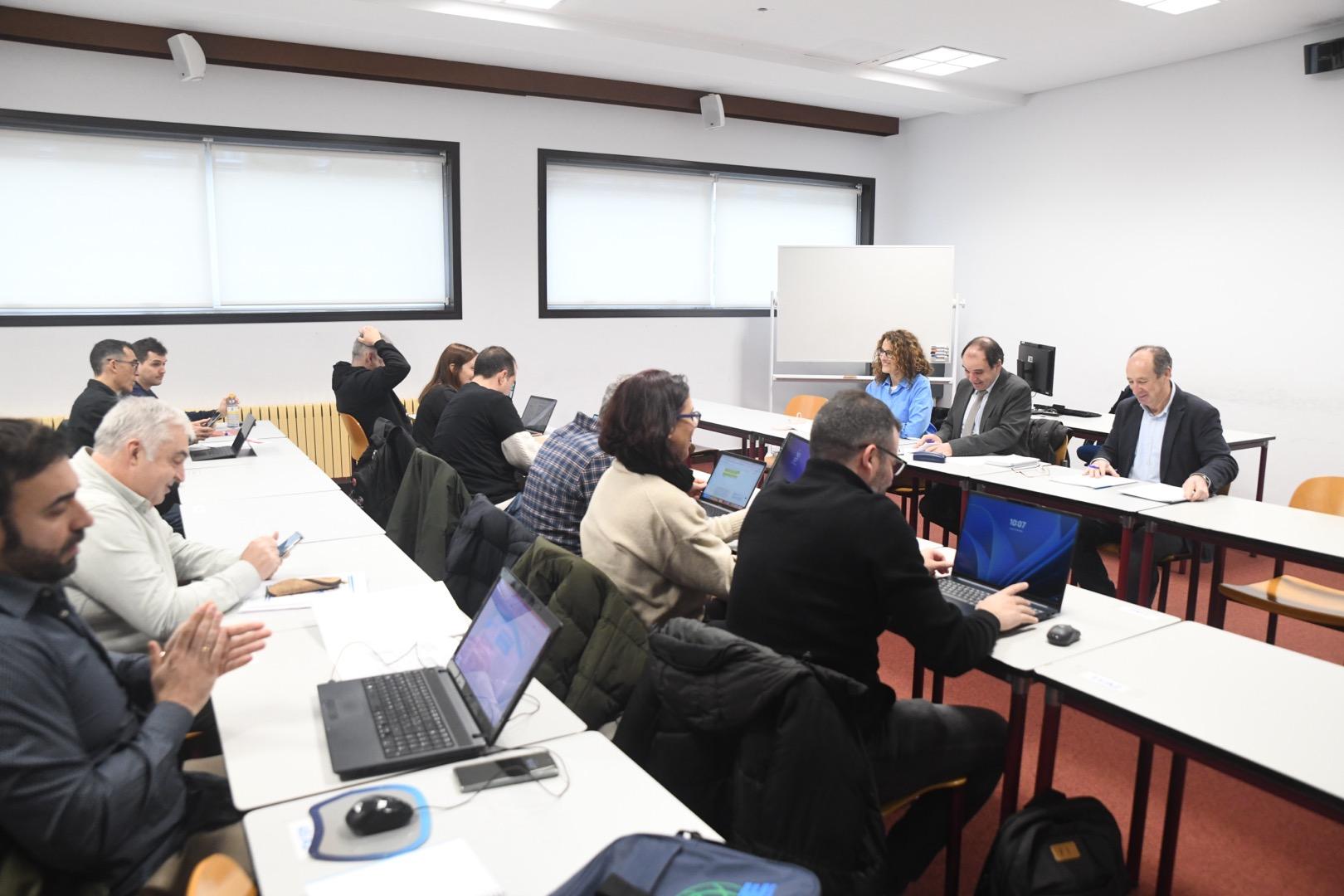
The renewal and selection of principals for public schools has become a highly regulated, online process with numerous deadlines, appendices, and requirements that should be clearly understood to avoid missing any opportunities. Whether you are already serving as a principal and wish to continue in your role, or you are aspiring to become one for the first time, it is essential to know how the process is structured in the different autonomous communities and what documentation is required at each stage.
In Spain, the processes for renewing and selecting school principals regulate access to leadership positions in a wide variety of institutions: primary and infant schools, secondary schools, adult education centers, conservatories, official language schools, art schools, and higher artistic education institutions, among others. Although each autonomous community approves its own regulations and schedules, several common elements are repeated: electronic submission of applications, merit-based assessment criteria, a leadership project, evaluation of leadership performance, and selection committees.
Scope of application: types of centers and calls for proposals
The calls for applications for the renewal and selection of principals generally affect non-university public schools offering general and special education programs. These include, among others, Public Primary and Infant Schools (CEIP), Rural Grouped Schools (CRA), Special Education Centers (CEE), Secondary Education Institutes (IES and IESO), Integrated Public Centers, Art Schools, Professional Conservatories of Music and Dance, Official Language Schools (EOI), and Adult Education Centers (CEPA).
In some regions, such as Aragon , the call for applications clearly distinguishes between general education centers (schools, institutes, adult education centers, official language schools, professional conservatories, art schools) and higher artistic education centers (such as the Aragon Higher Conservatory of Music or the Aragon Higher School of Design). For the latter, the regional education authority specifies a particular selection procedure for the director, with its own dates, committees, and evaluation phases.
Certain types of centers are also excluded according to regional regulations: for example, in Aragon, Integrated Public Vocational Training Centers and Higher Centers for Artistic Education are excluded from the general call for applications, as they are usually governed by specific regulations. In other regions, such as Castile-La Mancha or the Valencian Community, the call for applications is open to all non-university public educational centers under the jurisdiction of the regional education authority, except for the exceptions specified in each resolution.
It is very common for resolutions to include annexes with a detailed list of affected centers (by province, town, and center code), indicating in each case whether a renewal of the mandate is possible or only a selection process for a vacant management position. These lists are key to verifying whether the center where you work or the one you wish to apply to is indeed included in the call for applications.
Electronic submission of applications and standard attachments
Today, in virtually all regions, applications must be submitted electronically . This means using the online portals of each educational authority and having valid identification systems such as an electronic certificate, electronic ID card (DNIe), permanent Cl@ve with Cl@ve Firma, or other equivalent methods recognized by each electronic office.
In Aragon, for example, the entire process is handled through the Online Electronic Processing System (TTO), accessible via the Government of Aragon's Procedures Portal. There, the application is completed and signed, the required documentation is attached, and the electronic registration is carried out. Similarly, Castile-La Mancha uses the Electronic Headquarters of the Regional Government, while the Valencian Community centralizes the process on the OVIDOC platform, which generates a unique identification number for each successfully submitted application.
The calls for applications are usually accompanied by several regulatory annexes that structure the procedure. In the case of Aragon, for example, the following are published: regulatory guidelines (Annex I), the template for the self-assessment report on management performance for the renewal process (Annex II), the merit-based selection criteria (Annex III), and the detailed schedule of actions for renewal and selection (Annex IV). These annexes serve as mandatory references to know what is assessed, how it is scored, and the deadlines for action.
It is important to note that many administrations provide official application or report templates, which must be completed strictly according to the format specified in the resolution. For example, there are application templates for term renewal, templates for selection processes, and, sometimes, specific technical templates for management projects for certain periods (such as the so-called "Technical Template for Renewal 2026-2027" or "Technical Template for Selection 2026-2027").
In the Valencian Community, through OVIDOC , the platform generates a PDF receipt with the application number, which the applicant must keep to prove that the application was submitted on time and correctly. Furthermore, if an applicant submits multiple online applications, only the last one correctly registered will be considered, so it is advisable to carefully review each submission before confirming it.
Calendars and deadlines for renewal and selection
Each region sets a very precise schedule to differentiate between renewal periods (for current directors who wish to continue) and selection periods (to fill vacancies or director positions where the term is not being renewed). These periods are usually clearly separated so that the renewal process is completed before the selection phase begins.
In Aragon, for example, renewal applications are submitted between December 9 and 16, while selection applications are processed between March 11 and 17 of the following year. During these periods, specific access to the TTO (Technical Training Office) is enabled for each modality, and any applications submitted outside of these deadlines are automatically excluded.
Castilla-La Mancha also structures the process into two sets of dates . For renewals, the final list of vacancies to be renewed is published (for example, on December 4th), the application period opens (for example, from December 10th to 17th), and the dates for publishing the provisional and final lists of admitted and excluded candidates are set, as well as the deadline for completing the renewal process (around the beginning of February). Selection, on the other hand, begins with the publication of the final vacancies (in mid-February), the application period opens (for example, from February 18th to 25th), and the following milestones are followed: provisional lists, appeals, final lists, formation of selection committees, publication of provisional and final grades, and the final proposal of the selected candidate, which must be resolved before the beginning of June.
The Valencian Community, for its part, sets a specific period of ten working days for submitting renewal applications, starting the day after the resolution is published in the Official Gazette of the Valencian Government, with specific hours such as from 00:00 on one day until 23:59 on the last day. Furthermore, exceptional situations are foreseen, such as the detection of errors in a previous resolution that require postponing or reopening deadlines within a new time frame.
In all cases, the call for applications also details the publication dates of the provisional and final lists of admitted and excluded applicants, as well as the appeal periods, both during the renewal and selection phases. It is essential to note these dates and frequently check the electronic or physical notice boards at the centers and the official websites to avoid missing appeal deadlines.
Address renewal procedure
The renewal of the director's position is intended for those who have completed a first term with a positive evaluation and wish to continue leading the center. Those who have already been renewed once usually need to go through a selection process again if they want to be eligible for a third term, depending on regional regulations.
During the renewal phase, current management positions require individuals to submit a specific renewal and evaluation application, using the official template specified in the resolution (such as the corresponding annex in the Valencian Community or Castilla-La Mancha). Along with this application, they are often required to submit a self-evaluation report on their management performance, analyzing achievements, challenges, the degree of compliance with the previous plan, and areas for improvement.
After renewal applications are submitted , the education authority publishes provisional lists of admitted and excluded applicants, always indicating the reasons for exclusion. Excluded applicants have several business days (for example, five in some regions, or three in others) to submit appeals and correct any formal defects. Once these appeals have been reviewed, the final lists of admitted and excluded applicants are published, after which a brief period is usually opened for those who wish to withdraw from the process.
A key element in the renewal process is the evaluation of the leadership role . In regions like Castilla-La Mancha, the Education Inspectorate prepares a provisional report on the leadership's performance, which is then sent to the candidate. Following this, the head teacher convenes an extraordinary meeting of the teaching staff to report on the new leadership plan, the degree of implementation of the previous plan, and the results of the Inspectorate's evaluation. The staff must then vote on the renewal through a direct and secret ballot, typically by an absolute majority of its members.
In other regions, the participation of the school council is also crucial . The regulations of some regional education authorities stipulate that, once the final lists of candidates admitted for renewal are published, the head teacher convenes an extraordinary meeting of the school council. The council then has a specific period (for example, fifteen school days from the publication of the final lists) to express its support for or opposition to the renewal. Subsequently, the Territorial Area Directorate sends a list with the school council's assessment to the relevant General Directorate, opening a new period for appeals. Finally, the definitive lists of candidates who pass the process and are renewed for a new four-year term are published.
Global data from some recruitment processes show that renewals don't always occur in all schools. In Castilla-La Mancha, for example, out of 75 schools where the renewal process was initiated, 24% ultimately did not result in a renewal, and 20% didn't even request one. This highlights a recurring problem: the leadership role isn't attractive enough to many teachers, resulting in schools with no candidates and forcing them to open selection processes or even resort to extraordinary appointments.
Selection process: merit-based competition and management project
When there is no renewal, or the assessment by the faculty or school board is negative , a selection process is opened to fill the school principal position through a merit-based competition. In this competition, candidates compete on equal terms, demonstrating their experience, training, and career path, and presenting a leadership plan to a committee that evaluates several phases in a weighted manner.
The selection process typically consists of two main phases: an initial assessment of objective merits (academic, training, and professional) and a second assessment of the management project. Both phases are eliminatory, and candidates must achieve a minimum score in the first phase to proceed to the second. In higher artistic education, for example, experience and training are assessed up to a maximum of 15 points, with a minimum of five points required to access the project phase.
Applications are also submitted electronically , attaching a copy of the management project and all supporting documentation demonstrating the applicant's merits, according to an official scale included as an annex in the regulatory orders (such as Annex II of Order 170/2021 in Castilla-La Mancha or equivalent annexes in other regions). The administration generally allows applicants to resubmit documents already on file, verifying them automatically unless the applicant expressly objects.
After the application period closes , the administration publishes the provisional list of admitted and excluded applicants, along with the provisional results of the merit assessment. Applicants have several business days to correct any deficiencies that led to their exclusion or to appeal their merit scores. Once the appeals have been reviewed, the final list of admitted and excluded applicants is approved, expressly indicating which applications have met the minimum merit assessment requirement to proceed to the management project phase. At this point, a brief period for voluntary withdrawals is also usually opened.
Participation statistics reveal an uneven reality . In certain provinces of Castilla-La Mancha, a significant percentage of schools receive no applications at all during the selection process, with figures reaching around 25% of schools with no applicants overall, and peaks approaching or exceeding 40% in some provinces. Conversely, most schools that do receive applications typically have only one candidate, and only a small minority submit two or more candidates for the position of head teacher.
Requirements for participation and supporting documentation
The basic requirements for applying for a headship are detailed in the regional regulations governing the procedure. Generally, applicants must be tenured civil servants in the relevant teaching body, have a minimum of five years' seniority in the public teaching service, and have taught for at least five years in the same type of subject as that taught at the school to which they are applying.
There are exceptions for small schools or schools with specialized programs . In specialized preschools, incomplete primary schools, secondary schools with fewer than eight classes, and schools offering professional arts, sports, language, or adult education with reduced staff, the first two requirements—seniority and experience—may be waived when none of the submitted applications meet them. This flexibility aims to ensure that no school is left without a head teacher due to a lack of candidates who meet all the standard requirements.
Another key requirement is specific training in management roles . A certificate attesting to the successful completion of a training course on developing management skills, offered by the Ministry or regional education authorities, is usually required. In many cases, it is also acceptable to be currently enrolled in such a course at the time of application, provided it is completed and passed before the appointment date (for example, before July 1st of the year of taking office). Previous teaching qualifications or accreditations issued before the latest reform of the LOE/LOMLOE are considered equivalent to this training.
Regarding the documentation proving merits , candidates must attach digital copies of academic degrees, training certificates, language accreditations, teaching experience, management positions held, participation in governing bodies, and other relevant functions. No merit will be considered that has not been claimed and documented within the application period, except for those that the administration verifies ex officio because they are already included in its databases.
In addition to the entry requirements and objective merits , all applicants must submit a management plan that adheres to the specifications outlined in the call for applications: maximum length, content structure, document format, and evaluation criteria. Those seeking reappointment typically submit an updated plan compared to their initial proposal, including a specific section detailing the achievements and challenges of their previous term.
The management project: content, format and penalties
The management plan is the heart of the selection process . It is an original document, authored by the candidate, in which they define their proposal for the management, planning, and organization of the center for the coming years. Its content must be based on a detailed analysis of the center's current situation and specify objectives, lines of action, and evaluation mechanisms.
Calls for proposals typically specify a minimum project structure . Mandatory sections include an analysis of the center's most relevant characteristics; the definition of the management program's core objectives; general guidelines for action; specific plans to achieve these objectives; and how the project itself will be evaluated. Often, the objectives, actions, and plans are required to be organized into four main areas: center management and administration; pedagogical organization; institutional and community relations; and educational and operational outcomes.
Another essential element is the proposed management team . The project must include a specific section entitled "Proposed Management Team," which details the team's composition (name and surname of each member, their status as a tenured civil servant or contract worker—in the case of preschools—and the specific position they will hold: head of studies, secretary, etc.). This information allows for an assessment of the consistency between the proposed management structure and the individuals who will support it.
Regarding the format, the guidelines are very specific . The project must typically be submitted in PDF format, with a maximum length of 30 numbered pages, including supporting materials and appendices. It must include a cover page (with the applicant's identification information and the name of the institution), a table of contents, and a bibliography. While the cover page, table of contents, and bibliography are usually excluded from the maximum page count, their inclusion is essential. Layout guidelines are also specified: font (for example, Arial 12-point uncompressed), 1,5 line spacing, and standard 2,54 cm margins on all sides.
Failure to comply with these formal requirements will result in penalties during the project evaluation phase. Committees may deduct points if the font, size, line spacing, or margins do not conform to the specifications (up to a 5-point penalty in some cases), if the document exceeds the 30-page limit (deducting up to 2 points for 35 pages and up to 4 points for over 36 pages, without considering the content exceeding the limit), if the cover page, table of contents, or bibliography is missing (up to a 1-point deduction), or if the project is submitted in a format other than the one required, such as Word instead of PDF (with an additional penalty, for example, of 0,5 points).
The originality of the project is also strictly controlled . Plagiarism is considered to have occurred when a substantial overlap with another management project, from the same or a different autonomous community, is detected, exceeding a certain percentage (for example, 15% of the maximum number of pages allowed). The reproduction of regulations or institutional documents of the center (educational project, rules, annual general plan, etc.) is not considered plagiarism, nor is the reuse of documents entirely prepared by the candidate at the same center. When plagiarism is detected, the project is declared invalid, is not evaluated, and the applicant may receive a score of 0 points in this phase.
To guarantee a level playing field , the relevant authorities require participating schools to publish key information on their websites, in a prominent section titled something like "Institutional Documents" for the relevant academic year. This information includes the educational project, the coexistence plan and internal regulations, the annual general plan, the annual report, and the draft budget. This documentation must be available from the day after the call for applications is published, so that all candidates can consult it when preparing their projects.
Oral defense of the project and functioning of the selection committees
Once the merit assessment phase is complete, candidates with the minimum required score proceed to the defense and evaluation phase of their management project. This phase takes place before a selection committee specific to each center and combines an oral presentation with a subsequent debate or interview.
Selection committees are composed of representatives from the administration and the educational community . A common model, such as that of Castilla-La Mancha, establishes three members appointed by the educational administration (one from the Inspection Service, preferably the school's assigned inspector, another a current principal from a similar school, and a third member who is also an inspector or principal), three representatives of the teaching staff elected in a special session by direct and secret ballot (provided they are not running for any position on the management team), and three representatives of the school council who are not members of the teaching staff, also elected in a special session. In small schools, with fewer than eight classes, this composition is adapted, reducing the number of representatives from each group.
The project defense takes place in a public session , although the committee may limit attendance or establish online broadcasting options so that other interested parties can follow the session without overcrowding the room. The candidate has a maximum of twenty minutes for the presentation and oral explanation of the most relevant aspects of their project. This is followed by a discussion between the committee and the candidate, with a maximum additional duration of approximately twenty-five minutes, so that the total presentation and discussion time does not exceed forty-five minutes.
For the project presentation , the use of computer-based resources (presentations, projections, etc.) is generally permitted. The venues provide basic technological resources (computer, projector, internet connections), although candidates may bring their own equipment if they wish (laptop, adapters, etc.). A period of approximately fifteen minutes is usually allowed before the presentation begins to test the technical equipment; this time will not count towards the allotted time for the presentation.
Once the presentation and debate have concluded , the selection committee proceeds to assess the management project according to the criteria established in the annex of the call for applications (for example, Annex II in some communities, which details items such as the regulatory and contextual basis of the project, the suitability to the institutional documents of the center, the coherence with the needs of the educational community, the proposals for improving coexistence, the management of resources, the collaboration with families and with the environment, the planning of training and innovation, as well as the design of the internal evaluation and monitoring processes of the project itself).
The provisional score obtained in the project defense is published on the center's notice board or through other means provided by the administration. Candidates have a short period (for example, one business day or a few days, depending on the regulations) to submit written appeals to the committee chair, which must be registered at the center. After resolving the appeals, the committee publishes the final project score and sends the minutes with all the scores to the competent educational authority, which will add these scores to those obtained in the objective merit phase.
The combined results of both phases determine the shortlist of candidates for the center's directorship. The committee chair submits a proposal to the head of the Provincial Delegation or equivalent, including the name of the selected candidate or, if applicable, a statement that the position remains vacant if no candidate meets the minimum requirements. Following this, the administration publishes a provisional list of selected candidates, opens a new period for appeals, and finally approves and publishes the definitive lists of individuals who will be appointed directors for a four-year term, effective from July 1st of the year in question.
Management training, extraordinary appointments and practical aspects
Training for leadership roles has become increasingly important in all these processes. Several regions offer specific courses for developing leadership skills, aimed at both aspiring leaders and those already in leadership positions. In Aragon, for example, the Directorate General for Personnel, Training, and Innovation publishes a resolution announcing an annual training course for developing leadership skills in non-university public schools. Registration is through the teacher training platform (such as DOCEO) on specific dates in January, and the in-person or online sessions begin at the end of that month.
In the final phase of the merit-based selection process , those provisionally nominated as directors must provide proof, within a short period (for example, three business days), that they hold certification of training in the competencies required for performing management duties or, if applicable, proof of an update to said training. Failure to do so may result in the loss of the appointment, which would require the administration to consider the next candidate on the list or declare the position vacant.
When a school has no candidates or the process cannot be completed successfully due to exceptional circumstances, the regional education authorities have protocols for the extraordinary appointment of a headteacher. These protocols, outlined in specific documents for each period (such as the protocols for extraordinary appointments in 2026-2027 in some regions), allow for the designation of a teacher from the school or its surrounding area to temporarily assume the headteacher position until a subsequent ordinary procedure is completed.
Another relevant aspect is the exceptional procedures related to the economic consolidation of the position . In some calls for applications, such as those in the Valencian Community, an "exceptional operational procedure" has been established through the online platform, available throughout the school year, so that principals can request an evaluation of their performance for the sole purpose of partially consolidating the specific supplement for the position, even if they are not involved in a regular renewal process.
Finally, it's important not to forget the practical side of participation : carefully reviewing deadlines, calmly reading the guidelines and appendices, preparing the management project well in advance and scrupulously adhering to the formal requirements, compiling all supporting documentation beforehand, and staying in contact with the inspection services or the information lines provided by the provincial offices to resolve any questions. This advance planning often makes the difference between a well-positioned application and one that is penalized by formal errors or by leaving everything until the last minute.
In short, the process for renewing and selecting principals for public schools combines a technical evaluation of merits and projects with the participation of the educational community and a strong administrative and online component. A thorough understanding of how this process is structured in each region, what is expected of the leadership project, and the deadlines and requirements governing each phase is essential for any teacher considering taking on a leadership role, as well as for the schools themselves, which need to anticipate vacancies, support their candidates, and, if necessary, address situations of a lack of applicants using the tools provided by the regulations.


Table of Contents
- 1 Scope of application: types of centers and calls for proposals
- 2 Electronic submission of applications and standard attachments
- 3 Calendars and deadlines for renewal and selection
- 4 Address renewal procedure
- 5 Selection process: merit-based competition and management project
- 6 Requirements for participation and supporting documentation
- 7 The management project: content, format and penalties
- 8 Oral defense of the project and functioning of the selection committees
- 9 Management training, extraordinary appointments and practical aspects