- Meaningful learning occurs when new information is anchored in previous concepts, transforming the student's cognitive structure.
- It differs from rote learning in its durability and the ability to transfer what has been learned to real and varied situations.
- For its implementation, it is essential that the material has logical coherence, the student has prior knowledge, and there is a real desire to learn.

You've probably experienced studying for hours for an exam, only to find yourself completely lost two days later. This happens because we fall into the trap of rote memorization, a mechanical process where information floats around in the brain without connecting to anything. In contrast, David Ausubel proposes that true learning involves connecting new information with what we already know, giving it logical and personal meaning.
This approach is not just a teaching technique, but a way of understanding how our minds work. It's not about filling an empty bucket, but about reorganizing our cognitive structure so that knowledge is useful and doesn't evaporate over time. For this to happen, the information needs to be meaningful on its own, and we need to be willing to make the mental effort of integration.
The big difference between learning and memorizing

To understand this concept, it must be contrasted with its opposite: rote or mechanical learning. In the latter, information accumulates like loose pieces in a drawer; it is fleeting and difficult to retrieve except to repeat exactly what was read. This is the typical case of learning a list of names without knowing what they mean.
In contrast, meaningful learning is relational. Here, new information acts as an anchor that modifies what we already know. It's not an addition, but a qualitative transformation . The most powerful aspect of this method is transfer: the ability to grasp a concept learned in class and apply it to an everyday situation or a real-world problem unrelated to the textbook.
The pillars of cognitive assimilation
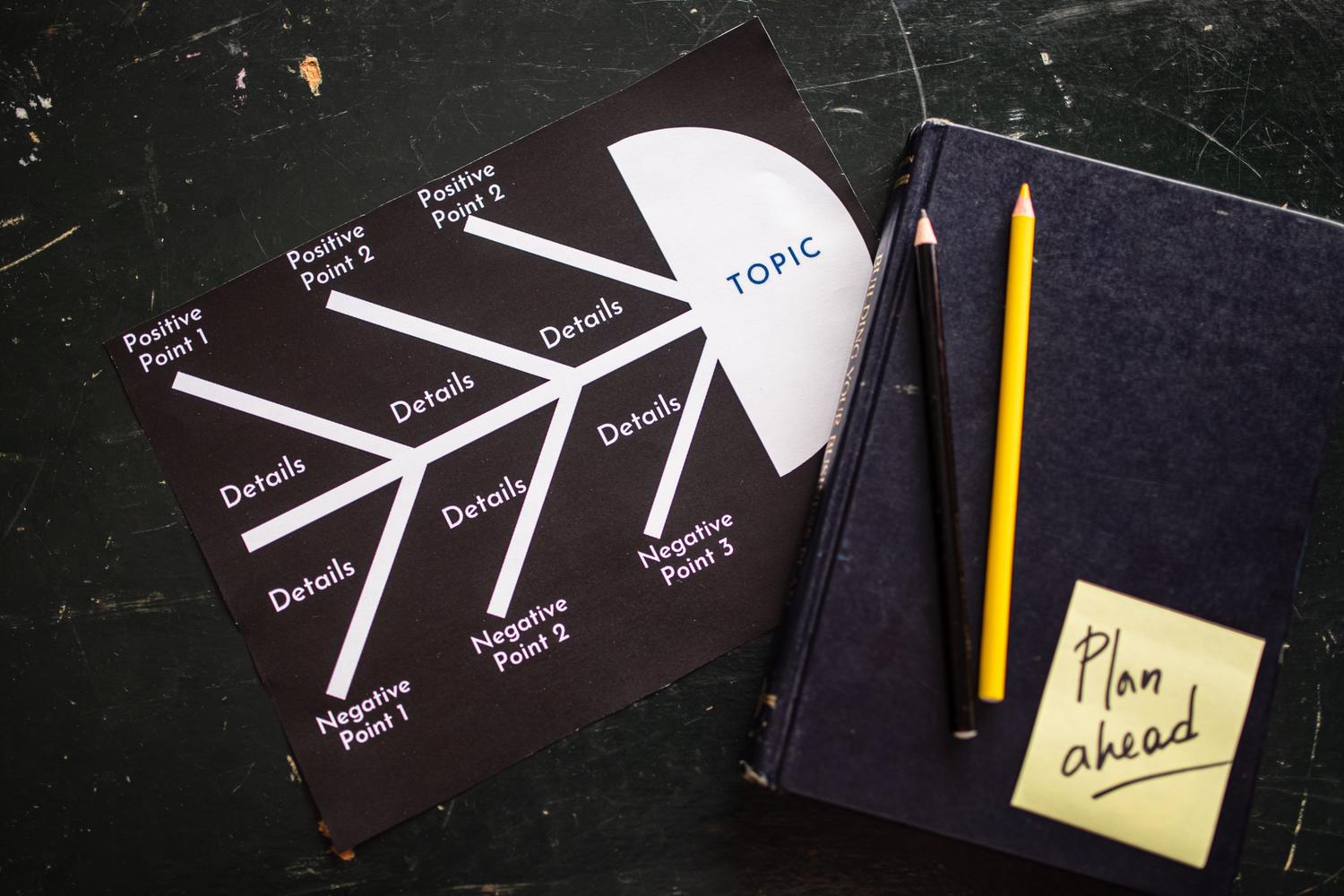
Ausubel explains that this process is based on assimilation, which occurs when new information is integrated into a more general structure. A fascinating point is what he calls obliterative assimilation , which is when, over time, the new and old information merge so much that we can no longer distinguish them; they have become a single, more robust and complex body of knowledge.
Within this framework, there are two key processes for organizing the mind. First, progressive differentiation , which involves moving from the general to the specific. It's like drawing a map: first we mark the continent and then we detail the cities. Second, integrative reconciliation , which occurs when we connect ideas that seemed distinct but share a common basis, restructuring our understanding.
Varieties of meaningful learning

Not all meaningful learning is the same. Depending on the complexity of what we process, Ausubel distinguishes three levels:
- Representations: This is the most basic level. Here we assign meaning to symbols or words. For example, when a child understands that the word "dog" refers to the animal that barks.
- Concepts: Here we are no longer talking about a concrete object, but an abstract idea. To learn a concept, the student must identify the common attributes that define that category and differentiate it from other similar ones.
- Propositions: It is the most elaborate form. It occurs when we combine several concepts to form a new and complex idea. It is the basis of scientific and philosophical thought, since it requires a conscious effort and volunteer.
Conditions necessary for the click to occur
It's not enough for the teacher to be good or the student to be intelligent; three critical factors must align. First, logical meaningfulness : the material must be organized, coherent, and not arbitrary. If the book is chaotic, the brain won't find anything to anchor the information.
Second, psychological meaningfulness . This means that the student must have relevant prior knowledge or "subsumers." If you try to teach advanced calculus to someone who doesn't know how to add, there will be no meaningful learning because there are no anchors available.
Finally, there is the willingness to learn . This is the emotional factor. If the student only wants to pass the exam to avoid getting in trouble, they will rely on rote memorization. For learning to be meaningful, there must be genuine curiosity or a real need to solve a problem.
The role of the teacher and the key tools
The teacher is no longer a transmitter of information, but a guide who designs experiences. One of their key tools is the advance organizer , which acts as a cognitive bridge. These can be introductory (to prepare the ground), expository (for entirely new material), or comparative (to differentiate similar concepts and avoid confusion).
Furthermore, teachers can foster this process through various strategies. Concept maps are ideal for visualizing hierarchies, while analogies help to ground abstract concepts by comparing them to things the student already knows. The use of games and interdisciplinary projects also helps to bring knowledge beyond the classroom and into the student's reality .
Practical applications and current challenges
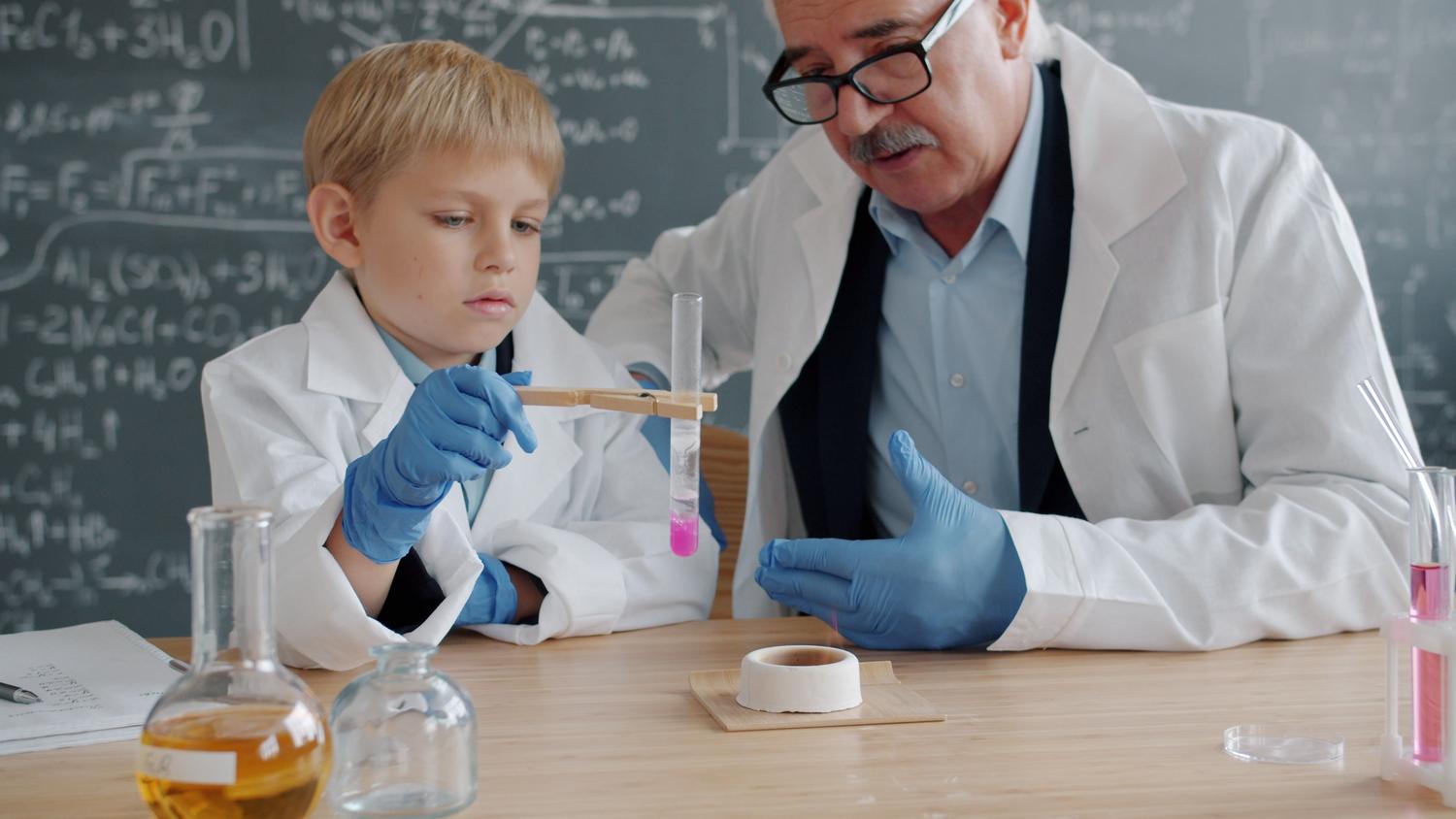
In the classroom, this translates into projects where students solve real-world problems, such as measuring neighborhood air pollution to understand chemistry. At home, parents can apply this approach by connecting math with grocery shopping or science with a walk in the woods, boosting the child's intrinsic motivation .
However, today we face new challenges. With the advent of generative AI , evaluating the final product (an essay or a report) is no longer sufficient, because the machine can do that. Now, what matters is the process footprint : recording what the student knew at the beginning, how their thinking evolved, and how they integrated the feedback. The focus has shifted from "what they know" to "how they learned it."
The key to this model lies in understanding that the most influential factor is the student's prior knowledge. When we enable a person to connect new information with their own experience, we generate a permanent cognitive change that not only helps them pass, but also develops autonomy and the ability to learn how to learn throughout their life.