- The educational events calendar brings together fairs, seminars and accessible resources to better guide training decisions.
- In Spain, major events stand out, such as the Education Week, the Saló de l'Ensenyament, UNITOUR, FIEP and numerous regional fairs.
- The events include international proposals, seminars on cultural rights, and advanced programs in neuroeducation and the VESS Model.
- Planning attendance at these meetings allows you to take advantage of guidance, educational trends, and specialization opportunities.
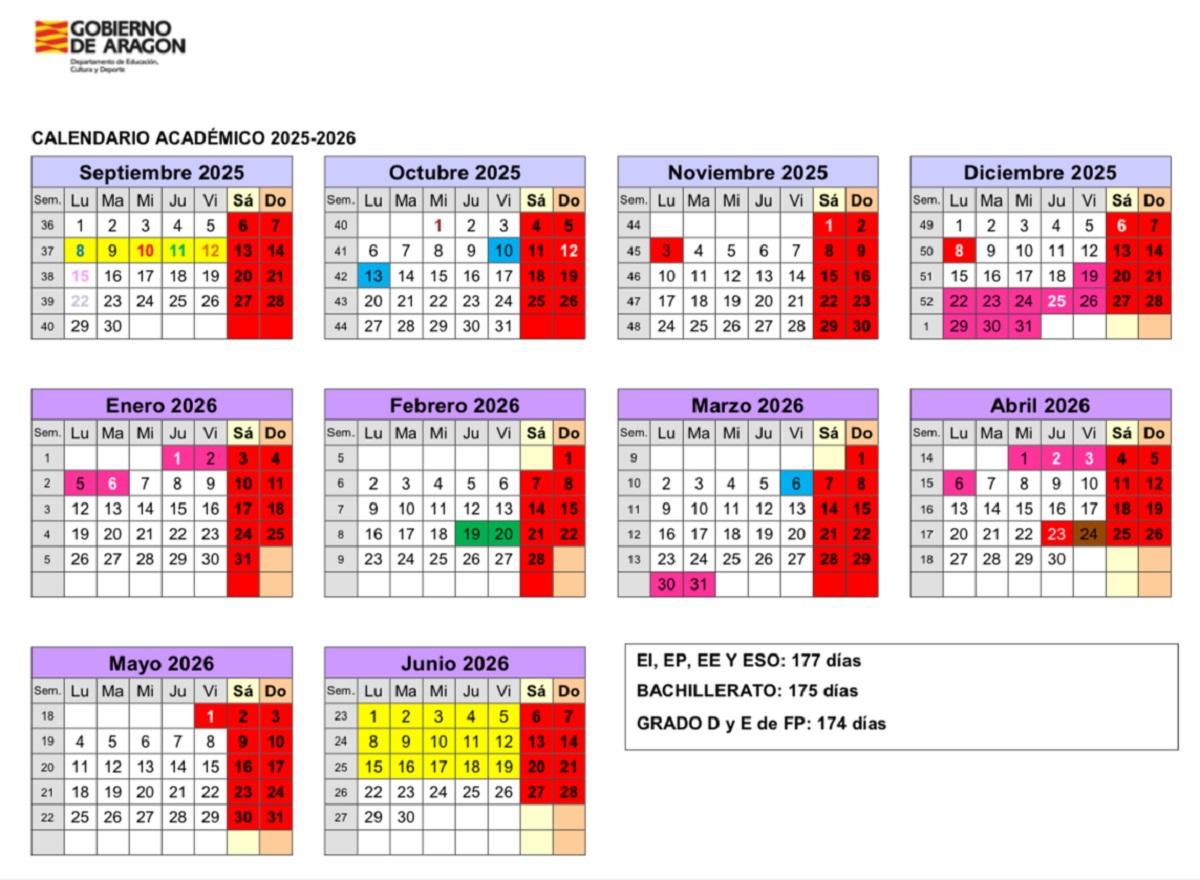
Having a good calendar of educational events has become almost essential for students, families, teachers, and schools. Having fairs, conferences, seminars, and specialized training courses all in one place allows for smart planning of the academic year, the discovery of new educational opportunities, and, in general, navigating the world of education with much greater confidence.
Throughout the year, dozens of educational fairs, exhibitions, and conferences are held in Spain and internationally , ranging from major university guidance events to highly specialized programs in neuroeducation and pedagogical innovation . This article offers a comprehensive guide to the most relevant events, including dates, venues, approaches, and practical tips for getting the most out of them. It also includes resources such as downloadable calendars, accessible formats, and classroom activities.
What is an educational events calendar and why should you care?
When we talk about a calendar of educational events, we are not just referring to a list of random dates; it is an organized plan that compiles fairs, conferences, seminars, congresses, workshops and training relevant to the educational community, ordered by day, month, place and theme.
Many of these calendars come with downloadable PDF versions, iCal files, and even teaching suggestions for direct classroom use. This makes it easier for teachers to incorporate commemorative dates, international days, or educational milestones into their curriculum in a way that is adapted to different ages and needs.
A good educational events calendar usually includes practical information about venues, times, target audiences for each event, and supplementary resources , such as materials available in plain text, cooperative activities, or recommendations for preparing for visits to trade fairs and exhibitions.
Furthermore, the most comprehensive calendars are built following principles of inclusion , normalization and equity , so that the proposals reach all students: activities with different levels of difficulty are proposed, the dates are described in simple language and access is facilitated through assistive technology (TTS, screen readers, Braille lines, etc.).
Major educational fairs in Spain
In the national landscape we find a very varied offer of educational fairs, student halls and training meetings that cover practically all stages: from ESO and Baccalaureate to university, vocational training , postgraduate studies and continuing teacher training.
These fairs are not just for collecting brochures; they are spaces where universities, vocational training centers, business schools, international institutions and companies in the education sector converge , as well as entities that organize camps, extracurricular activities or mobility and scholarship programs.
For many families, teachers, and students, a well-planned visit to one of these fairs can be a game-changer, as it allows them to resolve doubts face-to-face with advisors, learn in detail about the access requirements, and compare educational pathways without having to jump from website to website.
Below is a comprehensive calendar of educational fairs in different autonomous communities , with their locations, dates and strengths so you can decide which ones you are interested in attending.
Saló de l'Ensenyament (Barcelona)
The Saló de l'Ensenyament, held in Barcelona, is a classic event for academic guidance in Catalonia . It usually takes place between March 18th and 22nd, bringing together university degrees, vocational training programs (both intermediate and advanced levels), artistic and sports studies, and many other options.
One of its biggest attractions is that guided tours are organized for school groups , so that schools can take their students with a pre-planned route to make the most of the experience and not miss the most important stands.
Education Week – Ifema (Madrid)
In Madrid, Education Week at IFEMA has established itself as one of the country's major educational events . It usually takes place between March 11th and 15th and includes several exhibitions, such as Aula, for education professionals, and other related activities.
It's an event that brings together families, teachers, students, and educational organizations . It covers secondary and university pathways, vocational training, international studies, language programs, and study abroad options, as well as camps and extracurricular activities.
Education Week also serves as a forum for educational trends , where new methodologies, technological resources , and innovative projects that can inspire real changes in classrooms are presented.
UNITOUR, University Orientation Hall
UNITOUR is a traveling university orientation fair that tours much of Spain : Alicante, Murcia, Palma de Mallorca, Malaga, Cordoba, Seville, El Puerto de Santa Maria, San Sebastian, Bilbao, Santander, Tenerife, Las Palmas, Vigo, A Coruña, Pamplona, Logroño, Vitoria, Castellon, Valencia, Zaragoza, Oviedo, Madrid, Burgos, Valladolid and Leon.
The specific dates for each city are usually updated annually, so it's common to find periods "pending confirmation" until the final schedule is completed. Therefore, consulting the digital calendar and the linked ICAL files is very useful.
This fair plays a key role for those finishing high school or already enrolled in a degree program who want to continue their education with master's degrees or postgraduate programs, as it offers a comparative overview of public and private universities, curricula, career paths, and admission requirements. It is a crucial event for university guidance.
FIEP, International Postgraduate Studies Fair
FIEP (International Postgraduate Studies Fair) focuses on master's, MBA and postgraduate studies , bringing together national and international business schools and universities that present their most advanced programs.
It is also a traveling event, designed for university students who want to specialize and for professionals who are looking to retrain or change their career path through quality postgraduate courses.
Each year, it becomes a hub for networking, offering advice on funding, scholarships, and international programs , as well as showcasing the latest trends in areas such as business, technology, health, and education. It's an opportunity to refresh your skills or give your career a new direction.
Student and Future Professional Fair (Pamplona)
In Pamplona, the Student and Future Professional Fair is held, usually on March 5th and 6th, with a very clear focus on guiding students who must make key decisions about their academic and professional future.
Those who were unable to attend other major fairs in previous years, such as Expoelearning, find here a magnificent opportunity to catch up on training innovations, talks, demonstrations and career guidance services.
Other important trade fairs in Spain
In addition to the major events in Madrid, Barcelona or Pamplona, the calendar of educational events in Spain is complemented by numerous regional and local fairs that offer a more personal approach and are adapted to the needs of each territory.
Fira d'Ensenyaments Superiors (Menorca)
The Fira d'Ensenyaments Superiors is held in Menorca, usually on January 30 and 31, and is especially aimed at students from the Balearic Islands interested in university and postgraduate studies.
Its main value lies in serving as a meeting point for students, universities, and postgraduate centers without the need to travel to the mainland. There, students can clarify issues such as admission requirements, scholarship programs, mobility opportunities, credit transfers, internships, and career prospects.
Student Espai (Valls, Tarragona)
Espai de l'Estudiant, in Valls (Tarragona), usually takes place around March 11th and 12th and reinforces Catalonia's commitment to supporting students in choosing their educational path . It brings together universities, vocational training centers, and other institutions.
Their approach is characterized by being very practical and guiding , helping each person to compare options according to their interests, abilities and expectations, with special attention to the diversity of itineraries.
Benefits of attending educational fairs and exhibitions
Visiting a well-organized education fair offers much more than carrying a backpack full of brochures: the advantages lie in the direct interaction with centers, counselors and professionals , which allows you to clarify doubts that are not always clear on the web.
At these meetings, it is possible to attend talks, workshops, round tables, and demonstrations where educational trends, teaching methodologies, technological resources, mobility programs, and experiences of former students are explained.
Many centers offer personalized guidance services , in which, based on the student's interests, grades and expectations, possible itineraries are recommended, including combinations between vocational training and university, double degrees or studies abroad.
For institutions, fairs represent a great opportunity to publicize their educational project, their values and their pedagogical innovations , as well as to establish contacts with other centers and professionals with which to generate synergies and joint projects.
The following table summarizes some of the most prominent events, their areas of focus, the type of participating institutions, and the main resources they typically offer:
| Fair | Focus areas | Type of institutions | Resources offered |
|---|---|---|---|
| Fira d'Ensenyaments Superiors | University degrees and postgraduate studies | Public and private universities | Academic information, personalized guidance |
| Classroom (Education Week) | University, Vocational Training, International Studies | National and international universities, vocational training centers, language schools | Talks, advice, information on scholarships and mobility |
| Education Fair | Degrees, vocational training, artistic and sports education | Universities, vocational training centers, specialized institutions | Academic guidance, presentation of new degrees |
| UNITOUR | University orientation | Public and private universities | Direct information on access, admission and funding |
| SEEP | Masters, MBA, postgraduate studies | Business schools and universities | Networking, specialized consulting, international programs |
| Student Space | Higher education and academic guidance | Universities and various training centers | Advice, informational material, direct contact |
| TECHSPO | Educational technology and digital innovation | Technology companies, startups, EdTech professionals | Conferences, trend presentations, professional networking |
| ATIA | Assistive technologies and educational inclusion | Accessibility experts, technology companies, educational organizations | Workshops, demonstrations of inclusive solutions, innovation in accessibility |
How to make the most of an education fair
A teacher training fair is the ideal place to catch up on new educational trends, emerging methodologies, and changes in training programs . But to avoid it becoming a aimless stroll, it's a good idea to do some preparation beforehand.
The first thing is to be clear about what interests you: university, vocational training, postgraduate studies, studying abroad, career change … With that idea in mind, it is much easier to select the priority stands, the talks you want to hear and the activities that really add value.
It's also highly recommended to check the event website and the schedule beforehand to plan your route by area or time slot. Many organizers offer interactive schedules where you can mark sessions, download tickets, or even book appointments with guides.
If you are going with your educational center, it is usually a good idea for the teachers to work in class on a small guide of questions to take to the stands: questions about study plans, internships, career paths, admission requirements or scholarship possibilities.
Once there, try not to just pick up brochures: talk to students, faculty, and admissions officers . Their answers usually give a pretty accurate picture of what daily life is like at each institution and what's expected of students.
International educational events and specialized seminars
The calendar of educational events does not end at national borders; every year international meetings, seminars and thematic congresses are organized that can be especially interesting for teachers, management teams and cultural professionals.
One of the most unique proposals is the seminar " Cultural Rights in the Classroom. Create, Learn, Participate ", which is held in Seville, at the Alameda Theatre, on January 30 and 31 and February 1, in the afternoon.
This seminar addresses the idea that school is a key space for participation, creativity, and cultural democracy . Throughout the sessions, participants will explore how to integrate cultural rights into the educational environment so that students can create, learn, and actively participate in the school's cultural life.
Beyond the talks, these spaces allow education professionals to share best practices, build networks, and design collaborative projects that they can then implement in their classrooms or institutions.
Calendars and resources accessible for the classroom
Some educational projects offer an annual calendar accompanied by teaching materials for cross-curricular use in the classroom. It's not just about marking important dates, but about transforming those dates into opportunities for meaningful learning.
Common resources include activity proposals of varying difficulty , designed so that students, working cooperatively, can contribute ideas and produce relevant results without anyone being left out.
To ensure inclusion, an appendix with historical events written in simple language is usually added , which is very useful for working with younger children or students who have communication or reading comprehension difficulties.
Following the principles of accessibility and universal design, these calendars typically offer plain text versions compatible with screen readers, TTS, and Braille displays . This makes it easier for anyone, regardless of how they access information, to use the resource.
In addition, ICAL files are often made available for integration into online calendars (Google Calendar, Outlook, etc.), allowing centers, families, and students to receive automatic reminders of important days and key events.
Education as a social and economic driver
When we look at the number of events, fairs and training programs that appear on the calendar, it becomes clear that education is not just another service: it is a fundamental right and at the same time a true engine of development.
A quality, inclusive and equitable education ensures that all people have real opportunities to learn throughout their lives , regardless of their origin, economic situation or abilities.
In addition to transmitting knowledge, education opens doors, fosters freedom, and enables us to understand our environment in order to act upon it critically, responsibly, and creatively. That is why it is fundamental to individual and collective evolution.
The economic, social, and cultural progress of any society is inextricably linked to the quality of its education system . From the classrooms emerge the future generations who will work in all productive sectors and who will drive new activities and professions.
That is why education is configured as a strategic sector in which governments must invest : in the medium and long term, that investment translates into more productivity, more innovation and better trained and more versatile workers.
VESS training and neuroeducation programs
Within the calendar of educational events we also find very specific proposals for centers that are committed to pedagogical innovation , such as the VESS Educational Model and various neuroeducation programs accredited by universities.
VESS Model training and center accreditation
The VESS Model proposes an educational approach aimed at developing thinking skills, well-being and meaning , and has different training levels (VESS 1 to 5) that many centers carry out progressively.
Only schools that have completed this entire process are eligible for VESS Model Accreditation . These include schools such as Saint Mary's School in Seville and Santa María del Pino in Alella (Barcelona), with training programs that run from September of one year until mid-June of the next.
These accreditations are usually supported by university entities , such as the UB-Edu1st Chair of Neuroeducation, which adds a level of scientific rigor and recognition to the work carried out by the centers.
Among the schools accredited in the VESS Model are names such as Pérez Iborra (Barcelona), La Purísima (Callosa de Segura and Torrevieja), María Asunta (Castalla), María Inmaculada (Jávea), Almedina (Córdoba) or Salzillo (Molina de Segura) , which share experiences and good practices through different meetings.
Mentoring and advanced phases of the VESS Model
The VESS program includes mentoring and support sessions for teaching teams . One example is the "VESS 3 Mentoring Coaching: Holistic Phase" training, held at schools such as Colegio Montepinar in Murcia and Colegio La Milagrosa in Cuenca, with intensive sessions spread over several days.
In these phases, the overall implementation of the model in the center is worked on in greater depth , addressing school culture, pedagogical leadership, evaluation and methodological coherence at all stages.
Another key stage in the VESS training calendar is " VESS 4: Personal Development ," offered on specific dates (for example, in early July in Cuenca or in September in Murcia). These sessions focus on the personal and professional growth of teachers as key figures in educational change.
Neuroeducation program and specialized modules
Alongside the VESS Model, many centers are joining university-accredited neuroeducation programs , which connect discoveries about the brain with daily classroom practice.
One of the most powerful modules is " The value of difference, emotional management and conflict transformation ", taught in centers such as the Almedina School in Cordoba during several consecutive days at the end of June.
It addresses issues such as diversity in the classroom, emotional education, and tools to turn conflicts into opportunities for growth , both for students and teaching teams.
Another relevant module is " Effective Learning: The Body-Brain Connection, " which was conducted, for example, at the Sagrada Familia School in Alzira, also at the end of June. This module explores strategies for aligning movement, emotions, and cognitive processes , thereby optimizing how students learn.
These programs, being accredited by universities such as the University of Barcelona, reinforce the continuous training of teachers and the quality of educational projects that are committed to scientific evidence.
With this whole network of fairs, seminars, accessible calendars and innovation programs , the educational events calendar becomes a strategic tool for planning the course, broadening horizons and making training decisions with more information and less improvisation, both for students and families as well as for teachers, management teams and professionals who experience education from within.