- Defining objectives, narrative, and assessment aligns challenges and missions with the curriculum.
- Evidence reports improvements in motivation, performance and participation.
- LMS and AR facilitate tracking, immediate feedback, and dynamic experiences.
- Teacher training, data ethics, and usability support scalability.
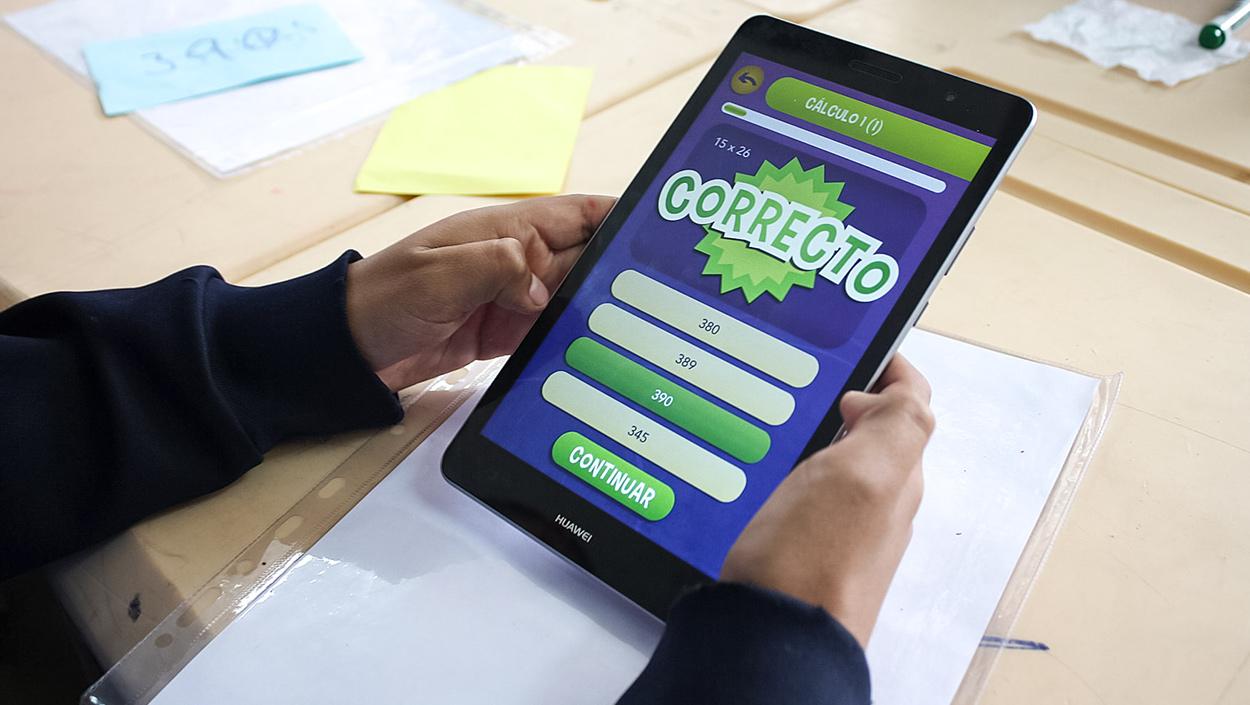
Digital education has embraced gamification as a tool to boost motivation, and within this framework, challenges and missions in virtual classrooms have become central to instructional design. The approach doesn't aim to transform the classroom into a video game, but rather to borrow its mechanics to increase participation, curiosity, and engagement with learning. In this context, emerging pedagogical trends offer useful frameworks for integrating these practices.
Recent literature and collected teaching experiences show that when narrative, clear objectives, and continuous feedback are interwoven with elements such as points, levels, badges, or rankings, students take an active role, make decisions, and progress at their own pace. The available evidence spans from early childhood education to university and vocational training, with studies, reviews, and case studies supporting both the benefits and challenges of this approach, linked to different types of educational innovation.
What are challenges and missions in virtual classroom gamification?
In a gamified project, challenges are specific tasks with defined achievement criteria, while missions group several challenges into a meaningful sequence, usually structured around a story. In virtual classrooms, this structure is deployed through platforms and tools that allow for personalized learning paths, real-time progress tracking, and immediate feedback . The narrative acts as an emotional glue: objectives, symbolic antagonists, allies, and rewards are integrated to maintain the group's attention and interest. These dynamics fit well with various e-learning modalities and virtual environments.
From a motivational perspective, the literature indicates that well-designed gamification aligns with frameworks such as self-determination (intrinsic motivation, competence, autonomy, and relatedness), enhancing engagement and persistence. Theoretical and empirical reviews in higher education have identified that this methodology, when applied judiciously, improves engagement and helps structure student-centered courses . In parallel, studies describe experiences with actionable mechanics in engineering and manufacturing workshops, demonstrating their versatility for practical tasks and showing how games as a tool can articulate educational objectives.
A key feature of online environments is the ability to adjust difficulty and combine individual and cooperative tasks. This allows students to collaborate in teams with defined roles while simultaneously completing personal mini-challenges that contribute points to the group. Continuous assessment is integrated into the gameplay itself through progress boards , badges, and levels, reinforcing the perception of advancement. To design scalable activities, many experiences incorporate educational games as reusable building blocks.
The technological dimension multiplies possibilities: from interactive quizzes, educational escape rooms , and simulations to augmented reality experiences. At the same time, the experience accumulated in educational platforms enables the integration of monitoring, personalization, and evaluation, minimizing friction in daily practice. Resources such as interactive worksheets facilitate the creation of activities with immediate feedback.

Benefits and evidence: motivation, performance and competencies
Recent research syntheses point to positive effects of gamification on variables such as motivation, performance, and participation . Meta-analyses and systematic reviews have quantified improvements in learning outcomes and highlighted the power of symbolic rewards and immediate feedback as facilitators of progress, provided they are designed in alignment with curricular objectives and do not displace intrinsic motivation.
In higher education, several theoretical and empirical studies describe increases in engagement and the acquisition of key competencies (including social and civic competencies) when well-integrated game dynamics are employed. In the field of physical education and sport, reviews and evaluations have documented favorable impacts on motivation and academic performance, suggesting that gamification transcends specific areas and can be adapted to very different disciplines. These findings connect with studies on the characteristics of the modern classroom.
The expansion of scenarios and content is also evident: from sexual health literacy using serious games and gamified mechanics , to mathematics projects supported by ICT, and engineering and manufacturing studies employing actionable design frameworks. This cross-disciplinary approach demonstrates that challenges and missions can be tailored to instrumental, cognitive, and socio-emotional skills.
During the pandemic, analytical articles pointed to gamification as part of the methodological response to accelerated digitalization , while also highlighting the need to improve teachers' digital competence. Along these lines, initiatives such as NANO-MOOCs have emerged to develop teachers' digital skills, enabling more educators to design and maintain gamified learning experiences with technical and pedagogical soundness; comparisons of MOOC platforms that support these initiatives are available.
Bibliometric reviews show a growing field, with lines of research focusing on usability, online collaboration, and platforms that integrate gamification (e.g., widely adopted LMSs). Studies on collaborative learning in gamified environments and on virtual collaboration spaces underscore the value of social interaction structured by missions and roles, as well as the importance of the key technologies that underpin these environments.
Designing challenges and missions: components, narrative, and evaluation
The design process begins by clarifying the skills and knowledge to be developed. From there, the curriculum is distilled into a project with phases, progressive challenges, and achievable objectives. Narrative is the driving force behind engagement: an introductory video, a mysterious message, or the emergence of a shared problem can trigger that initial impulse that places the group within the game's universe. In this process, it is helpful to consider how innovation in education redefines objectives.
In real-world experiences, teachers have created large-scale projects that span an entire course, as well as more focused projects for specific subject areas. These range from time-travel-themed projects for science, to environmental missions for early childhood education, space adventures for science literacy, and communicative storytelling for language arts, all linked by tasks that unlock levels and scenes.
The formation of cooperative teams with assigned roles is common. Teams inspired by narrative universes (for example, clans or houses) enhance immersion, and the creation of characters with avatars and names reinforces the game's identity. Tools such as the development of game cards or the creation of custom game boards facilitate the realization of this universe, even if the main deployment takes place on the center's virtual campus.
Challenges can be presented as comprehensive, playful experiences (breakouts, mystery boxes, riddles, escape rooms) or as traditional educational activities embedded in a narrative (flipped classroom, written exercises with gamified objectives). Both approaches are valid as long as they remain consistent with the story and assessment criteria. For quick-response activities, there are specific tools, such as Kahoot , that facilitate group quizzes.
Regarding rewards and penalties, special care should be taken. Badges, experience points, and privileges must be aligned with the learning objectives and assessment criteria to avoid unintended consequences. For example, it is problematic to grant advantages that contradict the purpose of a test. Points can recognize both problem-solving and cooperation, the quality of submissions, or personal improvement, and can be transferred from the individual to the team to strengthen shared responsibility. Dynamic teaching techniques help integrate these rewards in a pedagogically sound manner.
The assessment is integrated with progress dashboards and rankings, and usually culminates in a final reward consistent with the narrative (for example, a symbolic "card" that grants access to a resource in future tests). It is essential to break down the grading by task type and communicate the rules from the outset to ensure the system is transparent and fair.
To coordinate the entire ecosystem, many schools recommend using official regional or school-specific platforms, along with gamification tools to manage points, roles, and missions. In all technical decisions, compliance with student data protection is paramount: anonymization and the configuration of grade and metric visibility are essential.
Virtual classrooms and tools: from LMS to augmented reality
Virtual learning management systems (LMS) have become ideal platforms for deploying gamified mechanics: modules, topic-based progression, quizzes with multiple attempts and immediate feedback, integration of collaborative activities, and analytics tracking. Recent studies have shown that widely adopted LMSs allow for the consistent implementation of gamification, offering a stable framework for challenges and missions.
Alongside Learning Management Systems (LMS), tools are emerging that focus specifically on managing the entire game (points, missions, inventories, events) and providing quiz and contest services. It's common to see integrations in the virtual classroom with platforms that facilitate the creation of quizzes, rankings, team battles, and visual leaderboards. These resources make designing dynamic activities and real-time tracking more accessible.
Augmented reality adds a sensory layer that enhances engagement. For example, there are apps that, using only the teacher's phone and cards printed by the students, allow for yes/no or multiple-choice quizzes. The group responds by turning their card over and holding it up, while the app automatically scans and recognizes each answer, instantly showing who answered correctly. This type of gamified, simple, and agile dynamic is well-suited to sessions without one-on-one equipment.
In terms of collaboration, online learning experiences have shown that gamified environments foster participation and coordination among peers, especially when shared roles and goals are defined. Creating virtual workspaces with sociocultural support facilitates the transition of new students to the academic culture of the university environment.
Some regional educational platforms integrate gamification with personalization, assessment, and monitoring , and may require selecting the school's region or area for regulatory compliance and proper data management. They also frequently include privacy preference panels (cookie consent, granular settings), so it's advisable to review these aspects before starting a gamified project.
Application by educational stages: early childhood, primary, secondary school and university
In early childhood education, learning activities should consider the students' cognitive and emotional development . Repetitive elements, visual stimuli, music, and symbolic play work very well. Reward boards, songs with movement, and themed mini-games help children learn letters, colors, and habits. Activities like "the challenge corner" or "the action die" transform routines into playful opportunities.
In primary school, autonomy increases and it's possible to make the mechanics more complex : team missions to solve math challenges, card games for vocabulary, or narrative adventures where each activity unlocks phases of the "map." Quiz platforms and interactive resources facilitate monitoring, and if integrated with the school's LMS, teacher control and analytics become even more robust.
In secondary school, there are many designs that blend flipped classroom models with challenges framed within stories. It's viable to alternate traditional written tests with playful experiences (riddles, breakouts), as long as the narrative sustains the progression. Real-world examples showcase settings such as scientific expeditions, terraforming missions, research agencies, or literary universes; the use of roles, clans, and avatars strengthens team cohesion.
In universities and vocational training, the literature describes improvements in motivation, engagement, and performance across multiple disciplines—engineering, manufacturing, business management, and mathematics—supported by ICT. Gender differences and outcomes in health-related areas are also documented with serious games, highlighting the need for inclusive design and the monitoring of indicators to ensure equity.
For teachers who are new to or transitioning to digital teaching, short training strategies (nano courses, micro-credentials) have proven useful for strengthening skills and venturing into sustainable gamified projects. Technical robustness, pedagogical clarity, and institutional support are recurring factors in successful experiences.
Good practices, barriers and how to address them
Recurring barriers include the burden of design and maintenance , the learning curve for tools, over-reliance on extrinsic rewards, potential student fatigue, and equity issues. Recent reviews catalog these challenges and recommend strategies: clarifying objectives, iterating on a small scale before scaling, ensuring a variety of missions, and evaluating the usability of interfaces.
Another area for caution is data ethics : the public visibility of rankings can be demotivating for some individuals; it's advisable to opt for private panels or anonymize identifiers. It's essential to align rewards and penalties with educational criteria, avoiding "prizes" that contradict the evaluation objectives.
Regarding motivational fit, analyses from self-determination theory remind us that game mechanics should support autonomy, competence, and social interaction . Narrative and cooperative challenges help channel this intention, but if the system emphasizes only points or medals, it can generate unintended consequences. A balanced design combines meaningful missions, formative feedback, and choices.
Regarding impact assessment, it is useful to employ methodological triangulation : combining LMS usage data, academic results, perception questionnaires, and teacher observations. This multifaceted approach allows for refining the design through successive iterations and sustaining the project's continuous improvement.
Finally, reviews of gamification challenges highlight the importance of teacher training, clear rules, and time management . Testing the dynamics with small groups, gathering frequent feedback, and adjusting the difficulty level maintain a positive learning curve and reduce frustration.
Trends and Research: From the Post-COVID Boom to Actionable Frameworks
Recent years have seen a remarkable increase in publications on educational gamification, with bibliometric reviews mapping authors, topics, and contexts. The pandemic accelerated the adoption of active learning methodologies on virtual platforms and highlighted the need to strengthen teachers' digital competence, as well as to evaluate which elements of gamification sustain results beyond the "novelty effect."
Several studies highlight the feasibility of implementing gamification in existing LMSs and the effectiveness of collaborative learning in gamified online contexts. In parallel, actionable design frameworks for technical contexts (e.g., machining training) are described, which can inspire other areas requiring practical sequences with continuous assessment.
The relationship between usability and gamification emerges as a key focus: positive user experiences, clear navigation, and consistent mission design encourage adoption. Added to this is the growing interest in experiences within specific disciplines (physics, mathematics, health, business), as well as in analyzing individual and gender differences to ensure inclusive offerings.
In the school setting, compilations of good teaching practices offer inspiring examples with roles, clans, boards, avatars, and rich lore, often with open downloads of materials or guides. Many of these works are accompanied by accessible PDFs or repositories that allow the experience to be replicated or adapted to other schools and grade levels.
Given this context, the design of challenges and missions in virtual classrooms navigates between evidence, creativity, and technical feasibility. Pedagogical planning, compelling storytelling, and careful evaluation form the trio that distinguishes projects that endure and scale.
The combination of studies, reviews, and real-world experiences paints a promising picture: when gamification is anchored in clear objectives and supported by solid platforms , challenges and missions are not just decoration, but a framework for learning better, collaborating meaningfully, and enjoying the process sustainably over time.