- The customs warehouse combines an authorized physical warehouse with a special regime that allows goods, especially those from outside the EU, to be stored without immediately paying import duties or taxes.
- There are public and private customs warehouses, with subtypes depending on who assumes responsibility before Customs, and they allow usual handling, partial releases and a very long stay of the merchandise.
- It is clearly different from the temporary storage warehouse (maximum term of 90 days and few handling) and the non-customs warehouse (VAT tax regime without customs intervention).
- Spanish and EU regulations set requirements for authorization, guarantees and strict control, making the customs warehouse a key tool for optimizing treasury, logistics and competitiveness in international trade.
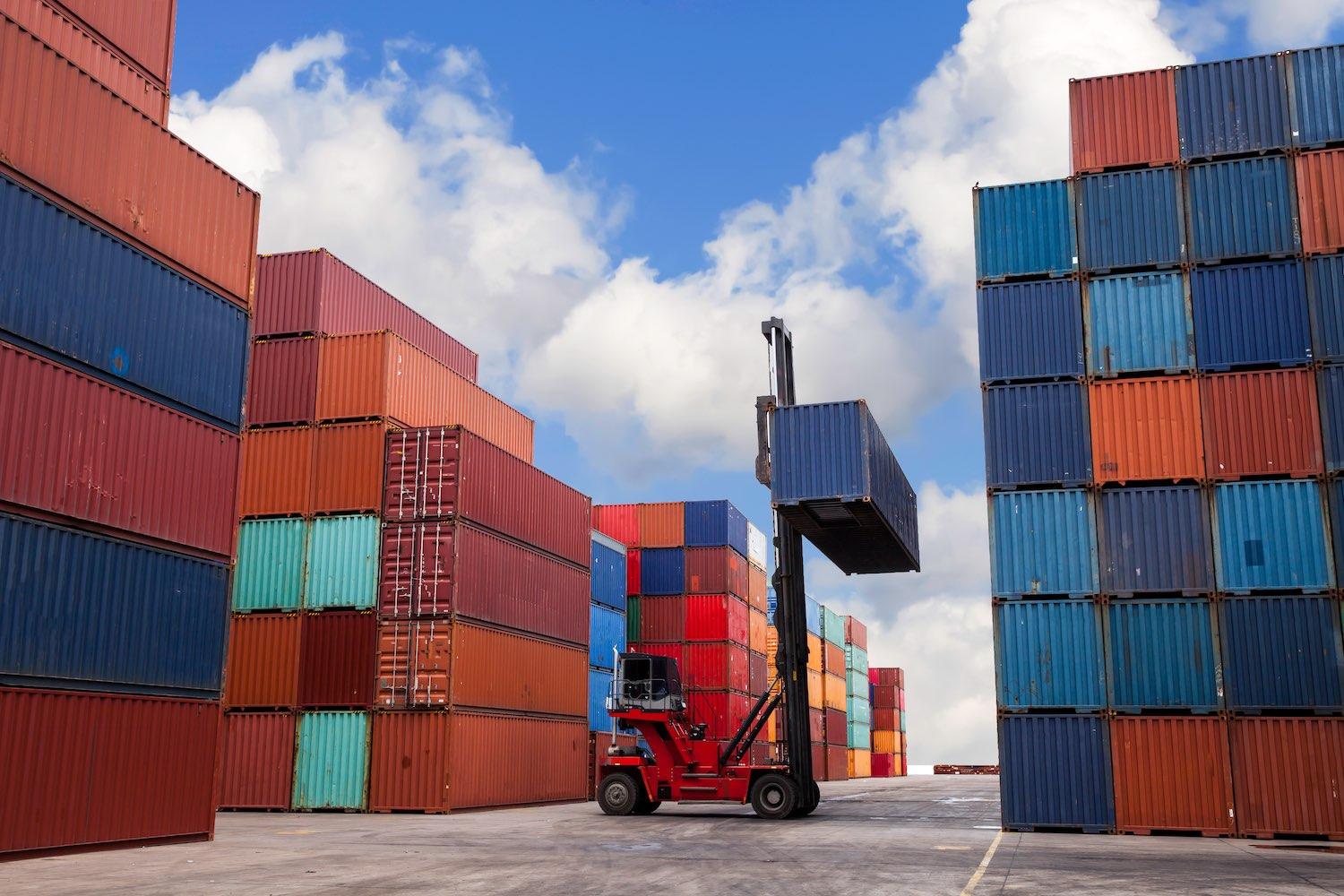
Managing goods entering and leaving the European Union can be a real headache if you're not familiar with the different customs procedures. Customs warehouses are a key tool for gaining flexibility, saving on taxes, and organizing international logistics efficiently.
In the following lines, you will find a comprehensive and accessible explanation of what a customs warehouse is, how it functions both legally and physically , the different types available, its advantages over other facilities (such as customs warehouses, free trade zones, and other similar facilities), and the relevant Spanish and European regulations. The goal is that, by the time you finish reading, you will know whether using one is right for you, how it will affect your taxes, and how it differs from other similar but not identical structures.
What is a customs warehouse?
The term “customs warehouse” has two sides , one practical and one legal, which usually go hand in hand although they are actually different concepts.
On the one hand, from a physical point of view, a customs warehouse is a warehouse authorized by Customs , subject to its permanent control, where imported goods (usually from outside the EU) can be stored without paying customs duties, VAT or other associated charges at that time.
On the other hand, in legal-customs language, the customs warehouse is a special storage regime that allows these goods, while linked to said regime within authorized facilities, to enjoy advantages such as the non-collection of duties, the non-application of certain trade policy measures or the suspension of internal taxes.
In daily practice, both meanings almost always overlap: a request is made to the customs authority to recognize a specific premises as a customs warehouse and, once authorized, it is used to link goods to the customs warehousing regime through the corresponding customs declarations.
As a general rule, only goods from outside the European Union are stored in a customs warehouse . However, when there is a clear economic justification and customs control is not compromised, the Administration may authorize the joint storage of EU and non-EU goods, which is very useful in consolidation or combined re-export operations.

Customs regime and warehouse arrangements
To properly understand the concept, it's worth remembering that a customs regime is the set of rules that govern the movement of goods when they cross a customs border. In the European Union, generally speaking, we can talk about three main groups of regimes:
- Import regime: entry of non-EU goods into the EU customs territory.
- Export regime: export of goods from the Community to third countries.
- Special regimes: storage, transit, processing, among others.
Within these special regimes, which include the customs transit regime , lies the family of warehousing or storage regimes , where we find mainly two types: free zones and customs warehouses (DWs). Each has its own particularities, but they share the logic of allowing storage under customs control with tax advantages.
In Community and Spanish terminology, the customs warehousing regime is defined as that which allows the storage of goods, with the possibility of being subjected to usual handling or other authorized operations, obtaining, depending on the case, benefits such as the non-collection of import duties or other taxes payable on the occasion of importation and the non-application of certain trade policy measures.
The Royal Decree that regulates customs warehouses in Spain, adapted at the time to the community directives and the International Kyoto Convention, establishes that these premises can be located in the peninsular territory and the Balearic Islands , and that goods of any nature, origin or destination can be introduced into them, with the limits and exceptions set by the regulation itself (health prohibitions, safety, protection of heritage, etc.).
How a customs warehouse works in practice
From a logistical point of view, the operation of a customs warehouse can be summarized as follows: the merchandise arrives, is presented to Customs and, instead of being released directly for free circulation, it is linked to the warehousing regime and transferred to the authorized warehouse, where it can remain for an extended period without incurring taxes.
To do this, the importer or their representative submits a declaration of eligibility for the special regime , along with supporting documentation such as invoices, packing lists, transport details, TARIC codes, relevant certificates, etc. Based on their risk analysis, the customs authority may allow the goods to enter directly or decide to carry out additional physical or documentary checks.
Once the arrangement is accepted, the warehouse operator (the company managing the warehouse) must maintain detailed records of entries and exits , accessible at all times to Customs services. In many cases, computer systems connected to or traceable with the Tax Agency are required, allowing for very precise control of the stock under the arrangement.
During their stay in the warehouse, goods may be subjected to so-called "usual handling ," a fairly extensive list of operations intended to preserve the goods, improve their presentation, or group them without changing their essential nature: cleaning, sorting, repackaging, labeling, simple mixing, repair of transport damage, preparation of assortments, ventilation, refrigeration, fumigation, etc.
When the owner decides to remove all or part of the stored lot, the customs exit declaration is submitted , assigning the merchandise one of the destinations allowed by the regulations: release for free circulation (with payment of duties and VAT), re-export, shipment to another free zone or warehouse, linkage to another regime (such as inward processing or transformation under customs control), destruction under control, abandonment in favor of the Public Treasury, among others.

Tax, logistical and commercial advantages of customs warehousing
One of the main reasons operators use this system is the possibility of deferring tax payments . While the goods remain in the customs warehouse, no import duties, import VAT, or other associated indirect taxes are levied (in certain cases, measures derived from the Common Agricultural Policy and trade policy measures also do not apply).
This deferral allows companies to better manage their cash flow : instead of paying VAT and duties upfront on an entire batch that they may sell over months or years, they only pay when the goods leave the warehouse for domestic consumption. And if part or all of the goods are re-exported, the import VAT payment can be avoided altogether.
The bonded warehouse also offers great flexibility in stock management . Partial releases are possible, releasing only the units that have already been sold or are about to be sold, while the rest remain in the warehouse without additional tax costs. This is ideal for just-in-time supply strategies or for goods with medium or low turnover.
In logistical terms, the absence of a general time limit in the Union Customs Code makes customs warehousing particularly useful for goods with a long shelf life or seasonal demand (Christmas toys, seasonal fashion, industrial components, etc.). Authorities can only set maximum time limits when the nature of the goods poses a risk to public health or the environment.
Another strong point is security . These facilities are subject to strict control by Customs: periodic inspections, inventory counts, stock verification, requirements for financial guarantees, bonds… All of this reduces the risk of theft, illegal diversion, or tax fraud, something highly valued by companies that handle high-value or sensitive goods.
Furthermore, the common location of many warehouses in strategic port and airport areas makes the warehouse a top-level logistics hub , very interesting for centralizing international cargo, consolidating shipments and deciding the final destination later depending on how the market evolves.
Types of customs warehouses: public and private
The regulations distinguish, firstly, between public and private customs warehouses , according to who can use them and who assumes primary responsibility for the goods.
A public customs warehouse is one that is open to use by any person or company that meets the required criteria. It is usually managed by a port authority, a logistics operator, or a customs broker with specific authorization. It is the natural option for many SMEs and companies that do not have sufficient volume to consider their own warehouse.
Within public warehouses, the Customs Code and community practice have defined several subcategories, such as DA type A, type B and type F , which differ mainly in who is responsible to Customs:
- Type A: responsibility towards Customs falls on the warehouse manager (the warehouse operator).
- type BThe responsible party is the depositor (the customer who introduces the merchandise).
- Type FThe customs authority itself assumes the management and responsibility of the warehouse.
For its part, a private customs warehouse is reserved for the exclusive use of the owner for goods related to their own business , distinct from storage on behalf of third parties. In other words, the company that obtains the authorization is both the warehouse operator and the depositor of the goods.
In the private sector, there are also nuances: categories C, D, and E have historically served to distinguish between standard dispatch procedures (type C), simplified direct debit procedures (type D), or deposits designed for very specific operations (type E). Although the framework has evolved, the underlying idea is that the type of deposit can be tailored to the specific circumstances of the operator.
In all cases, for the authorization of a warehouse (public or private) it is required to justify the availability of the facilities (ownership, lease or administrative concession), offer sufficient guarantees to ensure compliance with the regulations and establish a bond based on the volumes and nature of the goods to be stored.
Where do non-customs warehouses (DDA) fit in?
In international trade, it is very common to hear, alongside the "DA" ( Customs Warehouse), the term "non-customs warehouse" (DDA) . Although they sound similar, they are not the same and should not be confused, as they have different legal natures.
The DDA is primarily a tax regime , not a customs regime, focused on VAT management. It involves warehouses where certain goods can be brought in without paying VAT at the time of purchase or sale within the premises, representing a significant financial advantage for companies with a Spanish VAT number.
Unlike a customs warehouse, in a customs storage facility (DDA) there is no direct intervention by the customs authority , provided that the goods have already fulfilled their import obligations (tariffs paid, where applicable). It is a VAT optimization tool for goods that can be either EU or non-EU.
The main differences between DA and DDA include:
- Legal nature: DA is a customs storage regime; DDA is a VAT tax regime.
- Type of merchandise: in the DA, the usual goods are from outside the EU; in the DDA both EU goods and goods from third countries are accepted.
- DutyIn the DA, duties are suspended until the goods leave the country; in the DDA, duties have already been paid.
- Tax paymentIn the DA, taxes accrue when the goods leave the regime (except for re-export); in the DDA, VAT is deferred and may not accrue in certain operations within the warehouse itself.
Choosing between a customs warehouse or a DDA (Deposit and Export Facility), or combining both, will depend on the company's profile, its import/export flow , and the type of goods. That's why Authorized Economic Operators (AEOs) often advise their clients on the best combined strategy.
Differences between customs warehouse and temporary storage warehouse (ADT)
Another very common confusion arises between a customs warehouse and a temporary storage facility (ADT). Both serve to store goods under customs supervision, but their logic, timeframes, and handling possibilities are different.
The ADT is a facility where newly arrived non-EU goods are stored from the moment they are presented to Customs until they are assigned to a customs procedure (import, warehousing, re-export, etc.) or directly re-exported. It is, so to speak, a very short-term "parking" area.
The main limitation of the ADT is the maximum stay : regulations set a limit of 90 days. After this period, the goods must be placed under a specific customs procedure or leave the customs territory of the Union. No extensions are permitted beyond those stipulated by law.
In the ADT, moreover, the possibilities for handling are much more restricted . The usual handling procedures cannot be carried out to the same degree as in a customs warehouse, beyond what is strictly necessary to preserve the goods or to prepare them for declaration purposes (for example, weighing or taking samples).
Conversely, a customs warehouse offers unlimited storage time according to the Union Customs Code (with nuances in national regulations) and allows a wide range of standard handling procedures, always under authorization and control. If a company brings goods to a Temporary Storage Facility (TSF) and sees that it will not be able to clear them or decide their destination within 90 days, it is perfectly normal for them to transfer them to a customs warehouse to gain time and flexibility.
Legal framework and key definitions in Spanish regulations
The Spanish regulation of customs warehousing, in addition to the Union Customs Code and its implementing provisions, is based on a specific Royal Decree that develops the concept and updated the regime to align it with the Kyoto Convention and Community directives.
This Royal Decree begins with a series of definitions that should be kept in mind: who is a “person” for the purposes of the regulation (includes natural persons, legal entities and associations with the capacity to act), who is the “depositor” (who manages the deposit), who is the “depositor” (who links the goods to the regime), what is meant by “import duties”, “other taxes payable on the occasion of importation”, “trade policy measures” or what operations are considered “usual handling”.
Among these routine handling operations, the list is very detailed: examination and sampling, inventory, simple repairs, cleaning, selection, classification, filtering, transferring, relabeling, changing containers, simple blending, preparing assortments, ventilation, refrigeration, fumigation, anti-corrosion painting , and much more. It is understood that all these operations are intended to preserve the condition of the merchandise or improve its commercial presentation, without altering its essential nature.
The rule also makes it clear that the customs warehousing regime can be linked not only to goods from third countries, but also to Community or national goods subject to import duties, CAP charges, specific Community regulations or internal taxes, always within the limits derived from permanent or temporary prohibitions (public morality, health, safety, protection of cultural heritage, etc.).
As for the beneficiaries, it is established that any person can manage a customs warehouse , provided that they obtain the corresponding authorization, justify the availability of the facilities and constitute the guarantee that the General Directorate of Customs and Special Taxes considers appropriate based on the expected traffic and the duties that may accrue.
Authorization, control and periods of stay
Authorization to establish and manage a public customs warehouse is granted by the Ministry of Economy and Finance , while for private warehouses, the authority rests with the Directorate General of Customs and Special Taxes. Proof of economic necessity is always required (significant traffic, general foreign trade needs in the case of public warehouses, or specific industry/commerce needs in the case of private warehouses).
The authorization may be revoked or modified if the circumstances that justified it change, if the imposed obligations are not met, if the warehouse ceases to be used for the period established by Customs, or if the traffic that motivated its creation disappears. The type of goods admitted may also be limited according to the characteristics of the facilities or the risks they pose.
The control of the warehouse is exercised under a customs intervention regime . Customs takes the necessary measures to ensure the proper functioning of the system and may require, in addition to inventory accounting, individual guarantees from the depositor in certain cases to cover potential tax liabilities.
Although the Union Customs Code establishes that the time spent in warehousing is not generally limited, Spanish regulations have traditionally stipulated a general maximum period of five years , which may be extended or reduced by Customs depending on the nature of the goods or the type of warehousing involved. Once this period and any extensions have expired, if the goods have not been placed under another customs procedure or legally removed from the warehouse, abandonment proceedings are initiated.
The regulations also provide for the so-called "fictitious deposit ," an exceptional arrangement whereby, for economic reasons and when control is not compromised, goods can be linked to the customs warehousing regime without physically entering a warehouse. In this case, the authorization holder is considered the custodian of a private warehouse and must comply with specific control and guarantee conditions.
This entire legal framework, combined with the tax and logistical advantages, makes the customs warehouse a powerful component of the customs and logistics strategy for many companies, especially those dealing with large volumes, volatile markets, or complex supply chains, and for professionals with training in international trade and customs . When used effectively, it provides much-needed cash flow relief, better organization of goods flows, and a competitive edge over companies that continue to clear everything directly for free circulation without taking advantage of these mechanisms.
When the key elements are considered together - the dual nature of the warehouse, its fit within special regimes, its classification as public and private, its differences with ADT and DDA, the list of usual handling procedures, authorization requirements, guarantees, the possibilities of permanence and options for finalizing the regime - it becomes clear that the customs warehouse is much more than a simple storage facility: it is a legal-fiscal instrument designed to provide oxygen to international trade operations , always under the constant scrutiny of the customs authority.

Table of Contents
- 1 What is a customs warehouse?
- 2 Customs regime and warehouse arrangements
- 3 How a customs warehouse works in practice
- 4 Tax, logistical and commercial advantages of customs warehousing
- 5 Types of customs warehouses: public and private
- 6 Where do non-customs warehouses (DDA) fit in?
- 7 Differences between customs warehouse and temporary storage warehouse (ADT)
- 8 Legal framework and key definitions in Spanish regulations
- 9 Authorization, control and periods of stay