- Free program with in-person sessions at Cine Doré and online sessions for centers anywhere in the country, with advance reservation required.
- Aimed at secondary school, high school and vocational training (12-18 years old), with teaching guides and discussions led by the teaching team and guests.
- Registration by quarter and place in order of request, prioritizing centers participating for the first time.
- Platino Educa Ecosystem with more than 400 works, 240 guides, 35 ELE guides, and related teacher training.
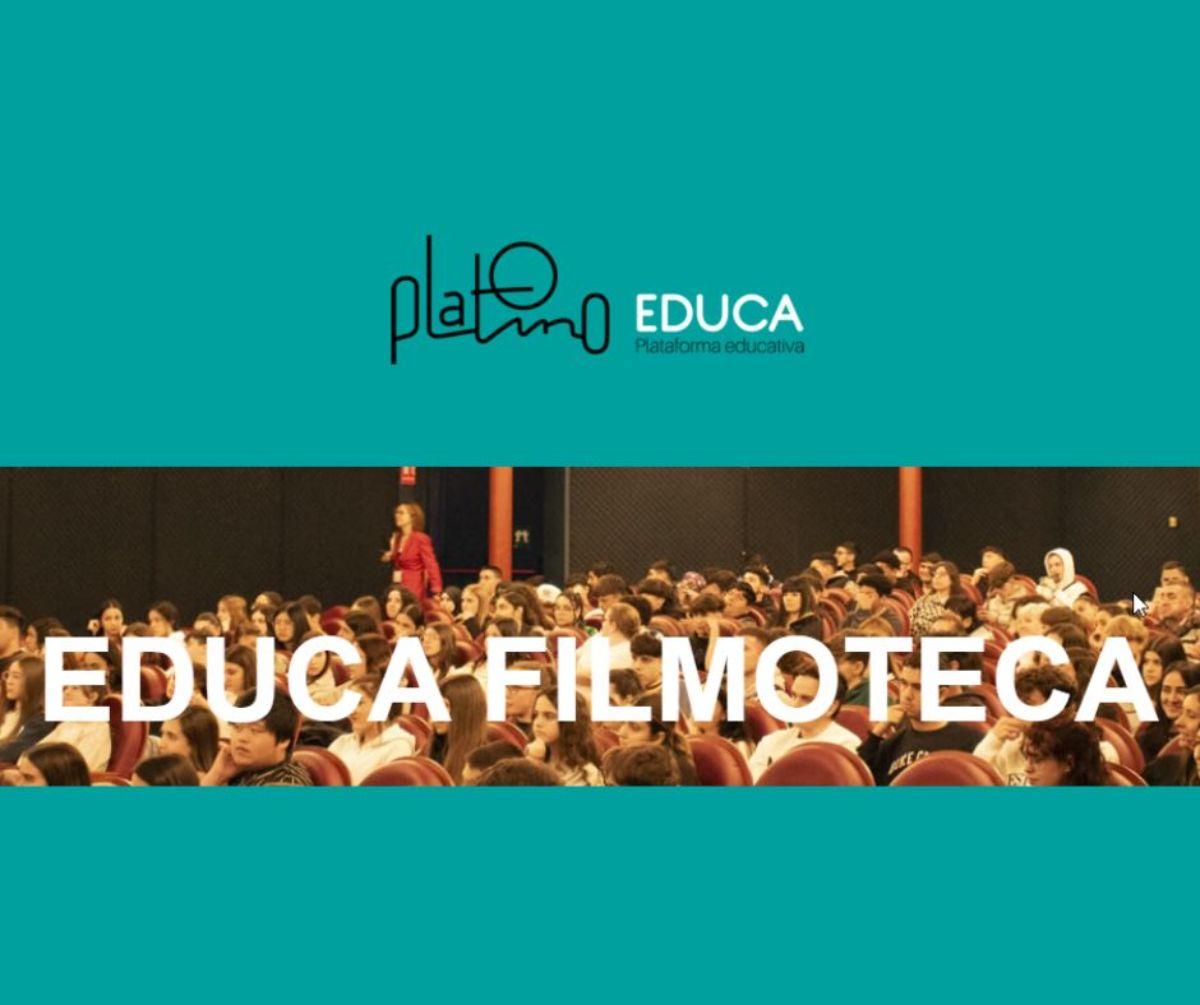
As a teacher, you're surely looking for activities that connect with your students and also develop key competencies. In this regard, EducaFilmoteca for teachers has become an invaluable resource: a free educational program from the Spanish Film Archive that uses Spanish cinema as a tool to develop critical thinking, promote media literacy, and bring the national film heritage into the classroom. All of this is achieved through a participatory methodology and a cross-curricular approach that fits perfectly in secondary education, high school, and vocational training.
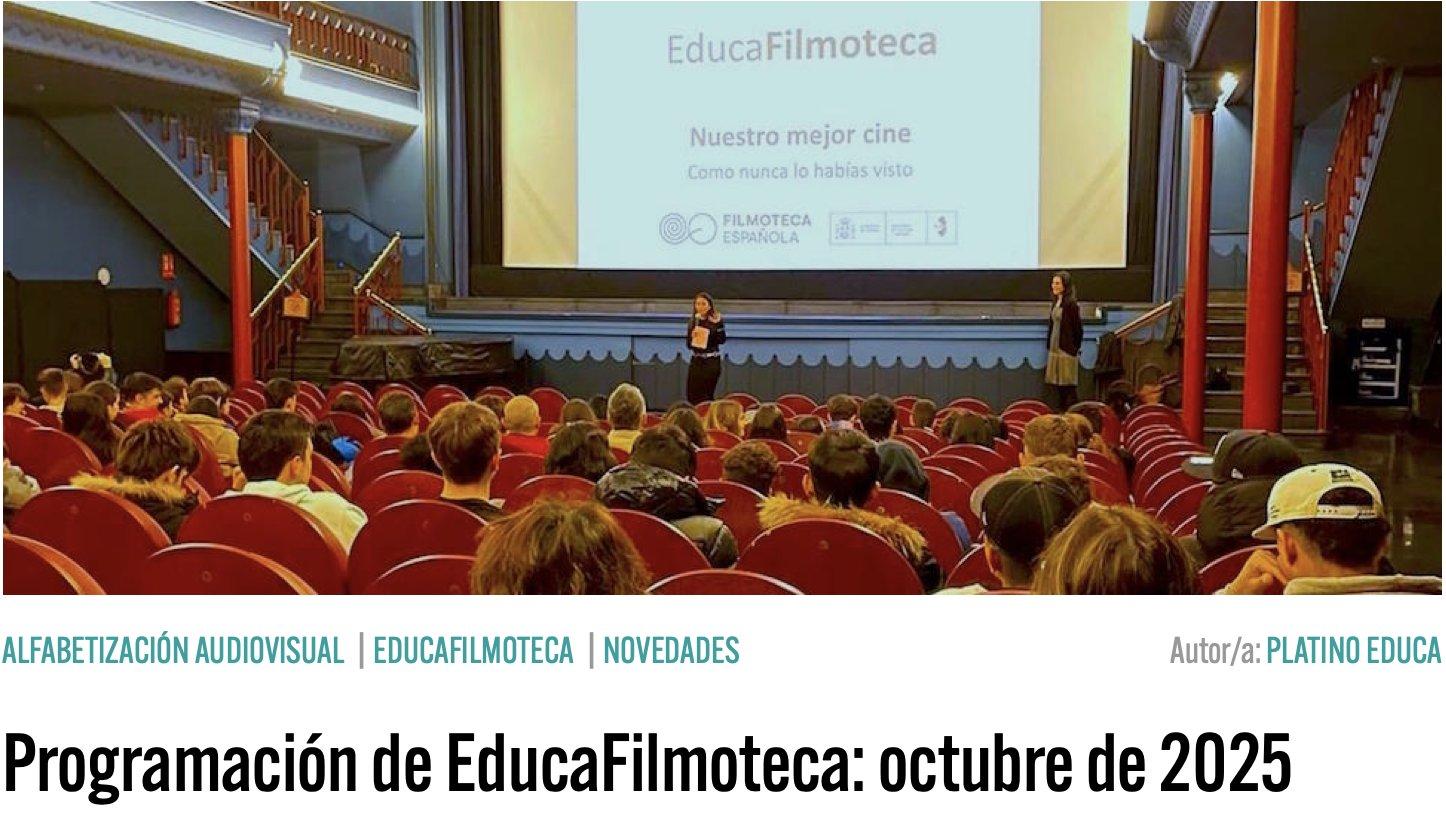
The program combines in-person screenings at the Cine Doré (Madrid) with a robust online component open to schools in any province and even Spanish schools abroad . Each screening is accompanied by an introduction and discussion led by an educational team, and filmmakers and specialists are often invited to contribute to the dialogue with the students. In practice, it is a comprehensive educational experience that brings together cultural enjoyment, guided reflection, and ready-to-use teaching materials for use before and after the screening.
What is EducaFilmoteca and why is it of interest to teachers?
EducaFilmoteca is the educational initiative of the Spanish Film Archive that brings Spanish cinema into classrooms free of charge for schools. Its objective is clear: to cultivate critical, engaged viewers capable of interpreting images as fluently as they interpret text. The films, selected for their educational and cultural value, serve as a springboard for analyzing the historical and social context, exploring audiovisual language, and debating current issues from a humanist perspective.
In each session, students receive an introduction from the teaching team that contextualizes the work: its historical period, key interpretations, the author's intentions, and stylistic features. This is followed by a screening and, finally, a facilitated discussion that usually includes filmmakers, critics, or historians. This structure—presentation, screening, and debate—transforms cinema into a true laboratory of ideas, encouraging students to express themselves, argue their points, and listen respectfully.
The proposal goes beyond simply watching films; it offers a solid pathway to media literacy and an introduction to the history of Spanish cinema. Ultimately, it integrates communicative, cultural, and social skills into a motivating format that is highly adaptable to the curriculum of different educational levels.
In addition to its educational value, the activity is completely free for schools. It only requires prior organization—booking a place and coordinating a schedule—elements that are easy to cover with the information and tools offered by the initiative itself, both in person and online.
To whom it May concern
The program is designed for secondary school, high school, and vocational training students , approximately between the ages of 12 and 18. This age range allows for increasingly in-depth exploration of the content and adaptation of the approach to each stage. For the teaching staff, it represents an opportunity to use film as a cross-curricular resource in subjects such as Language Arts, History, Visual Arts, Ethics, and Communication , to name a few.
Participation is also open to schools in any province and to Spanish schools abroad. This way, groups unable to travel to Madrid have the same opportunity to enjoy the program thanks to the online format, which facilitates screenings at their own school and access to digital discussions during school hours.
Modalities of participation
In-person at Cine Doré (Madrid): Students attend an educational morning session at the Spanish Film Archive (C/ Santa Isabel, 3, Madrid). The complete experience—introduction, screening, and discussion—lasts approximately three hours , from 10:00 AM to 13:30 PM, depending on the film's length. The classic cinema atmosphere and direct interaction with guests make this option a particularly memorable experience.
Online for all regions: the film is shown in class, free of charge and during school hours, followed by a digital discussion via videoconference led by the EducaFilmoteca team. These sessions are usually held on Fridays, from 12:00 to 13:30 (Madrid time), and typically use Zoom or Google Meet. Including the screening and discussion, the total duration of this activity is between 2,5 and 3 hours.
Both approaches share a philosophy and structure: pedagogical contextualization, screenings of Spanish films with high educational value, and a subsequent dialogue that promotes critical thinking, empathy, and oral expression skills. The focus is on learning to observe, to connect what is seen with reality, and to ask questions that open up new interpretations.
Programming and calendar
Each course features a program of films that explores different periods and styles of Spanish cinema. The schedule consists of in-person morning sessions and regular online meetings; for example, online discussions are usually held on Fridays from 12:00 to 13:30 . The film selection always seeks a balance between historical interest, aesthetic richness, and potential for classroom use, with the aim of introducing students to a broad and diverse cinematic heritage .
For the 2025-2026 academic year, a new program with a trimester-based calendar is being launched. The detailed schedule is updated well in advance to allow schools to plan their participation smoothly, and each session is accompanied by teaching materials to facilitate classroom preparation.
Registration, reservations and priority of places
Participation in EducaFilmoteca is free, but prior registration is required . Places are assigned on a first-come, first-served basis, and in the event of a waiting list, priority is given to schools that have never participated in the activity before. This criterion aims to extend the initiative to new groups and ensure equitable access across different regions.
The registration process is organized by trimester throughout the academic year. Schools formalize their reservations through the Platino Educa platform, where they select the modality (in-person or online), available dates, and number of students. For the online modality, all that is required is a computer with an internet connection, a projector or screen in the classroom, and a functional videoconferencing environment at the school.
- Registration on the platform and choice of session: the center chooses the title, date, and modality. The online options also include login details for the session. digital colloquium.
- Confirmation of places: The team organizes reservations in order of request and communicates the allocation. If capacity is full, a waiting list is offered, with priority for centers without prior participation. optimizing access.
- Classroom plan: Teachers receive the teaching guide in advance to prepare the viewing and discussion, integrating the curricular objectives and the evaluation criteria more appropriate to your group.
Teaching resources and support
Each session includes a teaching guide developed by the Platino Educa team. These guides include contextual information, suggested questions, pre- and post-session activities, and methodological tips for classroom use. The goal is to provide teachers with clear and adaptable materials, offering precise guidance for each educational stage.
Furthermore, the initiative complements the process with introductory presentations and interactive discussions. The subsequent dialogue with students is designed to foster interpretations, raise questions, and explore connections with other works or disciplines. When guests—directors, screenwriters, critics, or academics—participate, the conversation is enriched with professional perspectives that bring the craft of filmmaking into the classroom.
Newsletter for teachers: content and collaboration
EducaFilmoteca offers a free and easy-to-subscribe monthly newsletter on film and education for teachers and schools. It features platform updates, teacher testimonials, pedagogical suggestions from the team, articles and interviews with leading figures in film and education, and practical resources for media literacy. It's a great way to stay informed and inspire new classroom activities.
If you would like to contribute experiences or testimonials about film and education, you can write to [email protected] . The publication is edited in Madrid by EGEDA (Entidad de Gestión de Derechos de los Productores Audiovisuales - Audiovisual Producers' Rights Management Entity) and has ISSN 2792-9043. For security reasons, the user's IP address is logged in the comments section of the publication—for example, 178.255.231.254 —to prevent misuse.
Strategic allies: Platino Educa, ICAA and UAEE
Platino Educa is EGEDA's film and education platform, which, in addition to managing EducaFilmoteca through a public contract, promotes numerous resources for teachers. It maintains an agreement with the ICAA (Spanish Institute of Cinematography and Audiovisual Arts) for program management and, in parallel, has been selected to continue offering the 'Veo en español' (I Watch in Spanish) portal from the Educational Action Unit Abroad (UAEE) of the Ministry of Education and Vocational Training. This tool, available to schools within the UAEE network, is geared towards promoting Spanish language and culture.
The Platino Educa catalog includes over 400 audiovisual works, 394 of which are subtitled in languages such as Spanish, English, and French. In addition, there are more than 240 teaching guides and 35 ELE guides to facilitate learning Spanish as a foreign language at different levels, as well as thematic features, virtual meetings, PISA resources, courses for teachers, and an official blog with case studies that demonstrate the portal's pedagogical value .
According to the most recent data, the 'Veo en español' portal reaches more than 134.500 students and 10.700 teachers across the UAEE network in 47 countries. The platform registers an average of 1.000 views per month and has 3.470 users in 38 UAEE territories. The United Kingdom and Ireland stand out in terms of usage and views, as well as France, Germany, Belgium, Switzerland, the United States, and Morocco, among others, highlighting the international reach of the film education ecosystem.
Data and results from recent editions
Since 2018, EducaFilmoteca has brought the history and diversity of Spanish cinema to thousands of students. In 2022, Platino Educa took over the management of the program through a public tender, maintaining the Filmoteca Española's identity and strengthening the link between the classroom and filmmaking with special guests in each series. This coordinated effort guarantees educational quality and continuity in programming.
During the 2022-2023 academic year, 19 sessions were held (12 in-person and 7 online) with a total participation of 3.804 students from 68 schools. The ongoing program has offered 23 sessions (12 in-person and 11 online) and is expected to conclude in mid-June, demonstrating a stable schedule and growing demand from schools.
The participation of filmmakers and industry professionals adds significant value, much appreciated by the faculty. Previous editions have featured, among others, Alejandro Amenábar, Leticia Dolera, Fernando Trueba, Paco León, Celia Rico, Paco Plaza, and Cecilia Bartolomé, generating discussions rich in questions and learning about film language, narratives, and the craft of filmmaking.
Satisfaction surveys underscore the positive reception: a majority of teachers and coordinators rate the experience highly. In some reports, more than half of the teachers rated their satisfaction as very high, and a significant portion as high; among coordinators, outstanding ratings exceed 90%. Furthermore, it is clear that the pedagogical objectives are being largely met session after session.
Movies, examples and teaching potential
Among the films explored online are 'Buñuel in the Labyrinth of the Turtles' and 'Raise Ravens,' works that open doors to aesthetic, historical, and emotional analysis. The guides propose activities to contextualize the filmmakers, draw connections with other art forms, and explore film language through concepts such as framing, editing, sound, and mise-en-scène.
The session design fosters an orderly and respectful exchange of ideas. The teaching team poses thought-provoking questions, gathers the group's contributions, and guides the conversation to delve deeper into the content and connections. Guests frequently share anecdotes from filming, creative decisions, or intertextual references that help students analyze the film with greater depth and rigor.
In addition, the materials include pre- and post-viewing exercises: glossaries, character maps, sequence analyses, review writing, structured debates, and short audiovisual pieces created by the students themselves. All of this reinforces communicative competence and critical thinking from a practical and motivating perspective for the classroom.
Screening and debate: session rhythm
The core structure—presentation, screening, and discussion—is tailored to school hours. In person, the entire session takes place between 10:00 and 13:30 (approximately), and online, the discussion is scheduled from 12:00 to 13:30 (Madrid time), following the classroom screening. This format ensures sustained attention and allows for a reflective closing with the group before returning to the classroom.
In both cases, the goal is to ensure that the discussion is not an addendum but a learning opportunity in itself. Students are encouraged to listen, argue with evidence, compare interpretations, and formulate new questions that can continue the work in the classroom. In this way, the session becomes a catalyst for subsequent projects, teaching units, and assessable activities.
Practical information and contact
To resolve specific questions about mediation or complementary organizational aspects, some of the resources provided include contact methods such as email [email protected] and telephone 962 753 492 (9:30 a.m. to 15:00 p.m.). These contacts are useful for inquiries related to educational screenings and activities, especially in initiatives with institutional collaboration within the audiovisual field.
If your center will be participating online, remember to check in advance the internet connection, the audio quality in the classroom, and access to the videoconferencing platform designated for the discussion (usually Zoom or Meet). A quick technical test the day before prevents last-minute problems and ensures that students can focus on the educational experience.
Supplementary materials and documentation
Throughout the courses, various guidance materials have been published. One of the shared documents was the dossier 'EducaFilmoteca 2021 – Virtual Format', which summarized the working approach, the structure of the sessions, and recommendations for getting the most out of the online format. Although the content is updated each year, this type of guide serves as a reference for understanding the program's basic methodology.
In addition, the Platino Educa ecosystem offers training courses, virtual meetings, and a blog featuring real classroom experiences. These exchange spaces provide ideas for connecting films with curriculum content, assess audiovisual skills, and suggest rubrics or activities—such as dialogic discussions, Oxford debates, or comparative analyses—that amplify the impact of each session.
If you're planning your course and wondering about effective resources, EducaFilmoteca combines the best of both worlds: the allure of a traditional movie theater and the accessibility of online sessions; inspiring guests and downloadable materials ; a catalog of significant films and support designed for your daily classroom use. With easy registration, priority for schools joining for the first time, and an active teaching community, it's a program capable of transforming an ordinary morning into a lasting learning experience, and making film a powerful and accessible tool for teaching students how to watch and think.
Table of Contents
- 1 What is EducaFilmoteca and why is it of interest to teachers?
- 2 To whom it May concern
- 3 Modalities of participation
- 4 Programming and calendar
- 5 Registration, reservations and priority of places
- 6 Teaching resources and support
- 7 Newsletter for teachers: content and collaboration
- 8 Strategic allies: Platino Educa, ICAA and UAEE
- 9 Data and results from recent editions
- 10 Movies, examples and teaching potential
- 11 Screening and debate: session rhythm
- 12 Practical information and contact
- 13 Supplementary materials and documentation
