- CESEDEN is Spain's main joint military teaching center, responsible for Higher Studies of National Defense and the dissemination of defense culture.
- It is functionally dependent on the Undersecretariat of Defense and the General Secretariat of Defense Policy, and integrates schools, institutes and commissions such as ESFAS, IEEE, DCDD and CEHISMI.
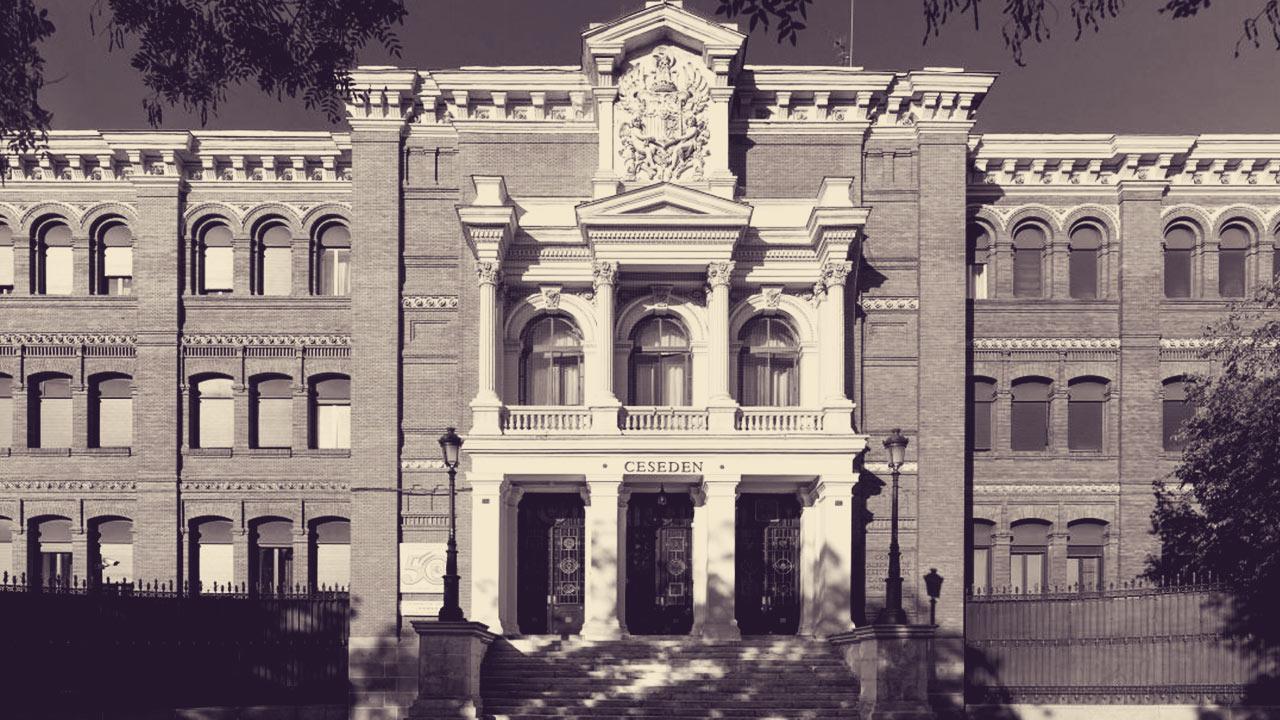
- Its headquarters is a historic mansion on the Paseo de la Castellana, designed by Ricardo Velázquez Bosco, which stands out as one of the last great eclectic buildings in the area.
- It promotes research and publications on military history and strategy, such as studies on Irish family sagas in the Spanish military, strengthening the overall understanding of national defense.
The Higher Center for National Defense Studies (CESEDEN) is today one of the most unique spaces where the military and civilian worlds intersect in Spain. Located on the Paseo de la Castellana, its history blends a rich educational tradition, defense culture, strategic research, and a highly regarded architectural heritage in Madrid. Far from being just a military academy, it has become a true meeting point for high-ranking officers, security specialists, and prominent figures from various professional fields.
CESEDEN is an auxiliary governing body of the Armed Forces , integrated within the structure of the Ministry of Defense . Its main mission is to deliver the Advanced Studies in National Defense courses and other advanced academic programs related to security and defense, both for military personnel and for civilian professionals with relevant responsibilities in these areas.
Functionally, CESEDEN reports to both the Undersecretariat of Defense and the General Secretariat for Defense Policy , allowing it to be closely involved in strategic defense decision-making. This dual functional reporting structure reinforces its role as a high-level think tank and training center, aligned with the core principles of Spanish security policy.
As the main joint military training center, CESEDEN is responsible for training general officers, senior commanders , and other personnel of the Armed Forces. But its activities are not limited to the military sphere: its classrooms also host high-ranking officials, academic experts, institutional representatives, and influential figures from the private sector, with the aim of strengthening ties between society and the Armed Forces and fostering a deeper mutual understanding.
This inclusive approach is reflected in the fact that CESEDEN has developed a robust program of research, analysis, and dissemination of defense culture . Its lines of work range from the study of geopolitical conflicts and risks to historical, doctrinal, and strategic thinking issues, encompassing emerging fields such as cybersecurity , defense diplomacy, and international cooperation.
Since 1999, CESEDEN has integrated the Higher Schools of the Armed Forces into its structure , schools that originated in the 19th century (from 1842 onwards). In this way, over a century and a half of experience in advanced military training, progressively adapted to postgraduate standards and the demands of current international scenarios, has been concentrated under a single institutional umbrella.
History, creation and evolution of CESEDEN
CESEDEN was officially created in 1964 and has been active since January 16, 1964 , marking the beginning of its trajectory as a leading center for defense studies in Spain. In its more than six decades of existence, it has adapted its training programs and structure to the political, social, and strategic changes in the country and the international environment.
The context of its founding stemmed from the need to unify and raise the level of higher military education , promoting a shared vision among the three branches of the armed forces (Army, Navy, and Air Force). The idea was to offer comprehensive training that combined military, legal, political, economic, and social knowledge, essential for addressing the growing complexity of national defense.
Over the years, CESEDEN strengthened its role until, in 1999, a key integration took place: the various Higher Schools of the Armed Forces were grouped into this center, thus inheriting a teaching tradition that dates back to 1842. This step meant the definitive consolidation of CESEDEN as a central pillar of higher military training in Spain.
Throughout its evolution, the center has also incorporated a distinct civilian dimension. It is increasingly common for its courses to include the participation of professionals from outside the Armed Forces , ranging from high-ranking officials to specialists from the private sector, as well as academics and analysts. This mix of profiles helps shape a vision of defense that is not limited to strictly military matters, but encompasses human, economic, technological, and social security.
Currently, CESEDEN is considered a fundamental node within the Spanish defense system, not only for its teaching work, but also for its ability to generate strategic thinking and debate , producing studies, publications and activities that feed into the design and review of security and defense policy.
Mission, functions and teaching activity
The core mission of CESEDEN is to deliver Advanced Studies in National Defense , primarily aimed at general officers and senior commanders of the Armed Forces. These programs address both the military dimension of defense and its political, economic, and social implications, seeking a comprehensive understanding of current and future challenges.
In addition to these top-level courses, the center organizes other specialized academic programs , seminars, workshops, and continuing education activities for military and civilian personnel. These formats cover topics such as peacekeeping operations, international alliances and organizations , crisis management, terrorism, cyber defense, the defense industry, and strategic communication.
A distinctive feature of CESEDEN is its commitment to collaboration with public universities , defense university centers, and other public and private entities. To this end, agreements are signed that allow for the delivery of recognized postgraduate programs, the sharing of faculty and resources, the promotion of joint research projects, and the facilitation of the participation of external experts.
These collaborations have led to the creation of postgraduate degrees and joint programs that blend the operational experience of the Armed Forces with the academic rigor of the university system. In this way, CESEDEN is integrated into the European Higher Education Area and aligns itself with university quality and accreditation criteria.
The center's work extends beyond the classroom. It also promotes applied research and strategic thinking projects , often channeled through the Spanish Institute for Strategic Studies or other affiliated bodies. These initiatives result in publications, analytical documents, military history journals, monographs, and public activities that help to disseminate a culture of defense among the public.
Organic structure and dependent organisms
To carry out all its functions, CESEDEN has a complex organizational structure that integrates various schools, departments, and specialized institutes . All of these work in a coordinated manner to offer a broad and coherent range of training and research programs.
The center is headed by a director , currently Miguel Ballenilla y García de Gamarra, who is responsible for academic leadership, internal management, and institutional representation of CESEDEN. Under his direction, all the bodies and units that make up the center are organized.
Several key entities report directly to CESEDEN:
On one hand, there is the Higher School of the Armed Forces (ESFAS) , which is responsible for the advanced training of officers and commanders of the Army and Navy in operational, strategic, and joint operations. This school is one of the central components of the CESEDEN's educational structure.
On the other hand, there is the Spanish Institute for Strategic Studies (IEEE) , an organization dedicated to research and analysis of strategic, security, and defense issues, from both national and international perspectives. Its work, disseminated in the form of documents, reports, and journals, has become a key reference for specialists and policymakers.
Also part of CESEDEN is the Department of Culture and Defense Diplomacy (DCDD) , which promotes the external projection of the Armed Forces, defense diplomacy and cultural initiatives, contributing to strengthening the image of Spain and its defense policy abroad.
Finally, the Spanish Commission for Military History (CEHISMI) was established , focusing on the study, preservation, and dissemination of Spanish military history. This commission coordinates research, conferences, publications, and conservation efforts related to the historical heritage of the Armed Forces.
The building: a historic mansion on the Paseo de la Castellana
The current headquarters of CESEDEN is located in one of the most unique mansions on the Paseo de la Castellana , in the Ensanche district of Madrid. This building has been linked to the world of education since its inception, maintaining this educational vocation for over a century.
The building stands opposite the former Cerro del Viento, also known as Altos del Hipódromo , an area now occupied by the School of Industrial Engineers and the National Museum of Natural Sciences. Its location on one of the capital's main thoroughfares makes the mansion a prominent feature of Madrid's cityscape.
The building is the work of Ricardo Velázquez Bosco (1843-1923) , an architect from Burgos and one of the most important figures in Spanish architecture of the late 19th and early 20th centuries. Since its construction, the building has been considered one of the emblematic examples of Madrid's eclectic architecture, combining classical elements with a very balanced composition.
One of the most striking features of the building is its understated yet elegant red brick façade , which lends a distinctive character to the complex. This façade, with its simple, classic lines, remains a visual landmark on the Paseo de la Castellana, standing out from the more modern buildings that surround it.
The CESEDEN mansion is also one of the last remaining large historic residential buildings on that stretch of the promenade, where numerous aristocratic and bourgeois residences once stood. Its preservation and use as a research center help to keep alive a very significant part of Madrid's architectural heritage.
Relationship with defense culture and military history
Beyond its teaching activities, CESEDEN has established itself as a hub for promoting defense culture among the public. Through open lectures, publications, and collaborations with other institutions, the center aims to bring the reality of the Armed Forces and the role of defense in a democratic society closer to the general public.
In this context, his involvement with publishing initiatives such as the Cuadernos de Historia Militar (Military History Notebooks ) is particularly relevant . This series of studies delves into various episodes, figures, and processes in Spanish military history. Within this collection, for example, is the volume dedicated to Irish family sagas in the Spanish military , which aptly illustrates the depth and historical rigor of the work promoted in this area.
This volume, which continues the line of inquiry begun in a previous booklet on French family sagas, addresses the presence of Irish soldiers in the service of the Spanish Crown from a very specific perspective: that of the family lineages that endured over time . Surnames such as O'Neill, O'Sullivan, O'Reilly, McSweeney, Tirry, Lacy, Kindelán, and O'Donnell, among others, are analyzed.
These Irish clans served in the armies and navies of the monarchs of the Habsburg and Bourbon dynasties from the late 16th century well into the 20th. Their service took place both in the European territories of the Spanish Monarchy and in its American possessions, leaving a profound mark on the evolution of the Spanish armed forces.
The distinctive feature of the so-called "Irish nation," as highlighted by the specialists who authored this volume, lies in the strength of its ties with the Spanish armed forces . Unlike other foreign contingents, the Irish integrated very well and maintained a long period of continuous service, sharing values, aspirations, and a sense of duty with their Spanish counterparts.
This continuity has allowed for the study of extensive and long-lasting lineages , which serve as evidence of the transformation and professionalization of the Spanish Army over several centuries. Alongside these major families, the volume also focuses on smaller or overseas groups, located in specific contexts, which help to complete the picture of the Irish presence in the Spanish military.
Works like this fit perfectly into the line of action of the Spanish Commission of Military History (CEHISMI) and of CESEDEN itself, which promotes high-level research on the military history of Spain, its international dimension and the contributions of military personnel of different nationalities to the construction of the current Armed Forces.
Institutional environment, resources and digital presence
CESEDEN is fully integrated into the institutional framework of the Ministry of Defense, as part of the Spanish Armed Forces and the Defense Staff. Its headquarters are located in Madrid, which allows for constant interaction with other central government bodies and with a broad network of universities and cultural institutions.
In addition to its in-person activities, the center maintains an active presence in the digital environment , including through its official website at defensa.gob.es/ceseden. This portal provides information about its training programs, relevant news, a calendar of events, and access to resources and publications of interest.
In the area of documentation and research, CESEDEN also relies on the integration of bibliographic resources and specialized databases . Among these is Dialnet, one of the main platforms for disseminating scientific output in Spanish, which allows users to locate articles, books, chapters, and other materials related to defense studies, strategy, military history, and related subjects.
Its role as a military training center for advanced studies places it in a unique position within the categorization of public facilities. Although it doesn't fit the typical labels of cultural, sports, or leisure buildings, it shares with many of them the character of an institutional space open to collaboration with the civilian community.
This reality means that, in some listings and directories, it may appear linked to categories related to cultural facilities, event centers or buildings of interest , since its headquarters hosts events, conferences and meetings that transcend the strictly military and have a clear cultural and academic component.
At the same time, CESEDEN maintains relationships with other affiliated organizations and institutes that broaden its scope of action: think tanks, universities, foundations, museums and entities specializing in international relations, security, defense and historical-military heritage, both in Spain and abroad.
In the broader public sphere, defense and security issues are also present on social media and communication platforms , although access to some content may require compatible browsers and appropriate configuration (e.g., with JavaScript enabled). This demonstrates how the conversation about defense has partly shifted to the digital realm, in parallel with traditional academic forums where CESEDEN plays a leading role.
With over sixty years of history and a prime location in Madrid, the Higher Center for National Defense Studies has established itself as an essential institution for training, research, and dissemination of defense culture in Spain. Its combination of history, unique architecture, high-level programs, collaboration with universities, and commitment to the rigorous study of military history—including contributions such as the Irish sagas in the service of Spain—makes it a unique meeting point between the Armed Forces and society, where the past, present, and future of national defense are constantly analyzed and debated.