- Analyzes educational projects, methodology, languages, and attention to diversity with real evidence.
- It balances proximity, resources and facilities with coexistence, values and verifiable results.
- Learn about the admissions process and associated costs to avoid surprises and plan well.

Deciding to enroll a child in school when they reach preschool age is not a simple matter; it's a pivotal moment that will shape their learning, friendships, and daily well-being. Choosing a good school is a concern for all families because we often feel that making the right or wrong choice will influence our children's learning pace and happiness for years to come.
The reality is that there's no single perfect school for everyone, but rather one that's best suited to each child and each family. To make an informed decision, it's important to consider location, educational philosophy, methodology, languages offered, student-teacher ratios, facilities, school climate, academic performance, costs, and the admissions process . In the following lines, you'll find a practical, comprehensive, and realistic guide to help you compare options, visit schools with discernment, and make a choice that aligns with your values.
Types of centers: public, subsidized and private
First of all, it's important to clarify the basic differences between the systems. The public school system is funded and managed by the government , with a national curriculum and free compulsory education. The private system is funded and managed by private entities, and therefore has greater autonomy and fees, although it follows the official curriculum.
Between these two extremes lies state-subsidized private education: privately managed but publicly funded . In Spain, a significant portion of these schools are religiously affiliated, and in many regions, their influence is considerable. This means you'll find state-subsidized private schools with high standards but admissions policies similar to those of public schools.
The important thing is to analyze the fit with your family: choose by comparing educational projects, resources, methodology, languages, values, and real daily costs . There isn't one universally best option, but rather the one that meets your expectations and your child's needs.
If you're considering private schools, remember that admissions are handled by each individual school and may include interviews or tests . In public and semi-private schools, the admissions criteria are regulated and based on a points system.
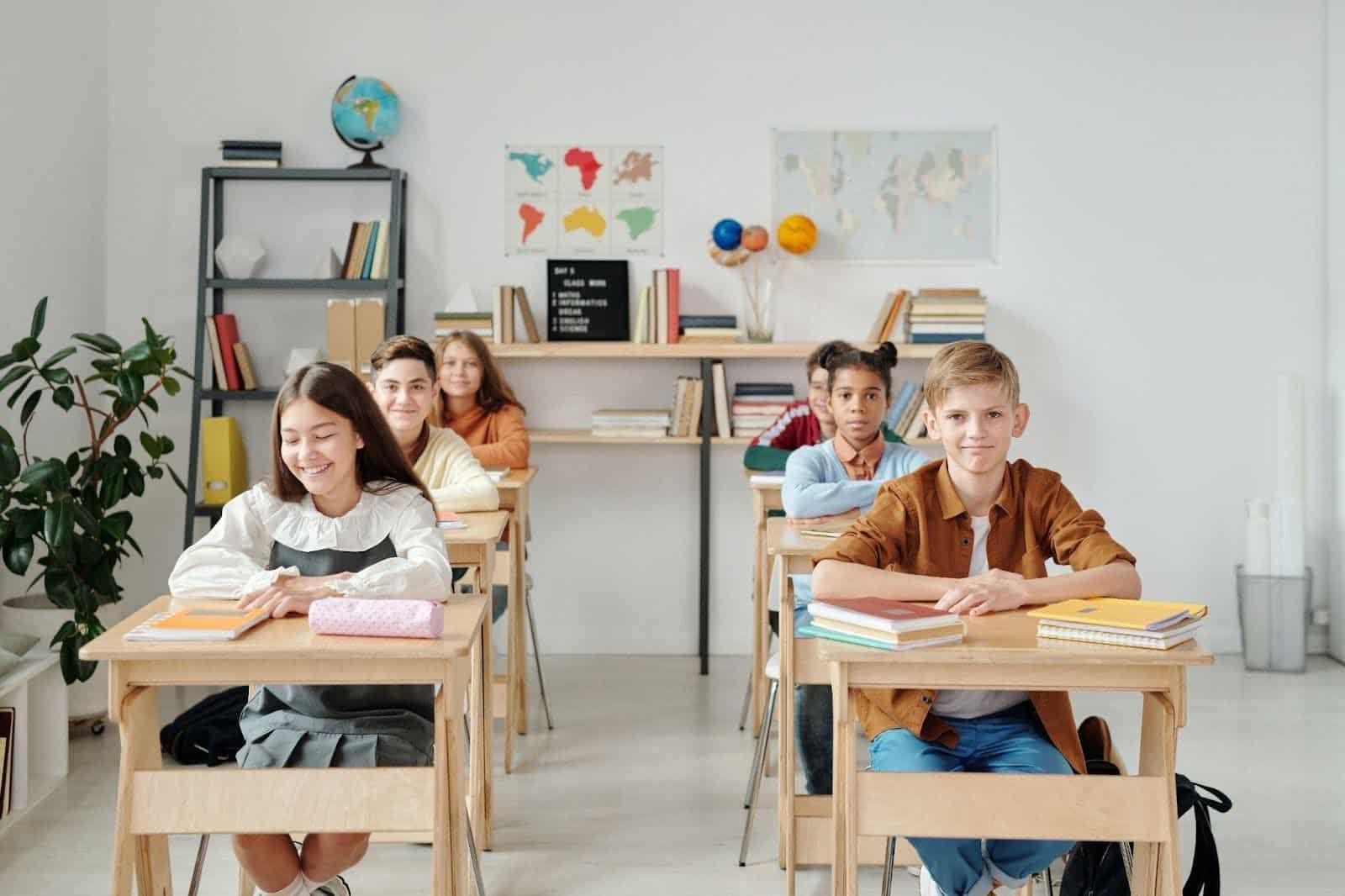
Educational project and learning methodology
The educational project is the heart of the school. You should know how the school teaches, how it assesses students, and how it supports each student , including how they teach reading in the early stages. Find out if they use project-based learning, cooperative learning, active methodologies, or more traditional approaches, and how they balance memorization, practice, creativity, and critical thinking.
Ask about personalization: what role does the guidance department play, how do they address gifted and special needs , and how do they support students' social and emotional development? This information will help you understand if the school is a good fit for your child's pace.
Another crucial aspect is digital skills. The integration of technology with a pedagogical purpose makes all the difference : devices, interactive whiteboards, educational platforms, digital curricula, and teacher training to use them responsibly.
Some schools promote transferable skills such as public speaking, leadership, emotional intelligence, creativity, and first aid. These soft skills programs and mentoring-style one-on-one tutoring improve students' autonomy, self-esteem, and social skills.
Attend open house events and interviews. Seeing a class in action, observing how teachers and students interact , and asking detailed questions is the best way to clear up any methodological doubts.
Languages and bilingual programs
Mastering other languages opens up personal and professional opportunities. A well-planned bilingualism fosters cognitive development and communicative competence , but it's important to distinguish between a flashy label and a solid plan.
Check specific aspects: how many hours of language instruction are offered per stage, which subjects are taught in the foreign language and with what materials . Consider whether they have teaching assistants or native speakers, whether they prepare students for official certifications, and whether they offer exchange programs or study abroad opportunities.
If you're interested in alternative methodologies, check how well they fit with languages. Montessori or Waldorf can coexist with multilingual projects , provided that the achievement of curricular objectives for each stage is guaranteed.
In the case of foreign schools such as high schools with a curriculum from another country, remember that you not only change the language of instruction , you also become linked to a different culture and educational system, something to value as a family.
Be wary of empty labels: look for real evidence of progress in comprehension, oral and written expression , and how that progress is assessed over the years.

Location and accessibility of the center
Commuting time affects routines and energy levels. Less time spent commuting means better rest and more family time . Consider proximity to home, work, or grandparents' house to better organize your daily life.
Consider the route as well. A safe and easy journey promotes gradual independence if your child will be walking or cycling in the future. If the school is far away, check school routes, schedules, and reliability.
Proximity shouldn't be the only criterion, but it does matter. A notable center 10 minutes away might be preferable to an excellent one 50 minutes away if that extra time compromises rest or work-life balance. Seek a balance between project and logistics.
If you have an ideal school in mind and it's far away, compare it with nearby options. Many areas have excellent schools you might not have considered.
Class size and attention to diversity
The number of students per classroom affects individual attention. The student-teacher ratio is set by regulations , and currently you can use these reference figures as a guide: 20 in preschool, 20 in primary school, and 25 in secondary school, with variations depending on the region and circumstances.
In general, smaller groups make it easier to monitor progress and personalize the learning experience. Don't hesitate to ask about the actual student-teacher ratio at the school and how they manage it in key courses, or if they offer smaller class sizes for core subjects.
Attention to diversity is non-negotiable. Check if there are support professionals such as speech therapists, learning support specialists, or physiotherapists , as well as response protocols and coordination with tutors and families to adapt teaching when necessary.
If your child has specific educational needs, ask for practical examples: how they adjust goals, how they assess progress, and what resources are available in the classroom . The support plan should be clear and measurable.
Also ask about the stability of the teaching staff. Stable and well-trained teaching teams tend to offer better results and stronger relationships with students and families.

Facilities, resources and school life
Facilities aren't everything, but they help. Check out libraries, laboratories, dedicated classrooms for languages, music, or technology , as well as cleanliness, maintenance, lighting, and ventilation.
Accessibility matters. Ask about elevators, ramps, and accessible restrooms , and about spaces adapted for young children. An inclusive school is also reflected in its architecture.
In technology, look at the actual use. Digital whiteboards, tablets, or laptops should be at the service of learning , with a digital competence plan for students and teachers, not just as aimless equipment.
Playgrounds, green spaces, and sports facilities promote physical and social development. Check if there are separate areas for different age groups , if the playgrounds encourage non-sexist play, and if sports are well integrated into the school environment.
Regarding school life, they value complementary and extracurricular activities: excursions, cultural visits, workshops, celebrations, or international programs . It's not the main criterion, but it adds motivation and valuable experiences.
The dining room is an integral part of education. Ask about the type of cuisine, menus, special diets, and nutritional education . Healthy, tailored nutrition is another pillar of well-being.
For work-life balance, consider early drop-off services, extended afternoon care, or transportation options. These resources can be crucial for fitting schedules together without overburdening children.

Values, coexistence and emotional climate
The school educates not only in knowledge but also in character. Ask about the philosophy and values that inspire workshops, projects, and rules : equality, respect, tolerance, freedom, and responsibility should be present.
If you're looking for a secular or religious school, make that clear from the start. Ask about the role of religion in school life and how holidays and traditions are observed, to ensure it aligns with your family's preferences.
Positive coexistence isn't something you can just wing. Request the coexistence plan, the anti-bullying protocol, and the preventative measures implemented from preschool onwards. Structured programs like KiVa or similar are a good sign.
Emotional education matters. Observe whether tutoring, socio-emotional skills development, and family participation in activities that strengthen the school-home bond are being prioritized.
A positive environment doesn't mean a lack of rigor. It's about combining high expectations with support and respect , so that every student can thrive without constant stress.
Educational excellence is born within each school , when its community shares purpose, values, and daily commitment.
Free adaptation of pedagogical thought
Results, reputation and accountability
Academic results help gauge the school's performance, but they shouldn't be the only factor. Request data from external assessments, progress across grade levels, and, if applicable, university entrance exam results . Use these as a reference, not as the sole criterion.
Find out about participation in national or international assessments. INEE reports and PISA-type comparisons provide context , but they don't replace getting to know the classroom firsthand.
Reputation matters too. Talk to current families and alumni , consult local forums and the school's social media with a critical eye, and pay attention to the stability of the teaching staff.
Be wary of both simplistic rankings and a complete lack of data. Look for varied, consistent, and verifiable evidence that explains how students learn and how their progress is supported.
Admission process and selection criteria
School enrollment in public and state-subsidized schools follows an official calendar for each region. Find out about deadlines, publication of lists, and the registration period , and have your documents ready.
When there are more applicants than available places, a points system is applied. The most common criteria include having siblings already attending the school, proximity of home, proximity to parents' workplace, and per capita income . Other factors considered include being from a large or single-parent family, having a disability within the family, applying for twins together, being a victim of gender-based violence or terrorism, and academic performance in high school.
In state-subsidized private schools, admission follows the same procedures as in public schools. Private schools, on the other hand, establish their own processes , which may include interviews or internal tests.
To make an informed decision, take advantage of open houses. Visiting, asking questions, and observing the actual atmosphere will give you much more information than a brochure.
Costs and economic considerations
In Spain, compulsory education is universal and free in the public school system. However, there will be expenses such as materials and books , for which scholarships or income-based subsidies are usually available.
There is school insurance available from the 3rd year of ESO (secondary school) onwards, with a reduced fee. We're talking about a symbolic amount of around €1,12 that covers specific student contingencies.
School transport is usually covered during compulsory education, with some exceptions for upper secondary education (Bachillerato). Confirm your specific situation with the regional government and the school itself.
Regarding uniforms, they are not mandatory in public schools. In semi-private schools, there may be specific garments and additional fees , and in private schools, there will be fees and services with variable costs, always following the official curriculum.
As a quick guide: public means free education with a state curriculum , semi-private combines public funding with private management and possible fees, and private offers extended autonomy with its own fees and services.
Choosing an institute: additional keys
The transition to secondary school coincides with adolescence, a sensitive stage. Many primary schools are affiliated with a secondary school , which guarantees continuity and reserved places for their students.
If the assigned secondary school doesn't suit you, you can apply for another. Consider the school's atmosphere, elective courses, academic pathways, and coexistence program , as well as the distance and the range of activities offered.
In secondary school, tutoring becomes more important. Ask about academic and career guidance, and about the emotional well-being programs that support students at this stage.
Languages remain key. Check the continuity of the bilingual project, preparation for certificates, and international opportunities that will allow you to confidently move on to later stages.
It's also time to look further ahead. If your child will be continuing on to high school, research their results, electives, and pathways to vocational training or university to ensure consistency throughout their educational path.
Choosing a school isn't an exact science, but it is a process that improves when you compare methods and visit schools with clear questions. If you align educational projects, values, logistics, attention to diversity, and languages with your child's needs , and critically evaluate results, school life, and resources, you'll have a solid choice that will facilitate their academic, personal, and social development for many years.

Table of Contents
- 1 Types of centers: public, subsidized and private
- 2 Educational project and learning methodology
- 3 Languages and bilingual programs
- 4 Location and accessibility of the center
- 5 Class size and attention to diversity
- 6 Facilities, resources and school life
- 7 Values, coexistence and emotional climate
- 8 Results, reputation and accountability
- 9 Admission process and selection criteria
- 10 Costs and economic considerations
- 11 Choosing an institute: additional keys