- People Analytics transforms HR data into strategic decisions through new sources of information, metrics, and advanced use cases.
- Corporate training integrates Big Data, databases, applied statistics, network analytics, and NLP to harness the full potential of employee data.
- Visualization, ethics, legality, and a well-defined strategic plan ensure that People Analytics projects generate a real impact on the organization.
- An expert faculty and customized programs for companies allow people analytics to be adapted to the specific challenges of each organization.
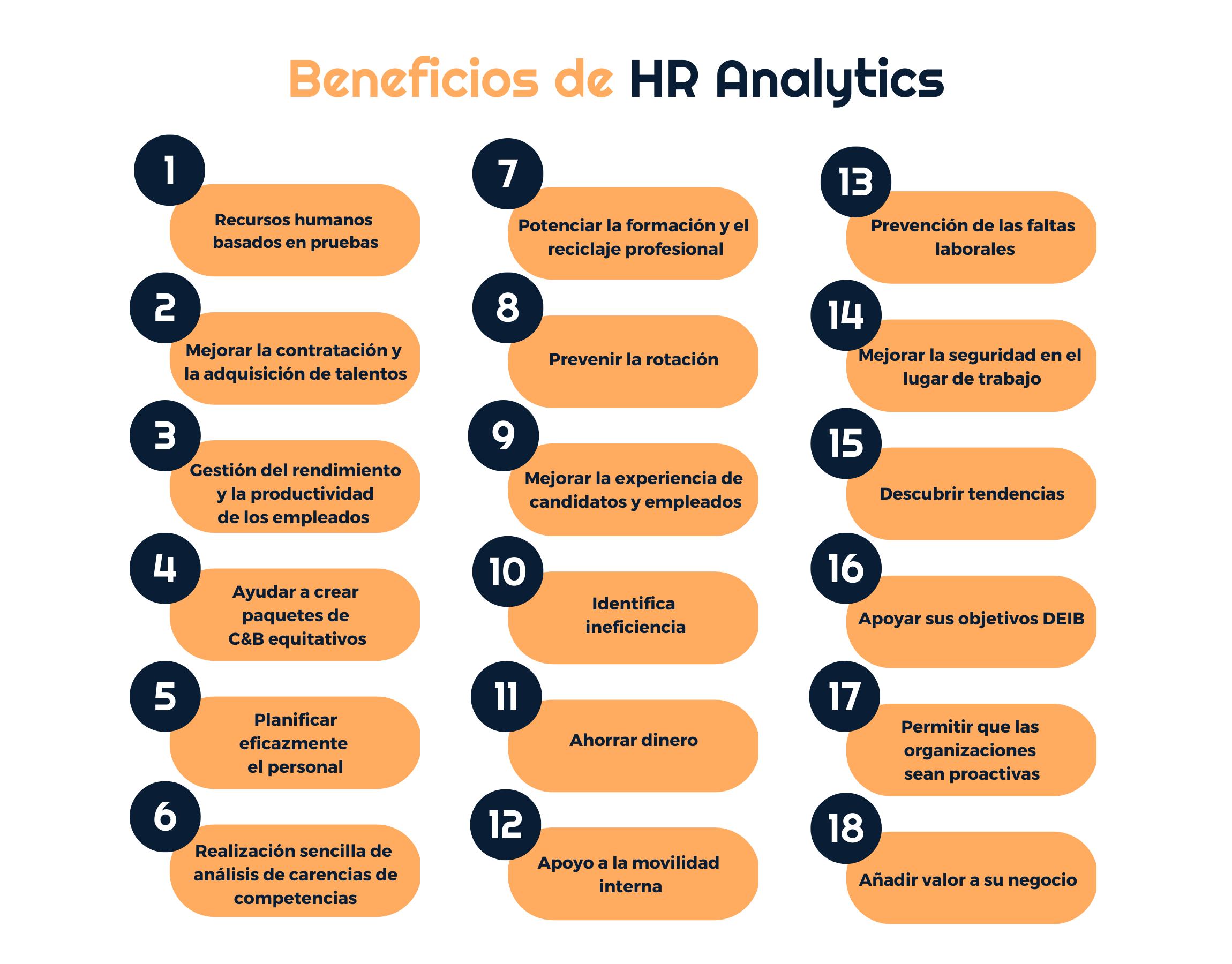
The influx of data into all areas of business has completely changed how people are managed. People Analytics has become the key lever for Human Resources to move beyond being a purely operational area and gain its own voice in strategic decisions, on par with finance, marketing, or business.
In this context, corporate training in People Analytics is no longer a "nice-to-have," but a real necessity for organizations that want to anticipate problems, identify hidden talent, design better retention plans, and improve the employee experience by relying on evidence, not just intuition. We will break down, in a very detailed and accessible way, how an advanced People Analytics program is structured and what it can offer professionals and companies.
What is People Analytics and why is now the time to invest in it?
People Analytics is an approach that applies data analysis techniques, statistics, and advanced models to the field of Human Resources, with the goal of better understanding people within the organization and making more informed decisions about talent, performance, climate, and culture. It's not just about "looking at reports," but about transforming scattered data into actionable intelligence.
One of the first things addressed in a serious corporate training program is the difference between People Analytics and Big Data applied to HR . While Big Data focuses on technologies, volume, and speed of information, People Analytics focuses on what business questions we want to answer about people, what indicators are meaningful, and how to translate the analysis into concrete decisions.
The reason why People Analytics has now gained so much relevance is twofold: on the one hand, the explosion of new data sources in the workplace (HR systems, collaborative tools, performance evaluations, surveys, digital communications, etc.) and, on the other hand, the pressure from management to justify investments in talent, training or engagement with data, just as is done in other areas.
This change requires HR professionals to develop new skills beyond labor law and administrative management: understanding metrics, analytical thinking, basic data handling, the ability to dialogue with technical profiles and, above all, communication skills to translate insights into stories that convince management.

New data sources in Human Resources
A key element in People Analytics training is understanding that employees are no longer seen as isolated records in a system, but as "global employees ." This involves integrating multiple sources: data from recruitment, onboarding, performance, compensation, internal mobility, training, climate surveys, digital interactions, and much more.
The so-called digital employee traceability tracks the trail left by individuals when interacting with corporate tools, learning platforms, ticketing systems, or internal networks. All of this generates a vast amount of information which, when properly managed and in compliance with regulations, allows for understanding collaboration patterns, workloads, turnover risks, and levels of engagement.
In a module dedicated to this topic, a clear distinction is made between structured and unstructured information . The former consists of data organized in tables (dates, salaries, surveys with closed-ended questions, numerical indicators), while the latter includes free-form text, emails, comments on open-ended surveys, documents, CVs, or even interview transcripts.
To be able to work with all of this, the organization needs a Human Resources Data Lake , that is, a centralized repository where people data, both structured and unstructured, is stored in its raw form, ready to be transformed and analyzed later according to the needs of the projects.
HR metrics, indicators and dashboard
Another key part of corporate training in People Analytics is the module on HR metrics and indicators . This module delves into what truly constitutes a useful metric, how it is defined, and why measuring in HR can be both complex and essential.
Concepts such as turnover, vacancy fill time, recruitment cost, absenteeism, internal promotion rate, training participation, employee NPS, and other climate and engagement indicators are typically reviewed. The difficulty lies in the fact that many aspects of human behavior are not directly observable; they require approximations, scales, and statistical models for rigorous interpretation.
A classic tool adapted to the human resources field is the Human Resources Balanced Scorecard , which allows for the connection of indicators related to talent, learning, internal processes, and business results. The goal of this type of module is for HR to stop collecting data indiscriminately and begin linking each metric to the company's strategic management : profitability, innovation, growth, customer service quality, and so on.
Based on this foundation, students learn to design dashboards that integrate key indicators, segmented by groups (for example, areas, countries, generations) to facilitate informed decisions about where to invest more in training, which teams need reinforcement, or which groups are at greater risk of leaving.
Real-world use cases of People Analytics
A good People Analytics training program goes beyond theory. Practical use cases are at the heart of the program , because they clearly demonstrate what can be achieved with well-processed data and how it translates into real-world business applications.
The first section typically addresses descriptive analysis , focusing on answering what is happening: workforce distribution, absenteeism trends, turnover rates by segment, project participation, etc. From here, segmentation analysis is introduced , which allows for the identification of relevant patterns by dividing the workforce by variables such as seniority, role, work center, type of contract, or performance level.
One of the most common uses is attrition analysis (voluntary and involuntary turnover), which combines personal, salary, performance, and contextual variables to identify factors that increase the risk of leaving. Complementing this approach is predictive absenteeism analysis , aimed at identifying groups more prone to recurring absences and designing specific prevention or support policies.
The analysis also delves into organizational network analytics , which allows mapping who collaborates with whom, which individuals act as key nodes, which teams are isolated, and what communication patterns exist between departments. This helps to uncover hidden talent , identify informal leaders, and analyze the impact of restructurings or organizational changes.
Introduction to Big Data technologies applied to HR
For all of the above to be possible, a basic understanding of technology is necessary. The goal is not to turn HR professionals into engineers, but rather to explain in simple terms what Big Data technologies are and how they are integrated into a People Analytics project.
The course begins with the concept of Big Data (volume, velocity, variety, veracity, and value), reviewing the evolution of technologies that allow for the storage and processing of large amounts of personal information. The complete information management process cycle is then presented : capture, ingestion, storage, transformation, analysis, and visualization.
These modules cover the main tools, including artificial intelligence solutions for HR , for ingesting, storing, transforming, and analyzing data, both in traditional environments and modern cloud architectures. The goal is for HR professionals to be able to communicate effectively with IT and data, understand the possibilities and limitations of each solution, and actively participate in projects, rather than simply receiving reports.
Databases and SQL and NoSQL fundamentals
The training typically dedicates a specific section to the concept of databases , as they are the foundation upon which all analyses are based. It explains what a relational database is, how it is structured with tables, fields, and relationships, and why it is so important to properly define employee identifiers and integration keys between systems.
Participants are introduced to SQL databases and query logic: selecting, filtering, grouping, joining tables... without needing to delve into complex programming, but enough to understand how data is extracted and prepared for later visualization in a dashboard.
In addition, NoSQL databases are presented , which are more flexible for working with semi-structured or unstructured information (e.g., documents, text collections, activity logs). Examples of NoSQL database types are shown, along with situations where they are particularly useful in the HR context, such as storing CVs or the results of open-ended surveys.
Data preparation, quality and transformation
No People Analytics project works without thorough data preparation and transformation . This phase is heavily emphasized in training because it's typically where the most time is invested and where the quality of subsequent analysis is largely determined.
It explains how derived variables are constructed (for example, seniority in position, promotion rate, frequency of department changes), how inconsistencies are detected and corrected, what to do with missing values, and how to standardize formats. Measuring data quality is another key element: completeness, consistency, uniqueness, and currency are reviewed with examples closely related to HR.
Common problems in data preparation are also addressed : duplicate employee records, identifier changes, historical data loading errors, discrepancies between payroll and talent management systems, etc. From there, normalization, deduplication, and cleansing strategies are presented to ensure data reliability.
To make all of this more manageable, students are introduced to data preparation tools such as KNIME, which allows for the relatively intuitive handling of files and data streams through visual nodes and processes. Furthermore, they receive an initial introduction to programming in R and Python , languages widely used in the data science community for statistical analysis and process automation.
Statistics applied to Human Resources
One of the most powerful components of a good People Analytics program is HR statistics . The goal isn't to overwhelm with formulas, but rather to ensure professionals understand what techniques exist, what they're used for, and how to interpret their results in business terms.
The first section reviews basic statistical principles : types of variables, measures of central tendency (mean, median, mode), dispersion, and the treatment of outliers or extreme values that can distort reality. Students learn to use appropriate graphs for each type of data and to understand when a difference is significant or simply noise.
The text then delves into topics such as sampling techniques , hypothesis testing and statistical significance, correlations, T-tests, and ANOVA. All of this is contextualized with very specific examples: comparing the effectiveness of two training programs, analyzing whether there is a relationship between engagement and turnover, and evaluating the impact of a new leadership model.
In a second section, techniques such as linear and multiple regression are advanced , which help to explain how several variables influence an outcome (for example, which factors best explain performance) and logistic regression , widely used to predict probabilities of binary events, such as the voluntary departure of an employee.
Cluster analysis methods are also used to group employees into segments with similar characteristics, and construct validation is performed using indicators such as Cronbach's Alpha, relevant in climate, engagement, or culture surveys, to ensure that the measurement scales are reliable.
Advanced analytics models for HR
Once the statistical foundations are established, the program usually introduces advanced analysis tools that allow for a further understanding of people's behavior within the organization.
Among these tools are decision trees , which are very useful for visually explaining which paths lead to a particular outcome (for example, a high probability of promotion or a high risk of leaving). These models greatly facilitate communication with managers because they illustrate clear rules.
The support vector model (SVM) is also presented , used in complex classification problems where the boundaries between groups are not so clear. In parallel, neural networks , which allow modeling nonlinear relationships between variables, and Cox regression , particularly useful for dropout analysis as it incorporates the time factor into the probability of leaving, are introduced in an accessible way.
The aim is not for everyone to implement these algorithms from scratch, but for HR managers to know what type of model might best fit the business problem and how to interpret the outputs presented to them by the data teams.
Corporate network analytics
One of the most distinctive modules in People Analytics training addresses Organizational Network Analysis (ONA). This module analyzes the organization as a network of interactions, going beyond the formal organizational chart.
The main metrics of individual behavior in networks (centrality, betweenness, closeness) are explained to identify key connectors, technical experts, or individuals with excessive dependencies. At the departmental level, measures of density, cohesion, and information flow between areas are studied.
Participants learn to visualize networks clearly and interpret them from an HR perspective: identifying silos, isolated teams, the impact of organizational changes, and mentoring programs. To facilitate this work, a tool like Gephi is often used , which allows for the visual and relatively simple representation and analysis of network structures.
At more advanced levels, more complex network analyses are explored, combining corporate email data, collaborative tools, project participation, and other elements, always with a strong emphasis on the ethical and legal aspects of using this type of information.
Analysis of unstructured information and NLP
The training also dedicates a large section to unstructured information , which is abundant and very valuable in HR: comments in surveys, texts of performance evaluations, emails, internal forums, job descriptions or letters of motivation.
It explains exactly what this type of information is and what role it plays in people management . From there, different business scenarios are explored: identifying hidden talent based on skills and experience gathered in CVs, analyzing the work environment using open feedback, and evaluating the tone and sentiment in internal communications.
Another powerful application is the detection of personality profiles and work styles from texts, always with great ethical and methodological caution to avoid oversimplifications or invasive practices. The training constantly emphasizes the importance of transparency and proportionality in this type of analysis.
To leverage this information, students are introduced to indexing tools such as Solr and Elasticsearch, which enable advanced searches across large repositories of documents and mixed data (structured and unstructured). Examples of indexing structured information (employee fields) and complete documents (CVs, reports, internal policies) are shown.
This is all complemented by an introduction to Natural Language Processing (NLP) , which explains the basic processes: tokenization, lemmatization, entity extraction, text similarity analysis, and sentiment detection. Applications such as document similarity analysis allow, for example, the automatic identification of suitable candidates for certain positions by comparing CVs and job descriptions.
Data visualization and Tableau for HR
A critical part of any People Analytics project is the visualization of results . No matter how sophisticated the model, if it isn't communicated effectively, its impact will be limited. The training emphasizes the importance of translating analytical complexity into visual stories that are easy for executives and managers to understand.
The main strategies for presenting results are reviewed : how to structure a narrative, what graphs to use in each case, how many indicators are reasonable in a dashboard, and how to avoid overwhelming decision-makers with information.
Different types of charts and their appropriate use are studied : bar charts, line charts, heat maps, scatter plots, geographical maps, etc., with specific HR examples (turnover by center, career path, comparison of groups). The creation of dashboards adapted to different roles (management, middle management, recruitment or training specialists) is also covered.
To bring these concepts to life, a leading tool like Tableau is used . Participants learn to create data sources, build charts, calculate derived fields, design interactive dashboards, define navigation actions between screens, and develop advanced charts that integrate maps and other visualizations useful for workforce analysis.
Ethics, legality and strategy in People Analytics
No serious People Analytics program can ignore ethical and legal aspects . A specific module is dedicated to reviewing the regulations applicable to the processing of HR information, especially regarding data protection, privacy, confidentiality, and the legitimate use of information.
Practical cases are analyzed to discuss ethical and cultural boundaries : what type of analysis is acceptable, how to inform the staff, the importance of salary transparency , what implications monitoring digital communications or behaviors has, and how to align People Analytics initiatives with the organizational culture and the social culture of the environment in which the company operates.
Another key point is the role of communication in any analytical project. It involves explaining to people what data is being used, for what purpose, what benefits are expected, and what safeguards are in place. Transparency is essential for building trust and avoiding perceptions of excessive surveillance.
From here, it connects with strategic thinking in People Analytics . The steps to define a solid strategy are explained: understanding business priorities, identifying key talent questions, assessing the organization's data maturity, defining a project roadmap, and aligning all of this with the corporate strategy.
The discussion also addresses common barriers and challenges : resistance to change, lack of quality data, silos between departments, a shortage of hybrid (business-data) profiles, and unrealistic expectations. All of these are approached with a clear focus on integrating People Analytics with the company's overall objectives.
People Analytics strategic plan and final project
The final stage of this type of training typically focuses on building a comprehensive People Analytics strategic plan . A very clear sequence of steps is presented that participants can replicate in their own organizations.
The first step involves defining the available and necessary data sources . Next comes constructing variables and, crucially, defining the function of each one (what exactly does “high talent” mean, what is “commitment”, how do we measure “potential”).
Next, an analytical model is designed according to the problem to be solved: turnover prediction, improved selection, optimized training, succession planning, etc. The strategy for delivering, communicating, and visualizing results is also defined , planning who will see what, how, and how often.
Next comes the process transformation strategy , which involves translating insights into real changes in HR policies, procedures, and practices. Here, personalized actions become crucial , creating differentiated interventions for different groups based on the data.
Finally, a framework for evaluating results and continuous re-engineering is established : measuring the impact of actions, identifying improvements, and adjusting the model or processes so that the People Analytics cycle becomes a permanent learning loop. All of this typically culminates in a Master's or program final project , where students integrate what they have learned into a real or simulated case study.
Student profile, customized training and expert faculty
People Analytics programs are primarily geared towards current HR professionals who want to evolve towards a more analytical approach, as well as HR graduates and postgraduates seeking to differentiate themselves with data skills. They are also very useful for business professionals interested in talent management.
Customized corporate training allows companies to tailor content, use cases, and tools to the specific needs of each organization. Learning paths can be designed for HR teams, middle management, or executives, combining theoretical sessions with practical workshops based on internal data (always handled with the necessary legal safeguards and anonymization).
Another distinguishing feature of these programs is the faculty , comprised of active professionals in leading positions in the fields of People Analytics, consulting, HR management, data privacy, and technology. This combination of academic learning and daily practice provides a highly practical perspective.
Among the typical profiles in this type of training we find course co-directors who are experts in People Analytics and talent consulting, specialists in privacy and information security with experience in large consulting firms, co-founders of people analytics companies and think tanks such as "People Analytics Spain", solution architecture managers in platforms such as Workday or data scientists with a focus on talent.
Also participating are leaders in People Analytics from large multinational corporations , HR directors from companies in diverse sectors, heads of analytics and reporting in people departments of organizations like Correos (the Spanish postal service), and professionals who have held leadership roles in people and culture. This diversity ensures training closely aligned with the real-world challenges of businesses.
In parallel, many institutions complement the technical content with inspiring testimonials from former students and professionals (such as Marina, Cristina or Isaac, among other real cases), who share how training in People Analytics has helped them to face personal and professional challenges and why they consider that continuing training is always a good decision.
This entire training journey, from understanding data sources and Big Data foundations to applied statistics, advanced analytics, ethics, strategy, and the design of a complete People Analytics plan, makes these corporate training programs in People Analytics a powerful tool to transform the HR function into a true strategic business partner, capable of anticipating, influencing, and generating tangible value based on data and not just intuition.