- The UGR trains its research staff in scientific communication, news handling and relations with media such as radio and TV.
- The university combines courses, a transparent cookie policy, and web resources to support responsible and accessible disclosure.
- There is a wide catalog of books and informative guides that cover everything from physics and biology to heritage, nutrition and culture.
- The program "I'll explain it to you" brings diverse research to the general public through short and approachable videos.
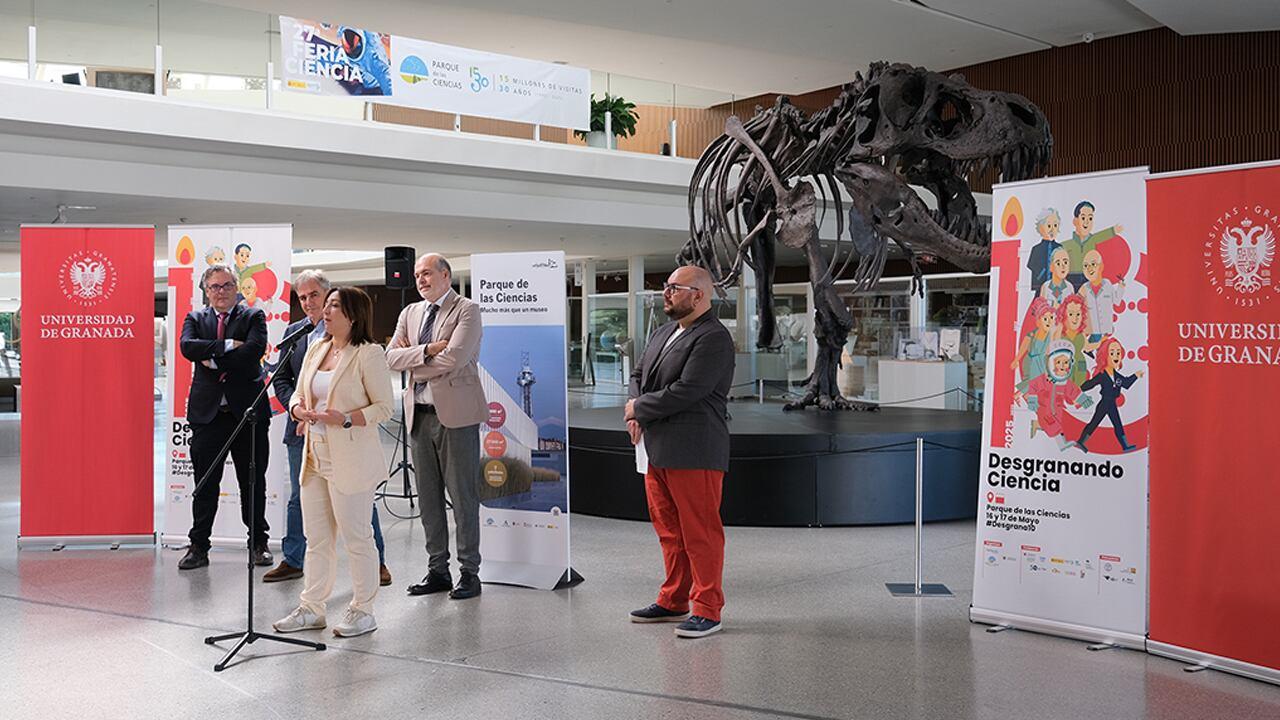
La Scientific outreach at the University of Granada It has become a key element in connecting citizens with the knowledge generated within the faculties, laboratories and research groupsFar from simply publishing academic articles, the UGR has been building a whole ecosystem of initiatives, materials and formats to make science accessible to people of all ages, with different interests and levels of education.
At the same time, the university itself has been forced to adapt to the challenges of contemporary communicationMedia relations, scientific news coverage, social media use, and the production of short videos and audiovisual formats for radio and television. All of this is facilitated through training courses, outreach programs, the activities of the Scientific Culture Unit, and the use of a wide range of resources. catalogue of works and resources of an informative nature.
Training in scientific outreach and university communication
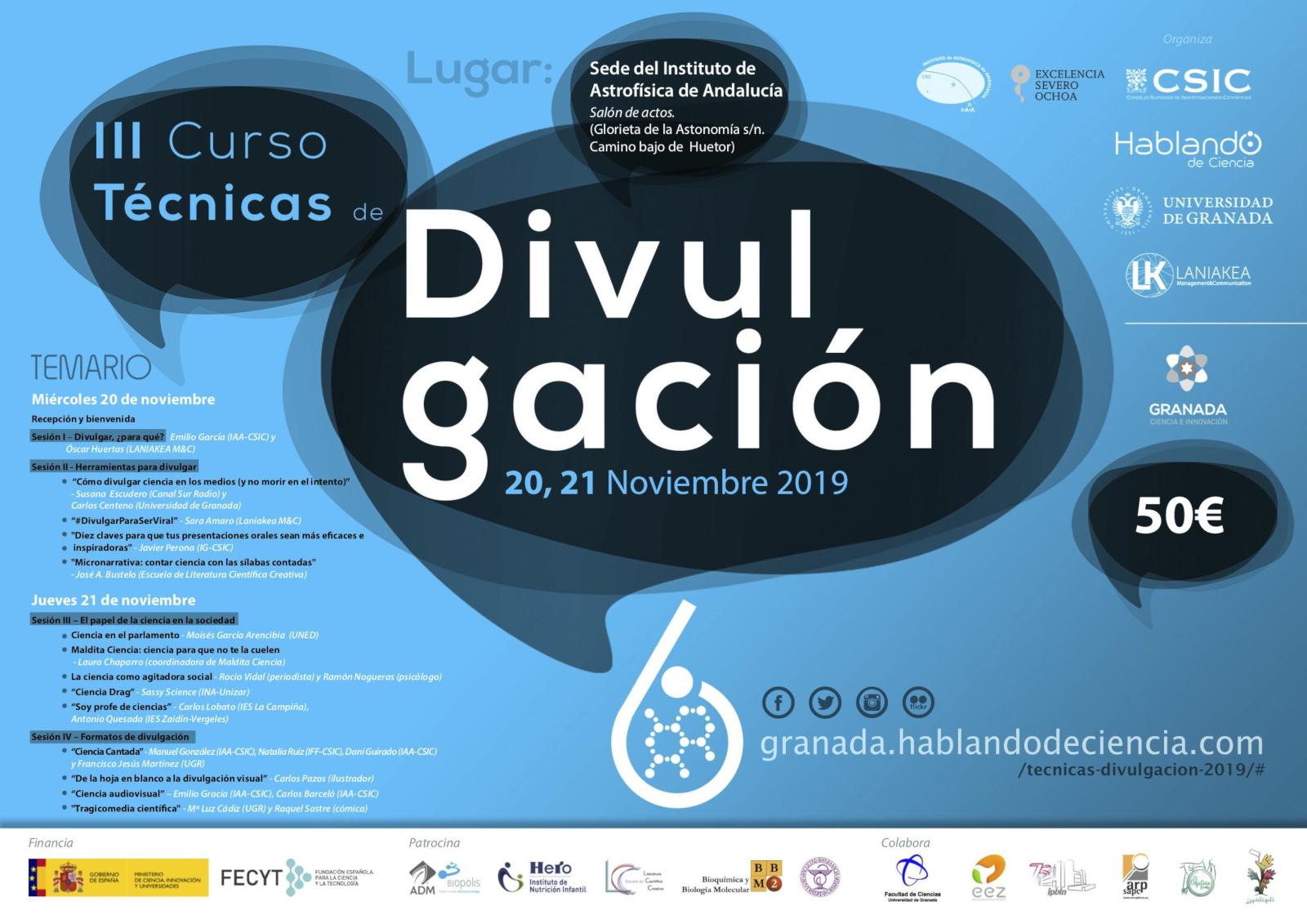
One of the pillars for improving the public image of science is the specific training of research staff in communication skills. At the University of Granada, courses and modules are developed to help doctoral students, young researchers, and faculty learn how to interact with the media, explain their work in understandable language, and adapt to different formats.
These training programs address, for example, how to manage the situation in which There are more applications than available places.In these cases, transparent criteria are used, such as the order of registration and the student's connection to publications related to their thesis. This prioritizes the participation of those who can best benefit from this type of training to disseminate their scientific findings.
A fundamental part of these courses consists of the critical analysis of scientific news published in print, radio, television, and digital media. The study examines how headlines are constructed, what data is selected or omitted, how results are explained, and what errors of interpretation They are common when academic research is transferred to journalistic formats.
The transformation process is also being thoroughly addressed. a scientific article o paper in a press releaseThe goal is to help researchers identify what information might be truly interesting to the public and what journalists need to do their job: clear context, relevant figures, understandable statements, and availability to answer questions.
These courses include the following activities real-world writing practice In these workshops, participants create their own press release based on a research article. Style aspects are corrected, the use of technical terms is reviewed, the text length is adjusted, and different possible approaches are discussed to focus on the results, methodology, or social impact of the study.
Module 2: Overcoming the fear of radio and television
The second major training block focuses on how to broadcast on radio and televisionThese two mediums still intimidate many people in academia. The underlying message is clear: there's no need to be so afraid of them, as long as you know the basic rules of the game and work with some preparation.
The module usually starts with a presentation of daily life in newsrooms of radio and TV. It explains how content production is organized, what timeframes are managed, what the criteria are for selecting topics, and how current events and the political or social agenda influence the choice of science pieces.
One of the most insistent messages is that The journalist is not an adversaryThe importance of collaboration is emphasized: journalists need reliable sources capable of clearly explaining complex topics, and researchers need intermediaries to bring their work closer to the general public. This symbiosis results in more rigorous and engaging pieces for the audience.
In these sessions, the Today's news agenda with schedules from radio and television news programs. Attendees can see which stories ultimately make it onto the air, how much time is dedicated to them, where they are placed within the newscast, and how they are covered. This helps to understand why certain scientific topics are more likely to appear on the news than others.
In addition, a wide-ranging round of open questions about how the media workswhere journalists and communicators answer frequently asked questions: how long does an interview really last, why is so much content cut, how is the headline decided, what happens if something has been explained incorrectly, and how can a correction be requested.
Another section deals with the Basic rules for speaking in front of a microphone or cameraAspects such as rhythm, intonation, clarity of message, the advisability of using everyday examples, the importance of avoiding excessively long paragraphs, and the use of simple metaphors to illustrate complex concepts without falling into misleading simplifications are addressed.
The practical part includes the recording of radio interviews to several of the attendees. Afterwards, these interviews are listened to in a group, the responses are analyzed, strengths and areas for improvement are identified, and doubts are resolved about how to improve naturalness, reduce filler words, and adjust the message to the available time.
This experiential approach, based on real examples and exercises, ensures that participants in the module leave with concrete tools for dealing with the media without getting stuck and without losing control over the scientific content of their speech.
Cookies policy, privacy and responsible use of data on the UGR website
The scientific outreach activities of the University of Granada rely heavily on its web platforms and online servicesThis necessitates a clear explanation of how cookies and user browsing data are managed. The institution has a detailed cookie policy designed to inform visitors clearly and precisely.
In general terms, a cookie is a a small piece of text that a website sends to the browser and allows us to remember certain aspects of your visit, such as your selected language, browsing preferences, or previously viewed content. Without these tools, it would be much more difficult to offer a smooth and personalized experience.
The UGR distinguishes between first-party cookies and third-party cookiesThis depends on who manages the domain from which the data is sent and processed. It also differentiates between session cookies (which are deleted when the browser is closed) and persistent cookies (which remain for a certain period of time to remember preferences or usage patterns).
Depending on its purpose, institutional policy speaks of technical, personalization, analytical and advertising cookies, including behavioral advertising. Each one serves a specific function: enabling the website to function, adapting the user interface, extracting usage statistics, or displaying promotional content that may be of interest.
For navigation analysis, the University of Granada's website uses the service Google Analytics as a measurement toolThanks to this system, aggregated information is obtained about the number of users, the most visited pages, the frequency and duration of visits, the type of browser, the access provider, the language, the device used, or the city associated with the IP address.
All this data allows improve the usability and structure of the websiteadapting the portal to the real needs of its visitors. However, the University of Granada emphasizes that, to guarantee anonymity, Google truncates the IP address before storing it, so that the information is not used to personally identify users who consult the content.
The institution's policy clarifies that Google can only to provide the collected information when required by law And, according to Google Analytics' terms of service, the IP address will not be associated with any other data held by the company. This strengthens privacy protection.
In addition, the website uses its own technical cookie, known as cookie_agreedThis is used to manage consent regarding the use of cookies. Its purpose is to remember which users have accepted the policy, preventing the notice from being shown again at the bottom of the page to those who have already expressed their acceptance.
The university also reports that it is possible Restrict, block, or delete cookies This applies to both the UGR website and any other site, using your browser's settings. Each browser (Internet Explorer, Firefox, Chrome, Safari, etc.) has its own help section that explains in detail how to configure these settings.
Publications and popular science books linked to the University of Granada
The University of Granada also promotes the scientific dissemination through booksThese guides and educational works cover a wide range of topics, from biology and physics to archaeology, nutrition, historical heritage, and critical thinking. Many of these publications are designed for a broad audience and combine scientific rigor with an accessible style.
Among the titles related to the world of plants, one work stands out that is dedicated to the symmetry and beauty in flowersThis explains why angiosperms are the most highly evolved group within the plant kingdom and how they came to represent approximately 95% of all plant species. Their structures, reproductive strategies, and the relationship between form, function, and pollination are described.
Another book delves into the relationship between language, science and realityThis shows how things lead us to words, and how words, in turn, shape our perception of things. The language of science is analyzed, compared with other specialized languages, and the role of vocabulary in the construction of knowledge is considered.
From the perspective of Roman archaeology and heritage, a teaching guide focuses on the Roman kilns of the Cartuja Campus and in the Hispano-Roman pottery complex in the area. This project combines historical content and practical activities to learn more about ceramic production and its role in Roman-era Granada, transforming the campus into a veritable open-air laboratory.
In the field of physics, several publications explore the concept of entropy, energy and structure of the universeas well as new ideas about life from the perspective of thermodynamics and statistical mechanics. The fundamental principles of these disciplines are introduced so that non-specialist readers can understand how they relate to the phenomenon of life and its organization.
The collection also includes narrative proposals, such as an animated book that invites readers to take an archaeological walk. Beneath our feet, through Roman Florence, offering an informative view of Granada during the imperial era through accessible stories and graphic resources designed for a young audience.
In the area of health and nutrition, one of the recurring authors analyzes the smart fats and omega 3 and 6 fatty acids in the context of personalized nutrition. The focus is on the growing need for reliable scientific information in the face of dietary changes, new lifestyles, and the increase in food-related illnesses.
Another study reviews the role of Five key nutrients in the prevention of viral infectionsThis article highlights the therapeutic potential of certain flavonoids as adjuvant agents against viruses. The existing literature is reviewed, and possible applications in improving the immune response are discussed.
Along the same lines of health and well-being, a work is presented dedicated to 20 healthy plants to combat stresswhich advocates a return to nature. The effects of stress on nutrition, sleep, and the body's overall balance are analyzed, and plant species with properties useful for managing prolonged stress are described.
The province's natural and botanical heritage also appears in a study on medicinal plants in LanjarónThis book explains how the convergence of specific environmental conditions has fostered a great diversity of species with therapeutic applications. The work combines scientific description with traditional knowledge.
The popular science collection also includes titles that reflect on culture and contemporary thoughtconnecting scientific knowledge with philosophy, architecture, or urban history. Examples of this are the books dedicated to the culture of our time, to the memories and spaces from the Beiro River to the Puerta de Elvira, or to the Bibataubín Castle, which reconstruct the memory of the city of Granada from multiple perspectives.
In the field of physics and cognitive science, we find works such as The passage of time, which explains in an accessible way the physics related to the ordinary perception of one-way time, or The Mind Is Critical, which asks what the mind is, how it can work so effectively starting from simple elements and what analogies can be established with physical concepts.
There is also room for analysis the lights and shadows of great scientific figures, with a book that addresses the so-called "sins" of Newton and Einstein, not to discredit them but to show their errors, limitations and questionable decisions within a scientific process that is always perfectible.
With a more applied approach, texts appear on evolutionary gynecology and evolutionary medicineThese works examine women's health in light of Darwin's theory of evolution. They highlight how understanding our evolutionary history helps us better interpret many specific pathologies and life stages.
University historical heritage also features prominently in a publication dedicated to Royal Hospital of GranadaThe book recounts how, at the end of the 15th century, the word of the Kings held a sacred character that had to be quickly translated into concrete actions. It reviews the history of the building and its political and social significance.
This overview is completed by titles that address the extinction of amphibians in the 21st century and its role as an indicator of the fragility of ecosystems, as well as A Physicist in the Street, where through dialogues between characters in a tavern, everyday physics problems are explained in a friendly and informative tone.
"Let me explain it to you" program: science in short videos for the general public
Alongside books and courses, the University of Granada (UGR) promotes specific projects to bring its research closer to the general public. One of the most prominent is the program "Let me explain it to you"coordinated by the Communication Management Office and the Scientific Culture Unit. The format is simple but effective: short videos in which university researchers explain their work in an engaging way.
In these videos, the research staff explains scientific curiosities or key aspects of their lines of studyIn plain language and with relatable examples, the goal is to break down barriers and show that behind every research group are people capable of telling interesting stories about real-world problems.
The program is open to participation from anyone researcher at the University of GranadaTo join the project, simply contact the Director of the Communication Management Office, Carlos Centeno, via his institutional email address. From there, the recording and distribution of the piece will be coordinated.
The topics covered in "I'll Explain It to You" are very varied. For example, one of the researchers analyzes The sustainability trilemma in nature tourism, explaining how to balance, at the same time, the conservation of the environment, the well-being of local communities and the economic profitability of tourism activities.
Another video focuses on methods for using renewable energy in the synthesis of chemical products, showing how the energy transition also affects industrial processes and the way of producing high value-added compounds with less environmental impact.
In the field of nutrition, a clear explanation is offered about Why it's a good idea to avoid ultra-processed foodsanalyzing its composition, the role of added sugars, low-quality fats and additives, and their long-term effects on health.
It also addresses the Importance of physical exercise for bone healthshowing how regular activity helps maintain bone mineral density and reduce the risk of fractures, especially in certain stages of life such as menopause or old age.
In the field of neuroscience, some videos explain how neurons respond to chemical stimuliSome studies focus on what circuits are involved or what techniques are used to record these responses, while others focus on the brain mechanisms of memory and how memories are formed, consolidated, and retrieved.
The program's greatest strengths are its thematic diversity. Content appears on a wide range of topics. popular voice and singer-songwritersDebunking myths surrounding gender violence, explaining the concept of microcredentials and their role in university education, or describing lines of research in the agri-food field.
Cultural heritage has its place with videos dedicated to it architectural legacy in Melilla Sustainable heritage restoration, where the discussion focuses on how to conserve buildings and works of art without losing sight of environmental and social sustainability criteria.
Other content deals with the social impact of research and the mechanisms by which knowledge generated at the university benefits society, from technology transfer to public policies informed by scientific evidence.
In the fields of history and archaeology, they explain Uses and management of water in Roman commercial and artisan spacesMeanwhile, in sports science, the focus is on the neurosciences of physical exercise and how movement affects brain function.
During pregnancy, the role of maternal stress This is analyzed in another video, which details its potential effects on the health of the mother and fetus, as well as strategies to mitigate them. In education, the concept of neuroeducation and its contribution to improving learning processes are introduced.
Areas such as the following are also explored: formal uses of spoken language, the richness of the heritage of the University of Granada itself, the role of engineering in the fight against climate change, the relationship between video games and research in computer engineering or the development of a functional yogurt based on goat's milk and human probiotics.
Creativity and the humanities appear in videos about plastic arts with threads and fabricsThe phenomenon of dehumanization and prejudice in its most extreme form, the vindication of the role of rural women in the 20th century, or the use of artificial intelligence as a tool to express social sensitivities and realities.
Finally, gender and cultural issues are addressed, such as the ostracism of women in cultural products for children and adolescents, raising the question of how unequal representation influences the construction of role models and expectations among young people.
This entire collection of audiovisual pieces shows that the University of Granada not only conducts research, but also makes a constant effort to to tell society what you are doing and why it mattersusing short, direct formats adapted to current information consumption habits.
Taken together, the science communication courses, the responsible data use policy, the extensive catalog of popular science works, and programs like "Let me explain it to you" paint a picture of a university that assumes scientific dissemination as a core responsibilityBringing science closer to the public through multiple channels and disciplines, from physics and biology to archaeology, nutrition, heritage and social sciences.