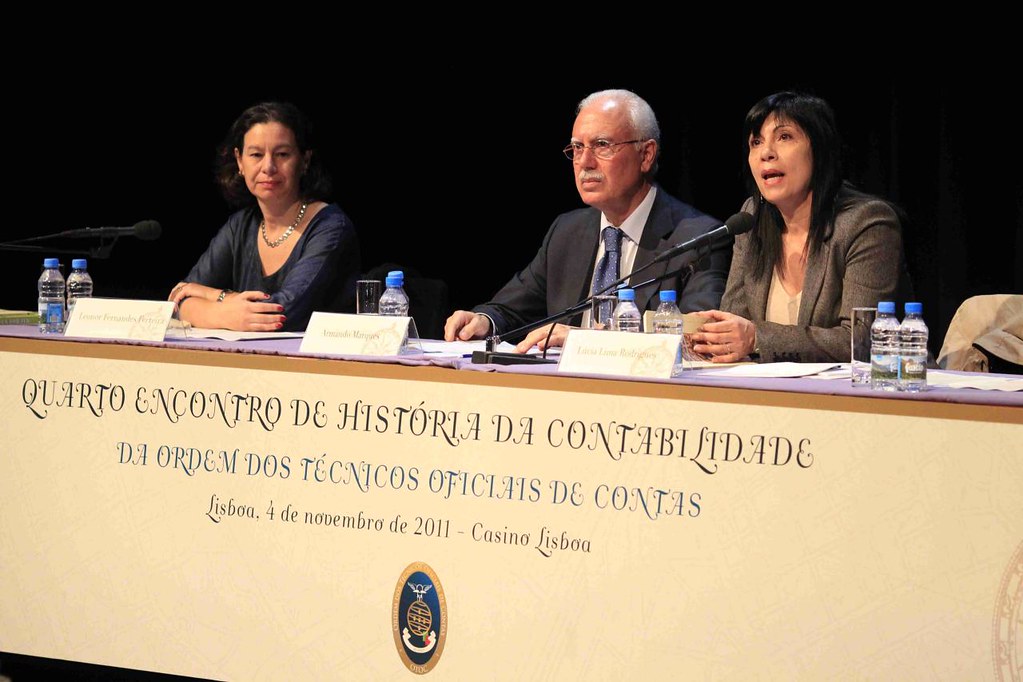
A look at the history of accounting reveals how this discipline has been present in our society since time immemorial. From the earliest records of exchange to modern accounting techniques, accounting has evolved to adapt to the changing needs of humanity.
The First Accounting Records
Accounting has its roots in ancient civilizations. The earliest known accounting records date back to Mesopotamia, where the Sumerians used clay tablets to document their transactions. These rudimentary systems allowed them to keep track of the exchange of goods, which was essential for trade and local administration.
In these societies, records were kept not only of trade, but also of tributes and offerings to temples. The Egyptians took this practice a step further, developing methods to record agricultural and construction transactions in detail .
As civilizations advanced , accounting became more refined. In ancient Greece, scribes recorded commercial and public transactions. Rome also left its mark, developing a more sophisticated accounting system based on single-entry bookkeeping. This method allowed for the recording of income and expenses, facilitating financial control of the vast empire.
The fall of the Roman Empire did not halt accounting progress. In the Middle Ages, accounting systems began to incorporate records of inflows and outflows, as well as detailed records of debts and credits.
The Double Entry Revolution
One of the most significant milestones in the history of accounting was the development of double-entry bookkeeping during the Renaissance. This system, popularized by the Italian mathematician Luca Pacioli in 1494, introduced principles that are still fundamental to modern accounting.
The double-entry method is characterized by recording each transaction in two different accounts: one debit and one credit. This not only provides a balance, but also a clear picture of an entity's financial status.
The Industrial Age and Modernization
The Industrial Revolution brought with it the need for even more precise and detailed accounting methods. Large companies required systems to manage their complex operations, and the principles previously developed were expanded and refined.
During this period, audits began to gain more importance, and accounting practices became standardized. Accounting was beginning to be recognized as a formal profession, with societies and associations dedicated to its practice and regulation.
Accounting in the 21st Century
Today, accounting has reached a point where technology plays a crucial role. Software such as QuickBooks and SAP has automated many accounting processes, making records more accurate and accessible. International standards, such as International Financial Reporting Standards (IFRS), have unified criteria, allowing for greater transparency across different countries.
Furthermore, the emergence of blockchain and artificial intelligence are once again changing the accounting landscape. These technologies promise greater security, efficiency, and accuracy in managing financial data.
Throughout its history, accounting has evolved not only technically but also in its values. Ethics in accounting has become a fundamental pillar, ensuring that financial records are truthful and transparent. This is essential for both investor confidence and global economic stability.
Accounting remains a discipline in constant evolution. New technologies and regulatory changes pose challenges, but also open up opportunities to improve the accuracy and usefulness of financial reporting. The ability to adapt to these changes will continue to be crucial for accounting professionals.
Each advance in accounting has served as a stepping stone toward a more complete and effective understanding of financial management. Reflecting on its history not only allows us to appreciate its importance but also to anticipate the future of a discipline that remains essential to the functioning of our society.