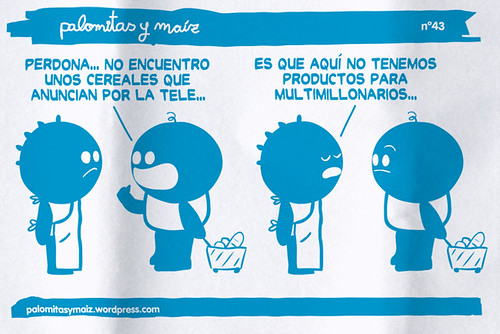
Private label refers to products manufactured by a company and sold under a retailer's brand, usually a supermarket or retail chain. In many cases, these products are identical or very similar to those offered by well-known brands, but they are typically more affordable. The logic behind private label brands is simple: to offer consumers a quality alternative at a more accessible price.
Characteristics of white brands
White label brands have several key characteristics that differentiate them from traditional brands:
- Reduced cost: Typically, white-label products are cheaper because they eliminate middlemen and costly advertising.
- Large scale production: They are often produced in large quantities, allowing for economies of scale.
- Variety: Most supermarkets offer a wide range of private label products, from food to cleaning and personal care items.
- Variable quality: Although many private label products are of high quality, some may not meet the desired standards.
Advantages of white labels
Economic savings
One of the most obvious advantages of store -brand products is cost savings . These products are usually cheaper than their name-brand counterparts, allowing consumers to reduce spending without sacrificing quality in many cases. This is especially appealing during times of economic crisis or inflation.
Comparable quality
Many store brands are subject to strict quality standards, meaning they can compete directly with leading brands in terms of quality. This has led to a positive perception among consumers , who recognize that many store-brand products offer comparable performance to more expensive products.
Purchasing practice
The fact that store-brand products are widely available in supermarkets and retail stores makes shopping easier . Consumers can find everything they need in one place, which can save time and effort compared to searching for specific brand-name products in different stores.
Variety of products
Private label brands aren't limited to just one type of product. From food to appliances, there are increasingly more categories in which private label products are offered. This diversity allows consumers to choose from a wide range of options without breaking the bank.
promotion of competition
The existence of private label brands means that well-known brands must work harder to offer quality products at competitive prices. This competitive environment benefits the consumer, who enjoys better products and lower prices thanks to this market pressure.
Disadvantages of white labels
Inconsistent quality
Although many generic products offer comparable quality, not all meet optimal standards. Quality can vary widely from product to product and from category to category, meaning consumers must be willing to experiment to find products that are truly worthwhile.
Less investment in innovation
Private label brands typically focus on basic products, meaning their investment in innovation is lower compared to leading brands that invest heavily in research and development. This can lead to a lack of new and exciting offerings for consumers.
negative perception
Although the perception of store brands has improved over time, a stigma still exists around these products. Many consumers still associate "store brand" with lower quality products, which may discourage some from trying them.
Brand Limitations
Some store brands lack the brand recognition and prestige of more established companies. This can be a deciding factor for consumers who prefer products already backed by a good reputation in the market.
Difficulty in traceability
Another aspect to consider is the difficulty in tracing private label products. While some chains offer information about the sources of their products, it is often more difficult to trace the origin of the ingredients compared to brands that invest resources in transparency. This lack of information can be concerning for consumers who are aware of sustainability and the origin of the products they consume.
White labels in different sectors
Food
In the food sector, store brands have gained popularity by offering products that, in many cases, are identical in quality and taste to their name-brand counterparts. From cereals to dairy products , consumers are finding increasingly affordable options that have changed their supermarket shopping routine.
Cosmetics and personal care
In the cosmetics sector, private label brands have begun to make their mark on the market. Many personal care and hygiene products offer formulas that rival those of well-known brands, representing a viable option for consumers seeking quality products at a lower price.
Electronics
Although less common, private label brands in the electronics sector are also booming. Many supermarkets and retailers have begun offering their own versions of products such as headphones, chargers, and small appliances , providing more affordable alternatives with quality guarantees.
clothes and fashion
The fashion world has also been invaded by private label brands. Clothing chains have launched product lines that compete directly with well-known brands. These alternatives allow customers to access current trends at much more affordable prices, although with the caveat of varying quality.
Cleaners and cleaning products
In the cleaning sector, private label products have revolutionized the way consumers approach their homes. These products often offer comparable effectiveness to leading brands, but at reduced prices, making them attractive options for many buyers.
Are white label brands a threat to traditional brands?
As private label brands gain popularity, traditional brands are forced to adapt. This sometimes translates into product redesigns, increased marketing investment , and more competitive pricing strategies. This has led to a shift in market dynamics where quality and perceived value are more important than ever.
Consumer reaction
Consumers have become more informed and selective in their purchasing choices. Many now research and compare products, regardless of brand. This means that the power of decision has shifted , and consumers are looking for options that offer the best value for money, which has driven demand for private label products.
Private label brands have burst onto the market as a viable and effective option for consumers seeking quality at a fair price. Although there are associated advantages and disadvantages, the private label phenomenon is here to stay, continually adapting its offering to consumers' changing needs. In a world where cost and quality constantly clash, private label brands are emerging as a solid alternative in the purchasing decision-making process.