- Artificial intelligence has been integrated into photography, design, literature, visual arts, music, and film, radically expanding creative possibilities.
- Tools such as GAN, transformers, DALL·E, Midjourney or Stable Diffusion allow you to generate images and other content from massive datasets and text prompts.
- The rise of AI-powered art raises ethical and legal debates about authorship, copyright, the use of datasets, and the impact on the employment of artists and designers.
- The academic field and collaborative projects, such as The Rolling Collection, are key to exploring responsible and creative uses of these technologies.
The relationship between artificial intelligence and art has gone from being an almost futuristic oddity to a central theme in museums, creative studios, universities, and public debates in a very short time. Today, AI is deeply integrated into the way we imagine, produce, and consume images, texts, music, and film, and it is reshaping the cultural industries and the arts and humanities from top to bottom.
This disruption not only introduces new tools but also reframes classic questions about authorship, originality, technique, and aesthetic experience . From paint markers that become infrastructure for collective creation to algorithms capable of generating hyperrealistic portraits or entire symphonies, the landscape has become filled with tensions, opportunities, and ethical challenges that artists, designers, programmers, and legislators are trying to navigate on the fly. At the same time, many creators are reorganizing their physical tools and integrating them into curatorial and participatory devices that combine the analog and the digital.
From brush to pixel: technologies that have changed art
Throughout history, each new visual technology has shaken the artistic ecosystem and forced a redefinition of what we understand by art . Photography , for example, began as a mechanical, almost soulless process, and ended up consolidating itself as an autonomous artistic discipline, with its own languages, poetics, and key figures.
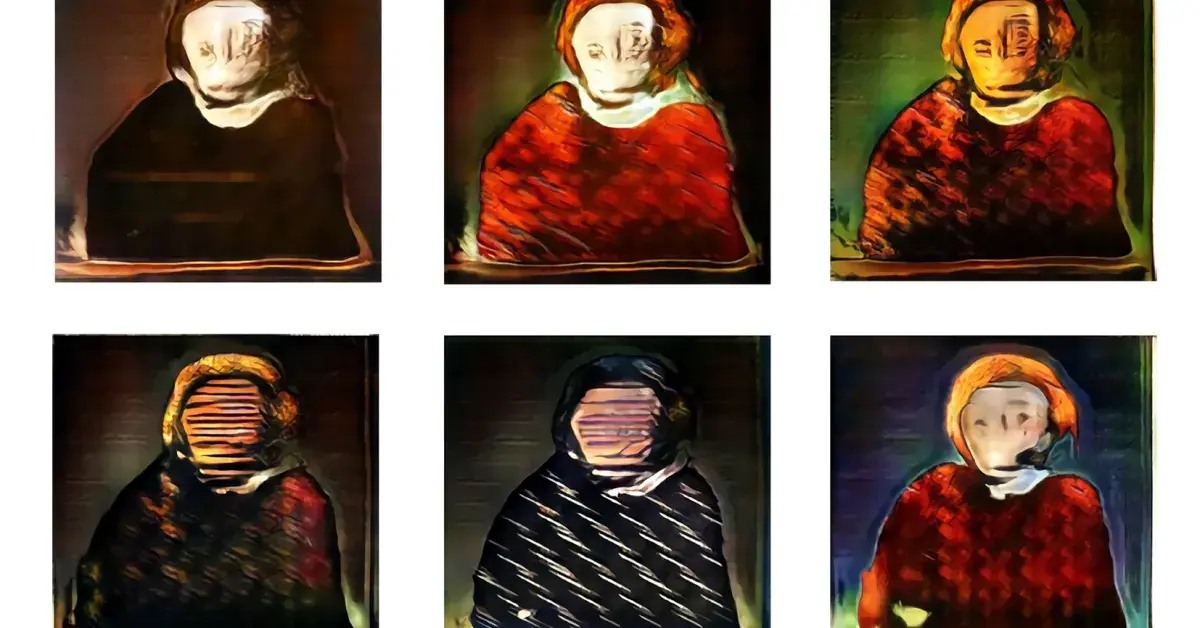
Artificial intelligence applied to images now enters this historical journey . While cameras directly captured light from the physical world at a specific moment, today's AI systems operate differently: their "target" consists of millions of existing images , broken down into small units or visual tokens, linked to verbal descriptions (linguistic tokens). Through this massive cross-referencing of data, AI internalizes the collective visual language circulating on the internet.
This production method transforms AI-generated images into a kind of second-order derivative of reality : they are not direct captures, but rather reinterpretations constructed from the visual memory stored in the data. Hence, many of these images are both familiar and unsettling: they resemble possible photographs, yet depict people, cities, or landscapes that have never existed.
Meanwhile, seemingly “classic” materials like POSCA paint markers are at the heart of contemporary experimental practices that engage with this new technological ecosystem. The hybridization of the analog, the urban, and the digital demonstrates that the transformation of art depends not only on algorithms, but also on how artists reorganize their physical tools and integrate them into curatorial and participatory projects.
POSCA, the circle and collective creation in The Rolling Collection
Since the 80s, the Japanese brand of water-based markers POSCA has established itself as a key tool in urban art, illustration, graphic design, and hybrid projects . Its opaque, intensely colored, and quick-drying ink works on paper, wood, metal, glass, or textiles, allowing artistic practice to move beyond the traditional studio and blend with public spaces, everyday objects, or installations.
More than just a tool, POSCA functions as a material infrastructure of contemporary creation : a technical device that offers immediacy in gesture without sacrificing chromatic density or precision. This versatility has helped democratize languages associated with painting , building bridges between professional and amateur practices, and fostering a more horizontal circulation of visual experimentation.
A particularly significant example of this expanded dimension is the traveling exhibition project The Rolling Collection , curated by ADDA Gallery. The exhibition revolves around the circular format, understood not only as a geometric form, but also as a symbolic structure and field of spatial tensions that challenge the hegemony of the rectangular painting in Western tradition.
Historically, the circle has been associated with ideas of wholeness, continuity, and cycles. In The Rolling Collection, however, this symbolic weight is shifted toward a more experimental exploration, where the absence of corners forces a rethinking of composition, balance, and the direction of the line . The curved surface generates a specific economy of artistic decisions and reorders the relationship between center and periphery.
This circular edge tends to blur internal hierarchies and produces centripetal and centrifugal visual dynamics that transform the way the image is constructed. The result is a body of work that directly challenges the ways in which we look at and organize pictorial space, fitting perfectly with the contemporary sensibility toward formal experimentation.
After touring cities like Barcelona, Ibiza, Paris, London, and Tokyo in 2025, a selection of the project will be presented at Art Madrid'26 , reinforcing its international reach and its ability to adapt to different cultural contexts. This Madrid event brings together artists such as Honet, Yu Maeda, Nicolas Villamizar, Fafi, Yoshi, and Cachetejack, all situated at the intersection of urban art, contemporary illustration, and hybrid practices.
Despite the heterogeneity of languages—ranging from graphic narratives to gestural chromatic explorations—the curatorial approach establishes a free, experimental, and intensely colorful attitude as a common thread . Color becomes a conceptual structure that articulates the pieces and links them to the specific materiality of the POSCA markers, whose chromatic intensity engages with the striking presence of the circular support.
The saturation and contrasts inherent in the marker are superimposed on the round format, generating surfaces of great visual impact . Far from being invisible, the tool is consciously integrated into the exhibition's narrative, in harmony with the particular aesthetics of the participating artists and with the logic of an art that embraces its means of production as part of the message.
One of the most significant features of the project at Art Madrid'26 is the active participation of the public . In the exhibition space occupied by POSCA, visitors can directly interact with circles arranged on the wall, using the markers themselves. In this way, they become symbolically and practically integrated into The Rolling Collection during its stopover in Madrid, transforming the space into a large, shared canvas.
This strategy introduces a clear relational dimension that destabilizes the idea of a closed work . Authorship is dispersed, and the exhibition space becomes a dynamic surface for the accumulation of gestures, akin to contemporary participatory practices that open the artistic apparatus to contingency and a multiplicity of voices without sacrificing the overall formal quality.
The choice of POSCA for this collective intervention is not accidental: its technical characteristics—ease of use, stroke control, and compatibility with multiple surfaces—guarantee an accessible experience for non-specialized audiences without sacrificing visual impact. The marker thus acts as a mediator between the professional sphere and spontaneous experimentation, blurring the lines between specialist and amateur.
Even the title, The Rolling Collection , suggests a collection in motion, not anchored to a single space or a definitive configuration. Its itinerant nature, combined with city-specific interventions , transforms the project into a constantly evolving entity. In this context, POSCA acts as a material catalyst for a transnational creative community, reinforcing its brand identity historically associated with urban scenes and emerging practices.
The POSCA x The Rolling Collection collaboration can be understood as a strategic convergence of tool, discourse, and community . The project proposes a reflection on the format, the global circulation of contemporary art, and the expansion of authorship, while POSCA provides the necessary technical infrastructure for both individual artworks and the shared collective experience.
What is generative art and how does creative AI work?
At the heart of the current revolution lies generative art : practices in which the artwork emerges from the collaboration between people and algorithmic systems. Through models trained on large sets of images, sounds, or data, AI is able to produce new pieces that combine styles, palettes, and forms in ways often unpredictable even to the creator.
The process usually begins with a prompt or instruction in natural language . A user might ask, for example, "a night sky filled with space destroyers in battle," and in a matter of seconds the system generates several possible versions of that scene. It's like having an inexhaustible assistant, capable of suggesting variations tirelessly and never running out of ideas.
The mechanisms for creating art with AI are very varied. There are " rule-based " systems that follow mathematical patterns to produce visual compositions, algorithms that simulate brushstrokes or painterly textures, and deep learning models such as generative adversarial networks (GANs) or transformers, which today shape much of the development of the field.
One of the most interesting pioneers is AARON , developed by Harold Cohen in the late 1960s. It is an emblematic example of the era of so-called symbolic AI (GOFAI), where the emphasis was on programming explicit rules to generate drawings. In its early versions, AARON produced black and white graphics that Cohen then colored; over time, the system evolved to handle brushes and inks chosen autonomously by the program.
With the advent of modern neural networks, the focus shifted to GANs (Generative Adversarial Networks) , which consist of two components: a generator, which attempts to produce increasingly convincing images, and a discriminator, which evaluates how close those images are to the training images. This internal "duel" leads to spectacular results in quality and realism.
More recent models combine approaches such as VQGAN (Vector Quantized GAN) with CLIP (Contrastive Language-Image Pre-training), which links text and images to refine the response to user instructions. Well-known tools like DALL·E , Google's Imagen and Parti, Microsoft's NUWA-Infinity, Midjourney, StyleGAN, and Stable Diffusion are based on variations of these architectures and have massively popularized AI-generated art.
Meanwhile, projects like DeepDream , launched by Google in 2015, showcased the potential of algorithmic pareidolia: by amplifying the patterns a neural network detects in an image, psychedelic and dreamlike visions are generated, achieving significant aesthetic and media impact. Other tools, such as user-friendly mobile applications or Jupyter Notebook environments requiring powerful GPUs, have broadened access to this type of visual exploration.
AI in photography, design, and visual communication
Photography was once perceived as a purely mechanical technology that ended up establishing a rich artistic language . Today, AI is playing a similar role with respect to images: it is capable of generating portraits, cityscapes, interiors, sunsets, or everyday scenes that circulate massively on the internet, often indistinguishable from a traditional photograph to the untrained eye.
However, this proliferation does not necessarily imply the disappearance of auteur photography . AI does not yet autonomously produce the conceptual or emotionally dense works found in galleries or specialized festivals. What is happening, however, is that it is replacing or complementing many utilitarian functions of photography : image banks, advertising campaigns with virtual models, press illustrations, and stock material, among others.
In the field of design and visual communication , creative environments have demonstrated a remarkable openness to technical innovations. Design, art, and technology have evolved together for centuries, but the leap made with digital tools and, more recently, with generative AI for content creation (text, image, code, prototypes, interfaces) has been particularly radical.
Researchers like Mingyong Cheng point out that this revolution opens up a very fertile perspective for the conception and execution of projects . The collaboration between AI and human skills allows for the exploration of novel concepts and streamlines phases of the process that were previously very costly in terms of time or resources, without sacrificing the expressive core provided by the artist's or designer's perspective.
Beyond the media hype surrounding viral AI-generated images, many of these tools are used to optimize creative workflows : automating repetitive tasks, generating variations of initial proposals, adjusting compositions, cleaning up backgrounds, improving image quality, or analyzing user data to refine visual decisions. In this way, creators and studios can gain efficiency and freedom , prioritizing the parts of the process where human intervention is truly irreplaceable.
AI tools that are changing art and design
At the forefront of this transformation we find a range of artificial intelligence tools designed for creators , which put machine learning and the processing of large volumes of data at the service of human imagination in different phases of work.
Among the most prominent in art and design are natural language processing models that allow the creation of images, illustrations, or graphic compositions from textual descriptions or reference images, as is the case with DALL·E, Midjourney, or Stable Diffusion. Recognition and classification programs are also crucial , identifying objects, patterns, or styles in images and helping to catalog files or generate specific datasets.
Of particular importance are the style transfer tools , capable of applying the aesthetics of one image to another or generating new hybrid styles, as well as the editing and automatic quality improvement systems: restoration of old photos, enlargement without noticeable loss of detail, noise removal or color correction with one or two clicks.
On the other hand, data analysis has become an ally for studying trends, feedback, and audience preferences. Platforms that integrate AI allow designers and communication teams to evaluate which types of images, layouts, or styles generate the most interaction and adjust their proposals accordingly, always with the not insignificant risk of falling into an overly homogenized aesthetic.
The key, as various voices in academia and the professional world emphasize, is to understand these tools as complements to human work, not as substitutes . AI can be a powerful support, but judgment, intention, and sensitivity remain the responsibility of people, who decide what meaning to give to the results generated.
Literature, visual arts and film: AI in the creative industries
The impact of artificial intelligence is not limited to static images. In literature , for example, experiments have existed for decades. In 1984, the Racter program produced the surrealist poetry book "The Policeman's Beard is Half Constructed," considered one of the first attempts at computer-generated writing , although the technology of the time imposed significant limitations.
With the emergence of large language models (LLMs), such as the various versions of GPT, the ability to produce coherent and stylistically varied texts has skyrocketed. Today, these systems can write stories, poems, or even novels that mimic the styles of specific authors with surprising fluency. This opens up scenarios for co-authorship, where AI suggests plots, dialogues, or structures that the human writer then reviews, corrects, and personalizes.
In the visual arts , generative art has been gaining ground since Harold Cohen's pioneering work with AARON, continuing through current neural networks. Artists like Mario Klingemann explore the limits of perception using deep learning models, and their works have reached prestigious institutions such as the MoMA in New York, demonstrating that AI art can aspire to high-profile art circuits.
A symbolic milestone occurred in 2018 when the Parisian collective Obvious sold the AI-generated artwork Edmond de Belamy at Christie's for $432.500, some 45 times its initial estimate. The piece not only highlighted the commercial potential of these technologies but also sparked an intense debate about authorship, originality, and legitimacy in the art market.
In the film industry , AI is used in multiple phases of production. In 2016, IBM Watson was used to create the trailer for the film "Morgan," analyzing hundreds of previous trailers to select the most impactful scenes. More recently, text-to-video generation has opened the door to short films written partially or entirely by AI, as well as algorithmically created environments and sets , drastically reducing pre-production time.
Interactive and personalized cinematic experiences are also being tested , in which AI adapts the story's development based on the viewer's reactions or decisions. These kinds of proposals could change not only how films are produced, but also how they are consumed, placing the audience in a much more active role within the narrative.
Inography, AI-powered music, and expansion into other languages
The generation of images that resemble photographs, but are not, has prompted the introduction of new concepts. In 2023, Ricardo Ocaña coined the term “inagraphy” to designate the procedure or technique that allows for obtaining still images using an AI system, thus differentiating them from traditional photography. This distinction helps to better understand the contributions and limitations of technology in 21st-century visual art.
Beyond visuals, AI has advanced rapidly in the realm of sound. By 2024, systems like Suno AI and Udio were already capable of producing sophisticated music, from instrumental tracks to complete songs with vocals, in a wide variety of styles. The line between human composer and algorithmic generator is becoming increasingly blurred, presenting both fascinating creative possibilities and legal and professional dilemmas.
In all these areas—text, image, music, video—AI doesn't operate in a vacuum, but rather draws on vast repositories of previous works. Much of the current controversy revolves around how these training sets are constructed , what licenses govern the original pieces, and what rights their authors retain or lose.
Ethical, legal, and labor debates in AI art
For decades, legal scholars and theorists have analyzed who should hold copyright ownership of works generated by computer systems. As early as 1985, Pamela Samuelson argued that, in computer-generated works, intellectual property rights should be assigned to the user of the program , and not to the software itself.
Researchers like Victor M. Palace have proposed several alternatives: recognizing AI as a legal author (which would require changing basic legal definitions), attributing authorship to the user, programmer, or company under the "work for hire" model, or considering that these works enter directly into the public domain due to the lack of an identifiable human author. Each option has very different implications for the cultural industry, from who collects royalties to what uses are considered legitimate.
On a practical level, many artists are concerned about the economic impact of AI-generated art. Some fear that, in sectors such as editorial illustration or design for small commissions, a single art director could, with the help of these models, replace several junior professionals . Testimonies from illustrators who see their style replicated in AI outputs without their consent have raised serious concerns.
Organizations like the British union Equity point out that a large majority of visual artists perceive the development of AI as a threat to their job prospects . Artists like Greg Rutkowski have denounced the increasing difficulty of finding their own work in search engines, which are flooded with generated images that mimic their aesthetic. Added to this is the lack of clear mechanisms for excluding specific works from the datasets used to train the models.
From a cultural perspective, researchers like Nantheera Anantrasirichai and David Bull emphasize that some critics fear AI will dilute the authenticity and uniqueness of human creative expression . The risk of stylistic homogenization is real if too many projects rely on the same architectures, prompts, and models, generating an "algorithmic average" aesthetic where differences are flattened.
In contrast, other voices argue that AI can foster experimentation , free artists from tedious tasks, and expand the available formal repertoire. The question is not so much whether AI is an enemy or an ally of art, but rather how these tools are regulated and used , what ethical frameworks are established, and how the diversity of voices and the professional dignity of those who make a living from creating art are preserved.
The role of academia and training in art, design and technology
Given this complex scenario, the university environment and, in general, the educational field occupy a privileged position to address the debate in depth . Classrooms become ideal spaces for articulating theoretical analyses, critical debates, and teaching practices that allow new generations to understand the opportunities and risks of AI in artistic contexts.
Educational programs that integrate design, art, and technology are emerging as key spaces for exploring the creative, technical, and ethical functions of these tools. The goal is neither to demonize nor idealize AI, but to provide students with solid criteria for working with it , developing their own projects, and taking a stance on issues such as authorship, intellectual property, and the social impact of their decisions.
This educational approach emphasizes avoiding stylistic homogenization : students are encouraged to use AI as a tool to find their own artistic language, not simply to conform to what the tools "suggest" by default. It's about strengthening the artist's hand and judgment over the convenience of automation.
Thus, the interaction between technology, art, and design becomes a testing ground for new models of collaboration between humans and machines, without losing sight of the ethical and human aspects of the creative process. Universities, research laboratories, and art schools are, in this sense, essential nodes to ensure that this revolution is not limited to the technical realm, but also incorporates critical reflection and responsibility.
Everything points to the future of art being a shared territory, where physical markers like POSCA, collectively altered circles, AI-generated inographic portraits, novels co-written with language models, music videos composed by algorithms, and personalized cinematic experiences all coexist. The challenge will be to keep creative diversity and human agency alive within this ecosystem of intelligent tools, so that technology doesn't stifle, but rather enhances, the richness of imagination and sensitivity that makes us human.