- Emotional intelligence is based on five trainable skills —self-awareness, self-regulation, motivation, empathy and social skills— which the LOMLOE includes through the CPSAA competence.
- Combining emotion and creativity multiplies the ability to resolve conflicts: flexible and divergent thinking opens up avenues that impulsive reaction abruptly closes.
- There are programs with public evaluation (Happy Classrooms, Responsible Education, INTEMO+ and RULER) that allow you to move from theory to classroom practice without inventing anything from scratch.
- Emotional training for teachers is not an embellishment: it is the prerequisite for any emotional education plan to truly work.

When someone hears the expression "emotional intelligence," they might easily picture a poster with smiley faces hanging on a classroom wall. However, it goes much further than that: we're talking about a set of skills that allow us to identify, understand, and manage our own feelings and, in turn, understand the feelings of others. This learning, so often neglected in schools, has direct consequences for personal well-being, for getting along with others, and for the ability to resolve everyday conflicts without everything exploding.
In recent decades, research on this subject has steadily increased, along with the growing certainty that working with emotions from childhood yields benefits both within the individual and in their relationships with others—something that aligns perfectly with the idea of a culture of peace . To this mix, we should add another crucial ingredient for holistic development: creativity and flexible thinking. Those who can imagine multiple approaches to a problem are more likely to find a solution that doesn't involve shouting or pushing. Throughout this article, we will review what is meant by emotional intelligence, how it has been studied, what theoretical frameworks exist, how it is implemented in the classroom, and how all of this connects to conflict management.
Where does the concept of emotional intelligence come from?
The term was coined by Salovey and Mayer in 1990, who defined it as a form of social intelligence that involves the ability to manage one's own feelings and emotions and those of others, to discriminate between them, and to use that information to guide thought and action. In other words, it's not about being likeable or having a good temperament, but rather a manageable and trainable skill that affects how we think and how we decide.
The concept was popularized by Daniel Goleman in 1995, with a statement that resonated throughout the educational and business worlds: according to his theory, emotional intelligence explains up to 80% of personal and professional success , while IQ accounts for around 20%. This idea resonated deeply because it broke with the old practice of measuring everything with reasoning tests.
Subsequent research has further refined the understanding. The meta-analysis by O'Boyle, Humphrey, Pollack, Hawver, and Story, published in 2011 in the Journal of Organizational Behavior and based on 191 studies with 18.726 participants, confirmed moderate but significant correlations between emotional intelligence and professional performance, with values around 0,24 and 0,32 depending on the model used, even after controlling for general intelligence and personality traits. In practical terms: emotion enhances, but does not replace, cognitive ability.
Simultaneously, other instruments and approaches emerged, such as Bar-On's EQ-i inventory (1997), or the work of Mayer, Salovey, and Caruso (2000 and 2008), which opened the debate on whether emotional intelligence is a true mental ability or rather an eclectic set of traits. This discussion remains ongoing and explains why there are mixed models and ability-based models within the same field.
The five components according to Goleman and their regrouping into four domains

Goleman identified five fundamental components, which remain the basis of almost everything taught today in faculties of Education:
- Self-awareness: To recognize and understand one's own emotions, strengths, weaknesses, and values, and to realize how they influence what one thinks and does.
- Self-regulation: to control or redirect the impulses and moods that overwhelm us.
- Motivation: passion for working beyond external rewards, with perseverance in the face of obstacles.
- Empathy: ability to perceive other people's emotions and respond accordingly.
- Social skills: manage relationships, build networks, and exert a positive influence on others.
Of the five, the first three are grouped as personal competencies and the last two as social competencies. However, it's worth paying attention to a detail that frequently appears in competitive exams and training materials: it's common to find a version with four domains instead of five components. This isn't a different model, but rather a later reorganization by Goleman himself , co-authored with Boyatzis in their 2002 work on resonant leadership, which groups self-awareness, self-management (self-regulation plus motivation), social awareness (empathy), and relationship management (social skills). It's the same content packaged into four blocks, so you don't need to memorize two different theories, but rather understand that one is a reorganized version of the other.
The most important consequence of all this is that these components are not ingrained personality traits: they are skills that can be developed . This potential for improvement is what makes emotional education a valuable educational investment, not just a curriculum embellishment.
Emotional intelligence versus intelligence quotient
One of the most powerful contributions of this concept was demonstrating that having a gifted mind for calculation does not guarantee a balanced life. The differences between these two abilities are clearly summarized in the following comparison:
| Appearance | Intelligence quotient (IQ) | Emotional intelligence (EI) |
|---|---|---|
| What does it measure? | Cognitive ability, logical reasoning, and memory | Emotional management, empathy, and social skills |
| Is it innate? | It remains fairly stable throughout life | It develops and improves with sustained practice |
| What does it predict? | Around 20% of professional success | Up to 80% of personal and professional success |
| As measured | Standardized tests such as the WAIS or the Stanford-Binet | Self-perception questionnaires, 360-degree evaluation, and ability instruments |
Classic studies on the subject indicate that people with high emotional intelligence tend to maintain better personal and professional relationships, manage pressure better, demonstrate greater leadership and teamwork, and achieve higher levels of life satisfaction . None of this means that IQ doesn't matter; rather, emotional intelligence complements and enhances what is already present.
Regarding the possibility of developing emotional intelligence in adulthood, the meta-analysis by Mattingly and Kraiger, published in 2019 and reviewing 50 studies, documents medium effect sizes, around 0,46, in structured programs of at least eight hours. However, the key is sustained practice over time : emotional journaling, mindfulness, professional supervision, and structured feedback produce measurable changes, while simply reading books on the subject without taking any action yields absolutely nothing.
Three frameworks for bringing emotional intelligence into the classroom: Goleman, Bisquerra and RULER
There is no single model of emotional intelligence. In Spanish educational literature and practice, at least three frameworks coexist, and each has a different place in the classroom and in lesson planning:
| Dimension | Goleman (1995) | Bisquerra (2003) | RULER (Yale, Brackett, 2007) |
|---|---|---|---|
| Origin | United States. Mixed model of widespread popular use, based in part on Salovey and Mayer. | Spain. Educational model of Rafael Bisquerra and the GROP group of the University of Barcelona. | United States. Skills-based educational model, promoted by Marc Brackett from the Yale Center for Emotional Intelligence. |
| Components or phases | Five: self-awareness, self-regulation, motivation, empathy, and social skills. | Five competencies: emotional awareness, emotional regulation, emotional autonomy, social competence, and life and well-being skills. | Five skills summarized in the acronym RULER: recognize, understand, label, express, and regulate. |
| Our Approach | Applied to leadership, professional success, and emotional management. | Educational and preventive: well-being, prevention of risky behaviors and development throughout life. | Educational and school: systemic implementation in centers, with mandatory prior training of the teaching staff. |
| Fit within the LOMLOE | Its dimensions are mapped to the CPSAA competency descriptors; it is the most cited framework in competitive examinations. | This framework is most aligned with the competency-based approach because it focuses on competencies, not traits. Highly recommended for developing curricula in Spain. | It fits with the CPSAA, but requires adaptation: the original material is in English and official implementation involves external training. |
For curriculum planning in Spain, Bisquerra's framework is the best theoretical fit, as his notion of emotional competence aligns with the competency-based approach of the curriculum. However, if the goal is recognition before a competitive examination board , Goleman remains the most frequently cited reference. The most sensible strategy is to cite Bisquerra as the primary framework, mention Goleman as a historical precedent, and only use RULER if the school implements that specific plan.
How the idea of intelligence has evolved
The concept of intelligence has changed in step with the trends of each era, although there has almost always been a strong temptation to measure everything. Following Salmerón Vílchez's classification (2002), three main groups of models can be distinguished:
- Models focused on structuring and composition: They look for the factor or factors that make up the construct, their relationships and their measurement, with the aim of describing differences between people.
- Models focused on cognitive functioning: They focus on the processes that guide action, intervening by modifying cognitive structures and fostering autonomy in learning. Key figures in this field include Piaget, Vygotsky, Bruner, and Wallon.
- Models focused on the global understanding of social development: They understand that individuals function in society through cognition and feeling, and that some behaviors are better explained from non-cognitive dimensions. Gardner is one of their best-known proponents, with the pursuit of happiness as a fundamental life need.
The four components of Salovey and Mayer and their educational interpretation
Another frequently cited proposal is that of Salovey and Mayer from 1997, which organizes emotional intelligence into four components. Fernández-Berrocal and his collaborators summarized these in 2002 in a way that is very useful for teaching:
- Perception: Read your own feelings and emotions, label them, and experience them. Recognizing how we feel is the foundation for later learning to moderate our reactions and not be swept away by uncontrolled impulses.
- Assimilation: Emotions and thoughts go hand in hand; if we know how to put emotions at the service of thought, we reason better and decide more wisely.
- Understanding: To understand other people's feelings, you must first understand yourself. Those who identify their own feelings connect more easily with the feelings of others.
- Regulation: The most difficult skill to master. It consists of moderating one's emotional reaction to intense situations, both positive and negative, and avoiding uncontrolled responses to provocation or fear. This field has also expanded to include the self-regulation of positive emotions.
Emotional education, emotional management, and emotional psychology
Emotional education is a comprehensive process that encompasses the development of emotional skills, the understanding of emotions and their impact on daily life, and the promotion of healthy well-being. It involves cultivating emotional awareness, regulation, empathy, and social skills to improve relationships and resolve conflicts constructively.
Within that umbrella, emotional management deserves a separate chapter. It refers to the ability to recognize, understand, and effectively regulate one's own emotions, and it begins with self-awareness: naming what we feel, knowing what triggers it, and how it affects us. From there, techniques such as conscious breathing, mindfulness, and constructive emotional expression come into play, in addition to developing coping and resilience strategies to handle life's challenges without breaking down inside.
Emotional psychology, for its part, provides the theoretical and scientific framework that gives meaning to all of the above: it explains the nature of emotions, how they function, and how they influence thought and behavior. This knowledge allows us to design educational environments with a positive emotional climate that supports students' emotional growth.
Emotion and learning: the weight of emotional memory
The brain's emotional system is directly involved in memory formation, decision-making, and motivation, making it impossible to separate emotion and learning. When a student feels enthusiasm or curiosity, their emotional system facilitates information processing and retention; when they feel stress or anxiety, concentration falters and performance plummets.
Emotional memory explains why this happens. Experiences with intense emotional charge, both positive and negative, are recorded more clearly and in greater detail, and these memories influence future attitudes and decisions. A student who received sincere praise for a job well done will remember that scene fondly and be more engaged; one who repeatedly felt embarrassed in front of the class will associate certain topics with discomfort and avoid putting themselves in that position. Therefore, creating an emotionally safe environment is not a matter of being overly friendly, but a pedagogical decision with demonstrable effects.
To deliberately link emotion and learning, teachers can integrate emotional experiences into the process: moving narratives, emotional expression through art or music, and connections between curriculum content and students' emotional lives. The goal is for what is taught to be meaningful to the learner.
Creativity, divergent thinking, and peaceful coexistence
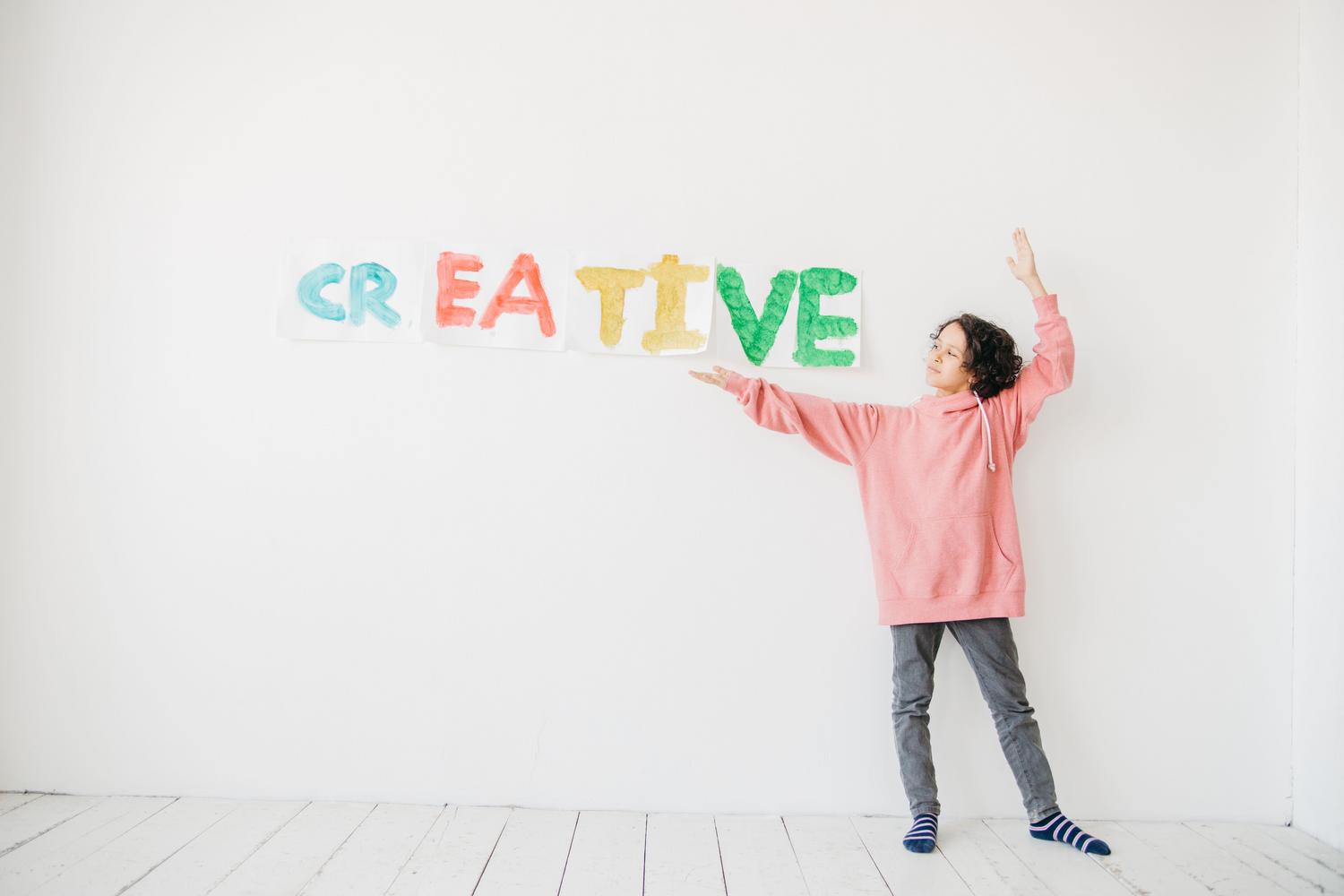
Emotional education doesn't exist in isolation. When combined with the development of flexible and divergent thinking, it creates a particularly powerful combination for the peaceful resolution of conflicts. The key is that a child who can imagine several alternatives to a problem has less need to resort to force, because they see solutions where others only see conflict.
The proposals that address this connection in early childhood education are based on a simple idea: the earlier you start, the better. Through projects implemented in schools, it has been shown that students improve their ability to recognize emotions, express their feelings, and find creative solutions to everyday conflicts, and that these advances ultimately benefit the entire school community. Hence the emphasis on the need to train teachers in these skills, because without well-prepared teachers, any program will never get off the ground.
Creativity, understood in this way, is not an artistic embellishment nor a talent reserved for a select few: it is a tool for coexistence. A school environment where one can make mistakes without being humiliated, where unusual questions are asked, and where different solutions to everyday problems are explored is, in addition to being a creative environment, a less aggressive and more cooperative one.
How to develop emotional intelligence: five practical ways
Unlike IQ, emotional intelligence can be developed at any age. These are the most effective ways to do so:
- Self-awareness: Keep an emotional journal noting what you feel and what triggers it, identify patterns of reaction to stress, and ask trusted people for feedback on how they see you.
- Self-regulation: Learn breathing and relaxation techniques, practice pausing before reacting, and identify your own emotional triggers.
- Intrinsic motivation: Set personal goals that truly matter, celebrate small achievements, and view failures as learning opportunities.
- Empathy: Listen actively without interrupting, put yourself in the other person's shoes before judging, and pay attention to nonverbal language.
- Social skills: train assertiveness, seek opportunities for collaboration, and learn to give and receive constructive criticism.
Teaching strategies for working on emotional intelligence in the classroom
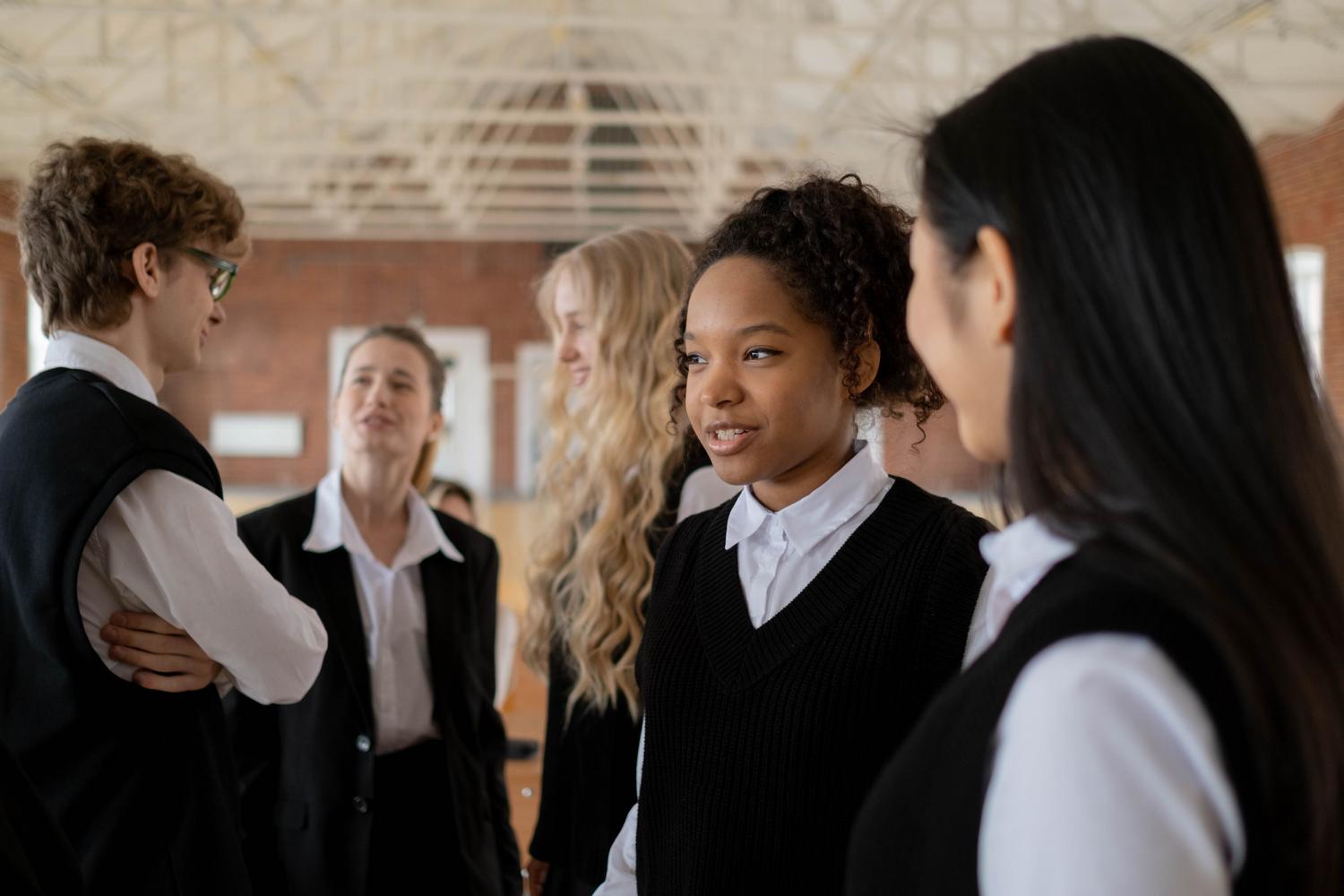
Developing emotional intelligence in the classroom isn't about adding an extra task to the list, but about integrating emotional work into existing learning situations. These are the most effective strategies:
| strategy | What is | Ideal stage | LOMLOE Competition |
|---|---|---|---|
| Emotional assembly | At the start of the day, the teacher asks the group how they are. The aim is not to solve anything, but to make their emotional state visible before starting work. | Infant and Primary | CPSAA: Emotional Self-Awareness |
| Emotional Thermometer | Visible poster with a scale of emotional states; students position themselves on it upon entering and the teacher adjusts the pace and demands according to what they see. | Preschool, Primary and Secondary | CPSAA: self-regulation |
| Emotional Socratic dialogue | In the face of a conflict, the teacher does not provide the solution: he asks how the student thinks the classmate felt or what he would have needed in his place. | ESO and Bachillerato | Civic competence: empathy and coexistence |
| Emotional reading of texts | Analyze the characters' emotions, their decisions and their consequences, and connect them with your own experience. | Primary and secondary school | Linguistic competence and CPSAA |
| Portfolio of emotional competencies | The student documents real situations in which they managed an emotion well or poorly, what they learned, and what they would do differently. | ESO and Bachillerato | CPSAA: Metacognition and Self-Assessment |
| Reflective closing routines | The last five minutes of class are dedicated to two questions: what you have learned and how you have felt during the session. | all stages | CPSAA: Learning to Learn |
There is a factor that runs through all these strategies and is often overlooked: the teacher's own emotional intelligence. A teacher who manages their frustration calmly, names what they feel, and responds instead of reacting is providing emotional education, even if they don't call it that. Their behavior is the model that students observe and internalize , which is why training in this area is a prerequisite, not an optional extra.
Ten concrete dynamics, stage by stage
Early childhood education (3 to 6 years)
- The box of emotions. Box with cards of basic emotions (joy, sadness, anger, fear, surprise). Each morning the children choose one and stick it in its place. Five minutes at the start of the day. Works on emotional awareness.
- The emotional story. Reading a story with a clear emotional charge, in the style of The Color Monster, and then identifying what the protagonist is feeling at each moment and why. About twenty minutes. Expands emotional vocabulary.
- The emotional thermometer. Poster with a four-color scale (calm green, sad blue, angry red, happy yellow). Children stand on it upon entering and before leaving. Two or three minutes. It trains emotional labeling and self-regulation.
Primary education (6 to 12 years)
- The circle of the word. The group sits in a circle, and only the person holding the object being passed around speaks. The question is: What made you feel good this week, and what was difficult? Twenty minutes per week. This session focuses on emotional expression, active listening, and empathy.
- The emotional diary. Twice a week, each student writes down what emotion they felt, why, and what they did about it. The teacher reviews the entries every two weeks without correcting, only responding. Ten minutes per session. This reinforces self-awareness and metacognition.
- The emotional traffic light. In the face of conflict: red (stop and take a breath), yellow (reflect on my own feelings and those of the other person), green (decide how to act). Initial half-hour session followed by continued use. Develops self-regulation and conflict resolution skills.
- The story of my emotion. Each student chooses an emotion and creates a short story, written or drawn, about a real or imagined situation in which they felt that emotion. These are then shared voluntarily in small groups. Approximately forty-five minutes. This activity expands vocabulary and emotional storytelling skills.
Secondary Education and Baccalaureate (12 to 18 years old)
- The portfolio of emotional competencies. Throughout the term, students document three to four real-life situations in which they managed an emotion well or poorly, using the following structure: situation, identified emotion, response given, subsequent analysis, and what they would do differently. They conclude with a fifty-minute self-assessment session. This activity develops metacognition and reflective self-regulation.
- Emotional analysis of literary characters. Using a novel from the curriculum, students analyze the characters' decisions based on their likely emotions and consider what they would have done in their place. Two fifty-minute sessions. Develops empathy and deep reading comprehension.
- Debate with emotional turns. A debate on a controversial topic with an added rule: before each argument, each participant names one emotion the topic evokes in them and another they believe it evokes in someone who disagrees. One hour. It curbs the emotional outbursts typical of adolescence and trains cognitive empathy and self-regulation in public discourse.
Programs with public evaluation behind them
Before implementing an emotional education program, the school should choose a framework with published evidence. These four options offer accessible materials and independent evaluation:
| Program | Origin | What is | Evaluation and access |
|---|---|---|---|
| Happy Classrooms | SATI team from the University of Zaragoza, coordinated by Ricardo Arguís and other authors | A program of positive psychology applied to preschool, primary and secondary education that combines mindfulness, personal strengths and emotional education | Over 30.000 documented downloads since 2010 and presence in hundreds of public centers. Complete free download manual and peer-reviewed publications |
| Responsible Education | Botín Foundation, with independent evaluation by the University of Cantabria | A comprehensive socio-emotional, cognitive, and creative development program that works with the entire school, not just volunteer teachers. | Longitudinal evaluation with control group and public reports with positive results in well-being, performance and prosocial behavior |
| INTEMO+ | Pablo Fernández-Berrocal, Rosario Cabello, Lourdes Rey and team from the University of Malaga | Specific program for adolescents aged 12 to 18 based on the Mayer and Salovey model, with twelve structured sessions and manuals for teachers and students | Evaluation in Spanish samples with a control group and significant improvements measured with standardized tests; publications in international scientific journals |
| RULE | Marc Brackett, Susan Rivers and the Yale Child Study Center | Social-emotional learning program structured in stages, with mandatory implementation and prior training of the teaching staff | Over 5.000 centers worldwide and randomized studies showing improvements in classroom climate and performance. Requires license and training. |
For a Spanish school starting out, the most realistic entry point is either Aulas Felices (Happy Classrooms), which is free and comprehensive, or Educación Responsable (Responsible Education), which includes support from the foundation. INTEMO+ is the best option if the focus is on adolescence, while RULER provides the most systemic framework but requires investment in training.
Conflict resolution with emotional intelligence

In most conflicts, the problem isn't the disagreement itself, but how it's managed. This is where emotional intelligence makes all the difference, because it allows you to address tension more constructively and empathetically, facilitating communication and understanding between the parties. These are the ways it works:
- emotional control: In the midst of an argument, it's easy for anger or frustration to cloud judgment. Those who regulate their emotions avoid impulsive responses, think more clearly, and make more rational decisions.
- Empathy: Putting yourself in the other person's shoes and understanding their point of view creates an atmosphere of respect and collaboration, and allows you to find solutions that benefit both parties without the conflict becoming entrenched.
- Effective communication: Expressing thoughts and emotions clearly, without aggression or passivity, and truly listening. Open communication reduces the misunderstandings that are at the root of so many conflicts.
- Self-control and stress management: Staying calm in tense situations not only improves decision-making, it also lowers the temperature of the environment.
- Creative problem solving: Understanding the emotions of everyone involved opens the door to innovative solutions that satisfy the needs of both parties.
Research on conflict management styles has its roots in classic works such as those by Thomas (1976) and Blake and Mouton (1964), and has continued to develop in studies on interpersonal styles in organizations, such as those by Munduate and colleagues. In the field of education, works such as those by Villamediana, Donado, and Zerpa have analyzed the relationship between conflict management styles, emotional intelligence, and moral development, while Jordan and Troth studied how emotions are managed during team problem-solving. The meta-analysis by Schlaerth, Ensari, and Christian follows the same line of thought, confirming the relationship between emotional intelligence and constructive conflict management in leadership contexts.
Neuro-linguistic programming tools that help
Neuro-linguistic programming (NLP) offers a handful of techniques that can complement emotional work. The first is reframing , which involves looking at the situation from a different angle: instead of focusing on the negative aspects of the conflict, a more constructive approach is sought, for example, seeing the disagreement as an opportunity to improve communication. The second is emotional anchoring , which allows access to positive emotional states in moments of tension and helps maintain calm and mental clarity. The third is rapport , the connection created by tuning in to the other person's body language, tone of voice, and emotions, which reduces tension and builds mutual trust. Applied judiciously, these tools help unlock perspectives that were previously unconsidered.
What happens when students lack emotional intelligence?
The components of emotional intelligence include skills for perceiving, understanding, and adaptively managing one's own emotions. When these skills are lacking, the consequences are noticeable both inside and outside the classroom. Fernández-Berrocal and his colleagues described several particularly sensitive areas:
- Relationships: Emotional intelligence influences how relationships are established, maintained, and valued. Those who struggle to manage their own emotions will find it difficult to manage those of others.
- Psychological well-being: Basic emotional processes underlie psychological balance and personal adjustment, and act as mediators between life's difficulties and the student's response to them.
- Academic performance: Paying attention to emotions, experiencing them clearly, and addressing negative moods influences mental health and, consequently, academic performance. Those with poor emotional skills become stressed more easily and make less effective use of available resources.
- Disruptive behaviors: Students with low levels of emotional intelligence show more impulsivity and worse social skills, which favors antisocial behaviors.
- Frustration tolerance and assertiveness: Those who regulate their negative emotions well and maintain positive ones more easily develop complex skills such as accepting criticism or defending their own position without being aggressive.
The conclusion of these studies is that emotional intelligence does not act as an isolated factor, but rather as a moderator between life's challenges and the student's response. Students with high emotional intelligence do not experience fewer difficulties; they manage them better, transforming failure into learning, conflict into dialogue, and stress into productive engagement . This difference justifies making emotional development an explicit objective of the education system.
It's worth adding that students' emotional thinking and emotional learning are key components of this whole system. The former refers to the ability to recognize, understand, and manage emotions in the learning context; the latter, to the process by which students acquire these skills and feel safe enough to participate, make mistakes, and take risks. When the classroom offers this safety, engagement with learning skyrockets.
The teacher as an emotional role model
Emotional intelligence is linked to fewer maladaptive behaviors and more adaptive behavior, and in the case of teachers, this translates into personal adjustment and well-being. For students to develop emotional skills, teachers need to act as emotional educators , and that involves more than just mastering the subject matter.
Teachers become the primary role models for attitudes, behaviors, and emotions within the classroom. A faculty capable of perceiving, understanding, and regulating the emotions of their students achieves emotional balance, which has positive effects on learning processes, mental and physical health, the quality of relationships, and the work environment. When the teaching staff knows how to provide emotional education, students enjoy school more, build stronger self-esteem, improve their performance, and develop their creativity more fully. Furthermore, discipline problems decrease, and the school environment becomes less aggressive, as noted by Dueñas Buey.
The study by Reyes, Brackett, Rivers, White, and Salovey, published in 2012 in the Journal of Educational Psychology with a sample of approximately 2.000 students, demonstrates the correlation between classroom emotional climate and academic performance, with student engagement acting as a mediating variable. A teacher who poorly manages their frustration or burnout creates a climate that hinders learning, regardless of their mastery of the subject matter. Therefore, emotional development for teachers is a prerequisite for any program that aspires to be effective.
Emotional intelligence in the LOMLOE and in the teaching program
The LOMLOE (Organic Law for the Modification of the Organic Law on Education) does not explicitly mention emotional intelligence in its text, but it implicitly incorporates it through Personal, Social, and Learning to Learn Competence, known as CPSAA, one of the eight key competencies in the Student Exit Profile. Its core components are self-awareness, self-regulation, motivation, empathy, and social skills—that is, Goleman's five components. Furthermore, social-emotional learning, an international framework for developing emotional intelligence in school settings, is aligned with the operational descriptors of this competency published by the Ministry of Education.
| Regulation | Reference to the emotional | Practical implications |
|---|---|---|
| LOMLOE, article 1 | It includes the full development of personality and affective capacities as a principle of the system | The emotional development of students is a legal objective, not an extracurricular activity. |
| CPSAA Competition | Self-awareness, emotional regulation, motivation, empathy, and social skills as operational descriptors | The programs should include learning situations that explicitly work on CPSAA. |
| Royal Decree 157/2022, on Primary Education | The CPSAA as a cross-cutting competence in all areas, evaluated through operational descriptors | Learning situations should reflect how this competence is addressed and assessed in each subject |
| Royal Decree 217/2022, on ESO (Compulsory Secondary Education) | The CPSAA as a competence to be acquired at the end of each course, with evaluation through linked criteria | Rubrics should incorporate CPSAA criteria and not just academic content. |
| Mental Health Act 2022 | The emotional well-being of students as a public health objective in the educational field | Schools must incorporate emotional well-being programs, and teachers act as early detection agents. |
If a selection panel asks about emotional intelligence in lesson planning, it will expect the candidate to be able to link it to the CPSAA (Comprehensive Care for Teachers and Students) and its operational descriptors, and not just mention it as a trendy pedagogical approach. The difference between mentioning it and demonstrating the ability to assess it is the difference between passing and ranking among the top candidates.
How to rigorously assess emotional intelligence
Assessment can be organized at three levels. In the classroom, systematic observation with rubrics linked to the CPSAA descriptors is the most practical approach. For student self-assessment, the TMMS-24 by Fernández-Berrocal, Extremera, and Ramos is the most validated self-report instrument in Spanish, free for academic and educational use with citation, and applicable to students from age twelve. Other scales include the WLEIS in its Spanish version, validated by Extremera, Rey, and Sánchez-Álvarez, and the Emotion Regulation Questionnaire by Gross and John.
When the goal is to measure actual ability rather than self-perception, the MSCEIT in its youth version is considered the gold standard, although it requires a commercial license. For a teacher's daily practice, self-assessment with validated instruments is the most realistic approach, provided it is combined with observation and classroom evidence.
Frequently asked questions about emotional intelligence
Can emotional intelligence be improved as an adult?
Yes, and there's data to back it up. Meta-analyses of training programs for adults show significant effects in structured programs of at least eight hours, with medium effect sizes. The key is sustained practice : emotional journaling, mindfulness, supervision, and structured feedback. Reading about the topic without practicing doesn't change anything measurable.
What is the relationship between emotional intelligence and the LOMLOE (Organic Law for the Modification of the Organic Law on Education)?
The law does not explicitly name it, but it incorporates it through the CPSAA competency, one of the eight key competencies of the Exit Profile. The operational descriptors included in the Royal Decrees for Primary and Secondary Education cover the dimensions of Goleman and Bisquerra, so lesson plans must reflect how this competency is addressed and assessed in each subject area.
Which framework should I choose for educational programming in Spain?
For the theoretical foundation, Bisquerra's model of emotional competencies best aligns with the competency-based approach to the curriculum. For recognition before a panel, Goleman remains the most widely recognized reference. If the school has a structured social-emotional learning plan, RULER offers the most systemic framework. The recommended strategy: cite Bisquerra as the primary framework, mention Goleman as a precedent, and refer to RULER only if the school implements it.
Why is it necessary to work on the emotional intelligence of teachers and not just that of students?
Because a teacher's emotional intelligence determines the emotional climate of the classroom, and that climate influences learning. Evidence shows a correlation between emotional climate and academic performance, with student engagement acting as a bridge. A teacher overwhelmed by frustration or exhaustion creates an environment that hinders learning, regardless of their mastery of the subject matter.
What should I do if I detect a student with serious emotional problems?
It's important to understand that emotional education is not psychological treatment. The teacher's role is preventative and educational, not clinical. If clinical anxiety, depression, self-harm, or suicidal ideation is suspected, the protocol is to gather objective information without questioning the student, report it to the guidance team, coordinate with the family following the established protocol, and activate the child protection protocol if there is a serious risk. The teacher provides support, but does not diagnose or treat.
How much time should be dedicated to emotional education for it to be effective?
The programs with the strongest evidence agree on one thing: it's not a separate subject, it's a cross-curricular practice. The operational recommendation is around fifteen to thirty minutes daily, distributed between an initial check-in, a reflective closing, and a full weekly session of specific activity, totaling between one hundred and one hundred and fifty minutes per week. Programs with isolated sessions and no daily practice show much weaker effects.
Is there a risk of indoctrination or invasion of the student's privacy?
It's a legitimate concern. There are three rules that limit this risk: no emotional activity can be mandatory or individually assessed, because students have the right not to share how they feel; emotional education doesn't impose moral values, but rather trains skills such as recognizing, regulating, and expressing emotions; and what is shared in class remains confidential within the teaching framework, unless there is a suspicion of risk or a protocol is activated. If the program respects these three rules, the risk is low; if it doesn't, it needs to be reviewed.
Research and reference readings
The body of evidence supporting all of the above is extensive. These are some of the most cited sources in the Spanish-speaking and English-speaking worlds on emotional intelligence, conflict resolution, and socio-emotional skills:
- Adrian, M., Zeman, J., & Veits, G. (2011). Methodological implications of the affective revolution: A review of 35 years of assessment of emotional regulation in childhood. Journal of Experimental Child Psychology.
- Afzalur, M. and Minors, P. (2003). Effects of emotional intelligence on concern for quality and problem solving. Managerial Auditing Journal.
- Akyol, MA and Akdemir, E. (2019). Comparison of emotional intelligence levels and problem-solving skills in future teachers. World Journal of Education.
- Andrade, MX (2017). Emotional intelligence, conflict resolution in the classroom and its relationship with teacher performance. Doctoral thesis, University of Alicante.
- Asimopoulos, C., Martinaki, S. and Papaioannou, A. (2020). Correlation between emotional intelligence and problem-solving skills in social work students. Comunitania.
- Bar-On, R. (1997). EQ-i, Emotional Quotient Inventory. Multi-Health Systems.
- Bastian, V., Burns, NR & Nettelbeck, T. (2005). Emotional intelligence predicts life skills, but not as much as personality and cognitive abilities. Personality and Individual Differences.
- Blake, RR and Mouton, JS (1964). The New Managerial Grid. Gulf Publishing.
- Cabello, R., Ruiz-Aranda, D. and Fernández-Berrocal, P. (2010). Emotionally intelligent teachers. Interuniversity Electronic Journal of Teacher Training.
- Chanco, P. (2020). Emotional intelligence and conflict resolution in early childhood education teachers. César Vallejo University.
- Deniz, S. (2013). The relationship between emotional intelligence and problem-solving skills in future teachers. Educational Research and Reviews.
- Extremera, N., Rey, L. and Sánchez-Álvarez, N. (2019). Validation of the Spanish version of the Wong and Law emotional intelligence scale. Psicothema.
- Galindo-Domínguez, H. (2020). Statistics for non-statisticians. 3Ciencias.
- Garrote, D., Jiménez-Fernández, S. and Martínez-Heredia, N. (2019). Cooperative work as a training tool in university students. REICE.
- Goleman, D. (1995). Emotional Intelligence. Bantam Books.
- Gross, JJ and John, OP (2003). Individual differences in two emotion regulation processes. Journal of Personality and Social Psychology.
- Hasnah, H., Hendra, DA, & Hapsah, H. (2018). Correlation between emotional intelligence and problem-solving ability in health students. Indonesian Contemporary Nursing Journal.
- Izquierdo Rus, T., Asensio Martínez, E., Escarbajal Frutos, A. and Rodríguez Moreno, J. (2019). Cooperative learning in the training of primary education teachers. Journal of Educational Research.
- Jordan, PJ and Troth, AC (2004). Managing emotions during team problem-solving: emotional intelligence and conflict resolution. Human Performance.
- Koole, S. (2009). The psychology of emotion regulation: an integrative review. Cognition and Emotion.
- Larsen, RJ and Prizmic, Z. (2004). Affective regulation, in The Handbook of Self-Regulation. Guilford Press.
- Lee, OS and Noh, YG (2017). Relationship between emotional intelligence, disposition to critical thinking, professional self-concept and problem-solving skills in nursing students. Journal of Digital Convergence.
- López, M. and López, V. (2018). Influence of emotional intelligence on conflict resolution styles in high school students. Central University of Ecuador.
- Mayer, JD, Salovey, P. and Caruso, DR (2000 and 2008). Models of emotional intelligence and its discussion as a skill or set of traits. Cambridge University Press and American Psychologist.
- Moncada, JS and Gómez, B. (2015). Development of socio-emotional skills for conflict resolution and coexistence. Education and Social Development Journal.
- Munduate, L., Ganaza, J. and Alcaide, M. (1993). Styles of interpersonal conflict management in organizations. Journal of Social Psychology.
- Navarro, Y., López, MJ, Climent, JA and Ruíz, MJ (2012). Development of conflict management skills in university education. Ibero-American Journal of Education.
- OECD (2005). The definition and selection of key competencies.
- Parra, HF and Jiménez, F. (2016). Conflict resolution styles in university students. Logos, Science and Technology Journal.
- Pena, M., Extremera, N. and Rey, L. (2011). The role of perceived emotional intelligence in solving social problems in adolescents. Spanish Journal of Guidance and Psychopedagogy.
- Peñalva, A., López, JJ and Landa, N. (2013). Emotional competencies of teacher training students. Journal of Education.
- Pérez-Bonet, G., Velado-Guillén, LA, García-Domingo, B. and Sánchez-Fernández, ML (2021). Emotional intelligence and early maladaptive schemas in future educators. REIFOP.
- Sánchez, FJ, Parra-Meroño, MC and Peña-Acuña, B. (2019). Experiences of cooperative work in higher education. Vivat Academia.
- Schlaerth, A., Ensari, N., & Christian, J. (2013). Meta-analytic review of the relationship between emotional intelligence and constructive conflict management in leaders. Group Processes and Intergroup Relations.
- Shahbazi, S., Hazrati, M., Moattari, M., & Heidari, M. (2012). Problem-solving training and its effect on emotional intelligence. Iranian Journal of Medical Education.
- Shahbazi, S., Heidari, M., Heidari, E., & Rezaei, P. (2018). Effects of problem-solving skills training on the emotional intelligence of nursing students. Journal of Education and Health Promotion.
- Talavera-Salas, IX, Parillo-Sosa, E., Zela-Pacori, CE and Calcina-Cuevas, SC (2021). Emotional intelligence and styles for managing social conflicts in university students. Dominio de las Ciencias.
- Thomas, KW (1976). Conflict and conflict management, in The Handbook of Industrial and Organizational Psychology. Rand McNally.
- Villamediana, J., Donado, A. and Zerpa, CE (2015). Conflict management styles, emotional intelligence and moral development. Revista Dimensión Empresarial.
It is also worth noting the contributions of authors who have studied the topic in the Ecuadorian and Latin American context, such as Suárez Vera, Carriel Haz, Sánchez Pionce and Gonzales Sánchez, whose work revolves around emotional intelligence, conflict resolution, school coexistence, basic education and pedagogical strategies, and who confirm that these concerns transcend borders and educational systems.
Ultimately, this whole journey leads to a fairly simple idea. Emotional intelligence is a set of skills that are learned and honed through practice, not an innate trait; creativity and flexible thinking are its best allies when it comes to transforming a clash of interests into an opportunity for understanding; and conflict management, properly understood, is not about avoiding differences, but about navigating them without destroying relationships. Schools play a crucial role in this learning, because they are one of the few places where very different people coexist daily with a common goal. Explicitly developing these skills, with scientifically backed programs, trained teachers, and dedicated time in the school day, not only improves the classroom environment and academic performance, but also helps build a society more capable of listening, understanding, and resolving its differences without resorting to force.