- Constructivism conceives learning as active construction connected to previous knowledge.
- Piaget, Ausubel, Bruner and Vygotsky support their principles with complementary contributions.
- In the classroom: teacher facilitator, collaboration, meaningful tasks, and formative assessment.
- Benefits: Deep understanding and autonomy; Challenges: Motivation and memory balance.
Constructivism is not a passing fad, but a solid approach to how learning takes place: People actively construct knowledge, connecting new knowledge with what they already know. This starting point changes the way we teach, assess, and design learning experiences so that they are relevant, motivating, and lasting.
Far from limiting themselves to repeating content, students reorganizes his previous ideas, compares information, explores, makes mistakes, and tries again, guided by teachers who act as facilitators. This vision informs the psychology of learning, language teaching, and the educational innovation we see in many classrooms today.
What is constructivism
In its educational and psychological aspect, constructivism maintains that learning is a internal construction process in which new knowledge is integrated with previous schemes, modifying them when necessary. We don't learn by mechanically copying reality; rather, we reinterpret what we already know to accommodate what we reach, and thus we broaden our understanding.
This approach is opposed to models focused on simple transmission and memorization. The key is that each person is responsible for their own process, while the teaching staff create the optimal conditions for that construction to occur: a collaborative environment, meaningful tasks, and opportunities for discovery.
Roots and key authors
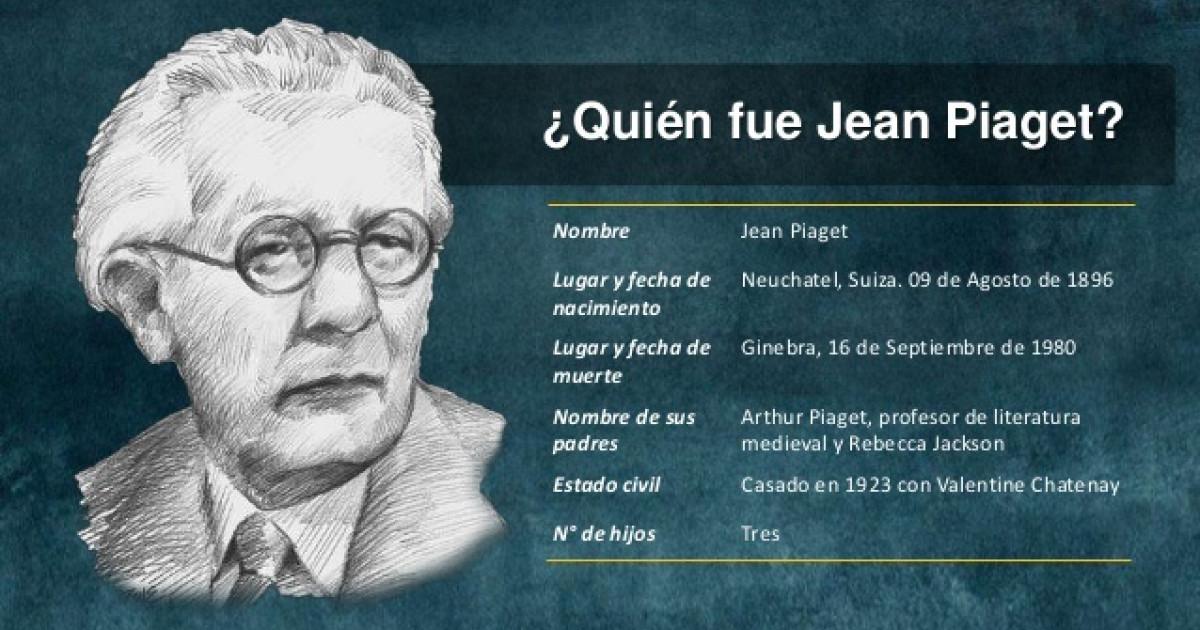
Several theories come together under the constructivist umbrella. Jean Piaget described how knowledge is integrated through assimilation and accommodation: First, we incorporate the new into existing structures, and if it doesn't fit, we readjust those structures. His proposal, known as learning by action, emphasizes experimentation and problem solving as the driving force of intellectual development.
David Ausubel put the focus on the significant learning (1968): True learning involves anchoring new knowledge into the relevant ideas the student already possesses. For this to happen, content must be well organized, connected to prior knowledge, and presented in a way that makes sense.
Jerome Bruner defended the Learning by discovery (1960), where the student explores, formulates hypotheses, and finds relationships on their own with the guidance of the teacher. This process, rather than passive reception, fosters deep understanding and transfer to new situations.
Lev Vygotsky added the social dimension: learning is mediated by the cultural environment and by interaction with other people. His idea of the zone of proximal development explains how, with expert or peer support, students can tackle challenges they would not yet be able to solve alone.
Shared principles of the approach
Beyond the nuances between authors, constructivist proposals converge in a teaching model with these features: active participation of students, attention to cognitive processes, use of strategies to reorganize content, recognition of the diversity of ways of learning and care of academic self-esteem.
- Student activity: Learning is doing, exploring, debating, creating and reviewing one's own work.
- Cognitive processes: : understanding, analysis, synthesis, inference and metacognition are promoted.
- Learning strategies: maps, summaries, analogies, guided questions and scaffolding that facilitate the reorganization of knowledge.
- Individualization: Each person learns differently, so flexible and relevant methodologies are developed.
- Self-esteem and autonomy: trusting in one's own ability favors problem solving and learning to learn.
How to learn and teach in a constructivist class
In the classroom, the teaching role changes: it stops being the only transmitter to become guide and facilitatorDesign challenging situations, guide processes, pose quality questions, regulate participation, and adapt support based on the needs of the group and each student.
Constructivist classrooms are usually organized in small groups, they encourage the exchange of ideas and focus on issues that genuinely interest students. Knowledge is shared between faculty and students, prioritizing collaboration and interactive learning.
The student, for his part, selects information from different sources, establishes relationships with your previous background, builds mental models and attributes value to what is learned. Thus, new knowledge is integrated into a coherent and lasting cognitive structure.
To sustain this process, it is important to activate motivation, because without it the scaffolding falters. Teachers, therefore, need strategies that spark interest, connect with the students' experience and give practical meaning to each task.
Constructivism and literacy: practical guidelines
In teaching reading and writing, the constructivist approach prioritizes learning with meaning and functional use. Literacy teachers should start from meaningful words for the student (your name, your neighborhood, personal information) and emphasize the instrumental value of reading and writing from the beginning.
Reading and writing progress hand in hand: rather than focusing only on the alphabet, we work with simple words and phrases, short texts are produced and everything is linked to real contexts (asking for help, completing forms, warning of a risk).
With adults or second language learners, it is useful to use everyday texts (administrative documentation, job applications, instructions) that connect with immediate needs. The key is not memorizing single letters, but rather understanding and creating meaningful messages.
- Select vocabulary with emotional or practical meaning to facilitate anchoring.
- Show real uses of reading and writing from day one.
- Alternate comprehension and production of texts, avoiding watertight compartments.
- Use manipulable materials that favor exploration and verification.
Constructivist activities and strategies
Active methodologies are the natural vehicle for this trend. Proposals such as mental maps They help visualize relationships between new and previous concepts; debates invite discussion, negotiation of meanings, and reasoned conclusions.
- Mental maps: visual representation of ideas and connections to integrate and reorganize content.
- Spaces for debate: open questions, active listening, and agreements based on reasons, not single answers.
- Fieldwork or research: autonomous inquiry into topics of interest, beyond the mere collection of data.
- Team puzzle: Each group masters one part and then combines to build the whole.
- Virtual magazine: authoring projects with technology, from research to final layout.
- Forums and self-learning: personal goals, searching for sources and reflecting on what has been learned.
These strategies work best with teaching that explains objectives and criteria, organizes teams, energizes, answers questions, provides individual and group follow-up, and evaluates both the quality and quantity of learning.
Differences with the traditional model
Although they can coexist, the contrast is clear. Constructivism focuses on develop cognitive skills and ensuring deep and lasting learning, while the traditional model prioritizes large-scale transmission and favors, above all, memorization.
- Process center: the student builds his knowledge vs. student as a passive receiver.
- Adaptation: Teaching is tailored to the needs of students vs. students adapt to the rigid curriculum.
- Teaching role: guide/facilitator vs. authority that monopolizes knowledge.
- Results: creative problem solving and transfer vs. recall of decontextualized data.
Consequently, the evaluation also changes: the value is placed on the process and understanding, application to real-life situations and reflection on how we learn, not just the final result of a specific test.
Most cited benefits
Among the highlighted advantages, the constructivist approach promotes higher-level thinking skills, enhances autonomy and creativity, and reinforces stable learning by connecting it with personal experience.
- Cognitive abilities (analyze, infer, argue, create) that transcend simple memorization.
- Meaningful and lasting learning by anchoring the new in what is already known.
- Autonomy and problem solving in diverse contexts.
- Attention to interests, beliefs and individual differences of the student body
- Improving the educational experience through active and collaborative dynamics.
These benefits are enhanced by classes with manageable groups, trusted environments and tasks that connect with what matters to the learner, something that many institutions have already adopted in their pedagogical models.
Criticisms and necessary nuances
Constructivism also receives objections. It is criticized for assuming that everyone is sufficiently motivated and prepared for autonomy, something that doesn't always happen without additional support. Therefore, it's important to take care with the scaffolding, clarity, and gradation of tasks.
Another criticism points out that it could undervalue memory and automatisms, which are useful for freeing up cognitive resources. Integrating spaced practice and active retrieval can reconcile these needs with deep understanding.
Likewise, constructivism is a heterogeneous set of theories, difficult to fit into a single school. Some formulations touch on philosophical questions (about reality and knowledge), and it is spoken of as a possible "meta-psychology": a framework for thinking about how we research and teach.
This debate does not invalidate their contributions; rather, it invites implementation. balanced and evidence-based, without ruling out traditional tools that may be valuable in combination with active methodologies.
Constructivism in foreign language teaching
In language teaching, constructivist postulates influenced later approaches to the cognitive code, such as humanistic approaches and the communicative approach. The idea is that students actively participate, use cognitive strategies, connect the new with what is already known and rely on the social interaction to advance.
This translates into communicative tasks, emphasis on autonomy, consideration of the cognitive style of each person and in the use of strategies that facilitate understanding and production. Cognitive and interactional variables play a central role in progress.
In this field, concepts such as autonomy in learning, cognitive strategies, social interactionism and cognitive variables are integrated to design sequences that combine comprehensible input, meaningful practice and metacognitive reflection.
Motivation: the fuel of learning
Learning, from the constructivist perspective, is a continuous and dynamic processMotivation isn't a given: it must be cultivated with appropriate challenges, useful feedback, and meaningful tasks. Without that spark, active participation fades and the method's potential is reduced.
Strategies such as connecting with group interests, raising authentic problems, offering options and making progress visible are powerful levers for maintaining engagement over time.
Guidelines for the teaching role
In practice, teachers working with this approach prepare the classroom, define objectives, organize teams, explains success criteria and reserves brief and strategic interventions to clarify doubts or model procedures.
In addition, it energizes, encourages participation, controls the functioning of groups, closely monitors individual and collective development and evaluates in a formative way, teaching students to think about their own thinking (metacognition) and to progressively gain autonomy.
Resources and recommended readings
If you want to expand, there are accessible and useful reference works for the classroom. For example, Coll (1993) addresses constructivism in the classroomGimeno and Pérez Gómez (1992) explore how to understand and transform teaching; Williams and Burden (1997) present a psychology of language teachers from a social constructivist perspective.
- Ausubel, D. (1968). Educational psychology, a cognitive point of view.
- Bruner, JS (1960). The mental process in learning.
- Piaget, J. (1966). The birth of intelligence in the child.
- Brown, H.D. (1994). Principles of Language Learning and Teaching.
You can also consult an open academic analysis on Redalyc to delve deeper into the foundations and applications of the approach: This PDF with a constructivist approach offers frameworks and evidence that complement teaching practice.
Although the term “constructivism” also exists in epistemology, where we discuss how much of reality we know and how, in education and psychology, it is used more pragmatic and applied, with the aim of explaining, predicting and improving learning and intervention processes.
When teaching builds on what students already know, it challenges them to discover, supports them with clear scaffolding, and invites them to use strategies to think better, the pieces fit together: There is more understanding, more autonomy and more desire to continue learning.